
Central Asia (820 – 963 CE): Samanid …
Years: 820 - 963
Central Asia (820 – 963 CE): Samanid Renaissance, Oasis Roads, and Steppe Frontiers
Geographic and Environmental Context
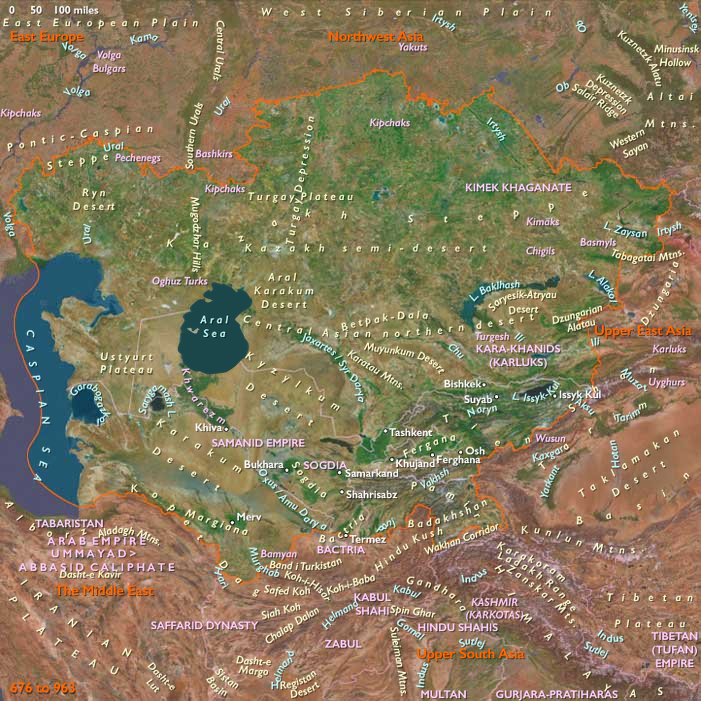
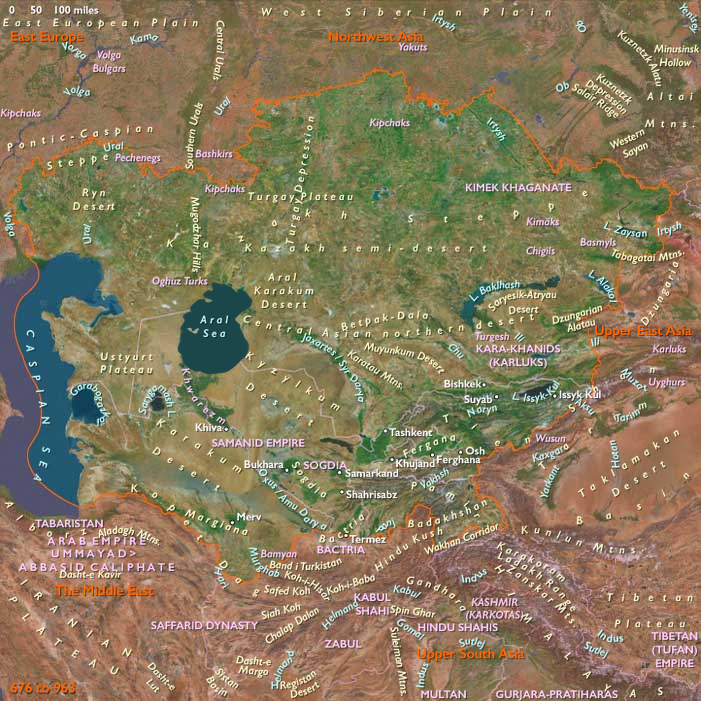
Central Asia includes the Syr Darya and Amu Darya basins (Transoxiana), Khwarazm and the Aral–Caspianlowlands, the Ferghana Valley, the Merv oasis and Kopet Dag piedmont, the Kazakh steppe to the Aral littoral, and the Tian Shan–Pamir margins.
-
A lattice of irrigated oases—Bukhara, Samarkand, Khwarazm/Urgench, Merv—was threaded by caravan tracks to Ferghana, Kashgar, and Nishapur.
-
Beyond the canals rose the steppe and semi-desert zones of Oghuz and Kipchak pastoralists, linking the Aral–Caspian to the Volga and Black Sea worlds.
Climate and Environmental Shifts
-
Warm–dry conditions with highly seasonal rivers (Syr/Amu); reliable irrigation made oases resilient while steppe pastures fluctuated with multi-year droughts.
-
Snowmelt-fed canals in the piedmont and river deltas underwrote bumper harvests; dune movement and salinization required continuous maintenance of canals and fields.
Societies and Political Developments
-
Tahirids (821–873) and Saffarids (861–1003) shaped the Khurasan–Sistan rim, but in Transoxiana the decisive power was the Samanid dynasty (819–999), ruling from Bukhara and Samarkand.
-
Under Nasr II (r. 914–943) and Nuh I (r. 943–954), Samanid authority stabilized Transoxiana and Khwarazm, balancing tributary ties with steppe tribes and asserting Sunni legitimacy against Ismaʿili activism.
-
Oghuz confederations along the Syr Darya gathered strength, controlling corridors toward the Caspian and brokering horses and slaves; Kimek–Kipchak groupings on the northern steppe grew more prominent.
-
In the far east, Karakhanid tribal blocs in Semirechye/Ferghana began coalescing (mid–late 10th c.), foreshadowing a new Turkic sovereignty over Transoxiana after 963.
Economy and Trade
-
Irrigated cereal and cotton agriculture flourished in the Zarafshan and Ferghana; orchards (apricot, grape, pomegranate) and silk weaving added value.
-
Samanid mints at Bukhara, Samarkand, and Nishapur struck vast quantities of silver dirhams; these coins fueled the Volga trade to Bulghar and the Rus’, turning Central Asia into a monetary engine of the wider Eurasian economy.
-
Caravan networks tied Merv–Nishapur to Rayy and the Iranian plateau, Bukhara–Samarkand to Kashgar and Khotan, and Khwarazm to the Caspian–Volga riverways.
-
Exports: textiles, sugar, paper, fruit syrups, refined silver; imports: slaves, furs, amber, swords from the north; horses, jade, tea, and silk from China; aromatics and pearls via the Persian Gulf.
Subsistence and Technology
-
Oases relied on canals and diversion weirs; in piedmont and delta zones, subterranean galleries (qanāt/kārīz) extended arable margins.
-
Paper-making (Samarkand tradition), book copying, and dyeing workshops thrived; iron foundries produced tools and blades for both oasis and steppe markets.
-
Steppe pastoralists fielded composite bows, lamellar armor, and remount herds; caravans and frontier garrisons purchased remount horses in quantity.
Movement and Interaction Corridors
-
The Transoxiana–Ferghana–Kashgar arc moved silk and jade west; the Khwarazm–Volga–Bulghar route moved dirhams and slaves north; the Merv–Nishapur–Rayy road linked to Baghdad and the Gulf.
-
Seasonal steppe corridors along the Syr and lower Amu carried Oghuz/Kipchak herds and raiding parties toward oasis frontiers—regulated by tribute, markets, and punitive expeditions.
Belief and Symbolism
-
Sunni Hanafi Islam anchored Samanid legitimacy; madrasas, mosques, and waqf endowments expanded in the oases.
-
A Persianate renaissance flourished at Bukhara: Rudakī and court poets inaugurated New Persian literature in Arabic script; Arabic scholarship (theology, medicine, astronomy) circulated through libraries and paper markets.
-
Ismaʿili missionaries operated in Khurasan–Transoxiana, but the Samanids suppressed them, positioning themselves as defenders of Sunnism.
-
Among Turkic steppe peoples, Tengri sky worship, ancestor cults, and shamanic practices persisted alongside growing contact with Islam.
Adaptation and Resilience
-
Oasis–steppe symbiosis—grain, textiles, and coin for horses, guards, and furs—reduced conflict costs and stabilized borders.
-
Canal upkeep and salt management preserved arable land; caravanserai provisioning reduced risk on long hauls.
-
Monetization via dirhams cushioned shocks by integrating Central Asia into Volga–Rus’–Baltic and Persian Gulf–Indian Ocean circuits.
-
Frontier diplomacy (tribute, hostage exchange, intermarriage) with Oghuz and Kipchak leaders channeled steppe pressures into trade.
Long-Term Significance
By 963 CE, Central Asia had entered a Samanid-led golden age:
-
A Persianate cultural core (Bukhara–Samarkand–Merv) powered scholarship and literature,
-
Irrigated oases turned river water into silk, sugar, and coin,
-
Steppe gateways delivered horses and transcontinental partners, and
-
The Karakhanids were poised on the Ferghana frontier, preparing to enter Transoxiana and inaugurate the next political cycle.
This age set the template for the region’s classic medieval pattern: Sunni–Persian urban courts, Turkic steppe military power, and caravan capitalism binding China, the Islamic world, and the North.
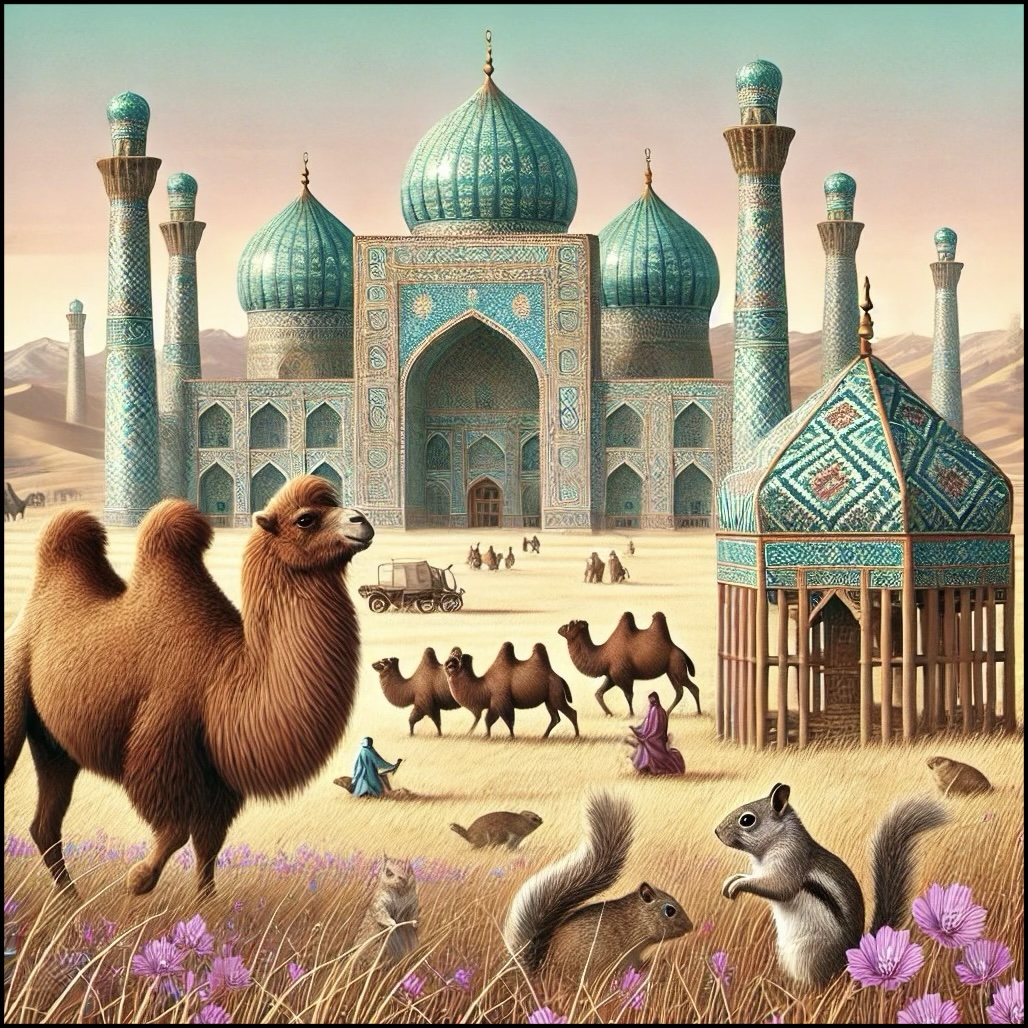
Central Asia (with civilization) ©2024-25 Electric Prism, Inc. All rights reserved.
People
Groups
- Polytheism (“paganism”)
- Tajik people
- Iranian peoples
- Arab people
- Persian people
- Zoroastrians
- Margiana
- Buddhism
- Khwarezm
- Buddhism, Mahayana
- Tokharistan (Kushan Bactria)
- Christians, Eastern (Diophysite, or “Nestorian”) (Church of the East)
- Oghuz Turks
- Karluks
- Islam
- Chinese Empire, Tang Dynasty
- Muslims, Sunni
- Kimek tribe
- Chinese Empire, Tang Dynasty
- Kimek Khanate
- Umayyad Caliphate (Harran)
- Uyghur Khaganate
- Oghuz Yabgu State
- Ismailism
- Abbasid Caliphate (Baghdad)
- Samanid dynasty
- Abbasid Caliphate (Samarra)
- Kara-Khanid Khanate
- Abbasid Caliphate (Baghdad)
- Kipchaks
- Chinese Empire, Pei (Northern) Song Dynasty
Topics
Commodoties
- Weapons
- Hides and feathers
- Gem materials
- Domestic animals
- Grains and produce
- Textiles
- Ceramics
- Strategic metals
- Slaves
- Lumber
- Manufactured goods
- Money
- Spices
Subjects
- Commerce
- Writing
- Decorative arts
- Conflict
- Faith
- Scholarship
- Custom and Law
- Medicine
- Astronomy
- Theology
Regions
Subregions
Years: 820 - 963
Central Asia (with civilization) ©2024-25 Electric Prism, Inc. All rights reserved.
People
Groups
- Polytheism (“paganism”)
- Tajik people
- Iranian peoples
- Arab people
- Persian people
- Zoroastrians
- Margiana
- Buddhism
- Khwarezm
- Buddhism, Mahayana
- Tokharistan (Kushan Bactria)
- Christians, Eastern (Diophysite, or “Nestorian”) (Church of the East)
- Oghuz Turks
- Karluks
- Islam
- Chinese Empire, Tang Dynasty
- Muslims, Sunni
- Kimek tribe
- Chinese Empire, Tang Dynasty
- Kimek Khanate
- Umayyad Caliphate (Harran)
- Uyghur Khaganate
- Oghuz Yabgu State
- Ismailism
- Abbasid Caliphate (Baghdad)
- Samanid dynasty
- Abbasid Caliphate (Samarra)
- Kara-Khanid Khanate
- Abbasid Caliphate (Baghdad)
- Kipchaks
- Chinese Empire, Pei (Northern) Song Dynasty
Topics
Commodoties
- Weapons
- Hides and feathers
- Gem materials
- Domestic animals
- Grains and produce
- Textiles
- Ceramics
- Strategic metals
- Slaves
- Lumber
- Manufactured goods
- Money
- Spices
Subjects
- Commerce
- Writing
- Decorative arts
- Conflict
- Faith
- Scholarship
- Custom and Law
- Medicine
- Astronomy
- Theology
Regions
Subregions