
Isabella, by marrying Ferdinand, had united Spain; …
Years: 1540 - 1683
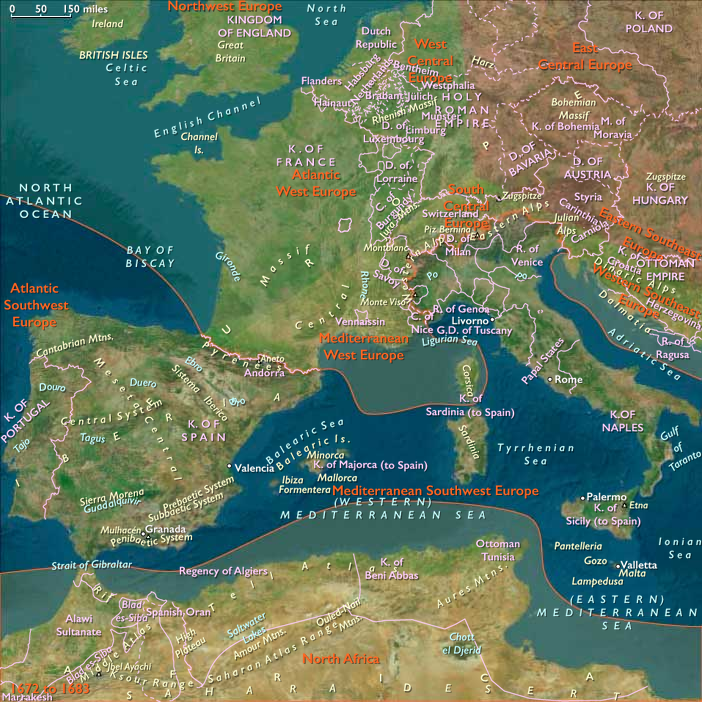
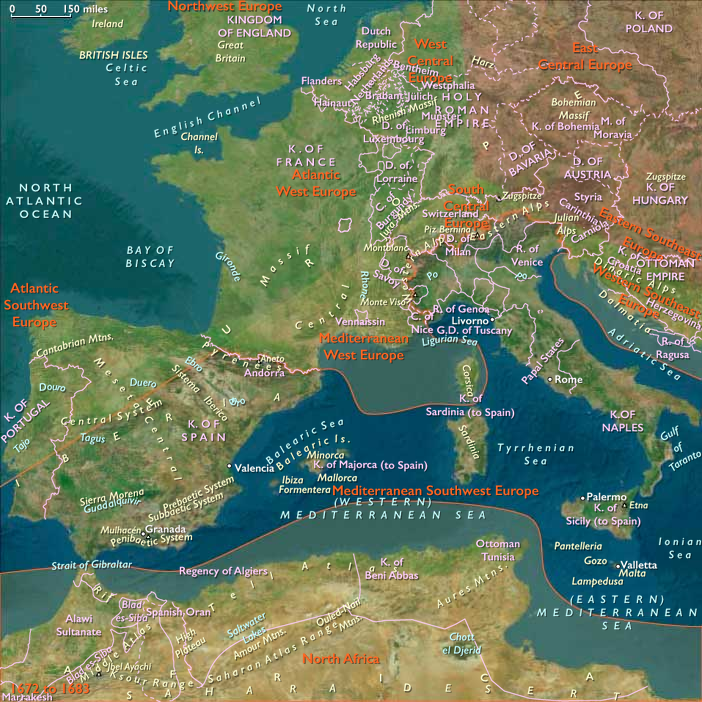
Isabella, by marrying Ferdinand, had united Spain; however, she had also inevitably involved Castile in Aragon's wars in Italy against France, which had formerly been Castile's ally.
The motivation in each of their children's marriages had been to circle France with Spanish allies—Habsburg, Burgundian, and English.
The succession to the Spanish crown of the Habsburg dynasty, which has broader continental interests and commitments, draws Spain onto the center stage of European dynastic wars for two hundred years.
Music, art, literature, theater, dress, and manners from Spain's Golden Age are admired and imitated
well into the seventeenth century; they set a standard by which the rest of Europe measures its culture.
Spain is also Europe's preeminent military power, with occasion to exercise its strength on many fronts—on land in Italy, Germany, North Africa, and the Netherlands, and at sea against the Dutch, French, Turks, and English.
Locations
Groups
- Arab people
- Berber people (also called Amazigh people or Imazighen, "free men", singular Amazigh)
- Dutch people
- French people (Latins)
- English people
- Sardinia, Kingdom of
- France, (Valois) Kingdom of
- Portugal, Avizan (Joannine) Kingdom of
- Ottoman Empire
- Turkish people
- Netherlands, Habsburg
- England, (Tudor) Kingdom of
- Naples, Kingdom of
- Spain, Habsburg Kingdom of
- Spaniards (Latins)
- Pavia, (Spanish-ruled) Commune of
- Spain, Habsburg Kingdom of
- Iberian Union
- Portugal, Habsburg (Philippine) Kingdom of
- Netherlands, United Provinces of the (Dutch Republic)
- Netherlands, Southern (Spanish)
- France, (Bourbon) Kingdom of
- England, (Stuart) Kingdom of
- England, Commonwealth of
- England, (Stewart, Restored) Kingdom of
Topics
Subjects
Regions
Subregions
Years: 1540 - 1683
Locations
Groups
- Arab people
- Berber people (also called Amazigh people or Imazighen, "free men", singular Amazigh)
- Dutch people
- French people (Latins)
- English people
- Sardinia, Kingdom of
- France, (Valois) Kingdom of
- Portugal, Avizan (Joannine) Kingdom of
- Ottoman Empire
- Turkish people
- Netherlands, Habsburg
- England, (Tudor) Kingdom of
- Naples, Kingdom of
- Spain, Habsburg Kingdom of
- Spaniards (Latins)
- Pavia, (Spanish-ruled) Commune of
- Spain, Habsburg Kingdom of
- Iberian Union
- Portugal, Habsburg (Philippine) Kingdom of
- Netherlands, United Provinces of the (Dutch Republic)
- Netherlands, Southern (Spanish)
- France, (Bourbon) Kingdom of
- England, (Stuart) Kingdom of
- England, Commonwealth of
- England, (Stewart, Restored) Kingdom of
Topics
Subjects
Regions
Subregions