
South America Major (820 – 963 CE):…
820 CE to 963 CE
South America Major (820 – 963 CE): Tiwanaku Prestige, Wari Decline, and Amazonian Earthworks
Geographic and Environmental Context
South America Major includes: all regions north of the Río Negro (the Patagonia boundary), i.e., Colombia (except Darién, assigned to Isthmian America), Venezuela, the Guianas, Brazil, Ecuador (excluding the Ecuadorian Capelands, which belong to Isthmian America), Peru, Bolivia, Paraguay, Uruguay, northern Argentina, and northern Chile.
-
Anchors: Altiplano (Tiwanaku, Lake Titicaca, Collao valleys), north Peruvian coast (late Moche, Sicán beginnings), Ecuador highlands (Caranqui–Cayambe ancestors), Quito–Quitu region, Caribbean Colombia & Venezuela (Tairona precursors, Llanos–Orinoco), Guianas (shell-mound and riverine horticultural cultures), Amazonia (Marajó, Xingu, Tapajós), Brazil’s Atlantic coast (sambaqui remnants), northern Argentina (riverine mound fields, early Guaraní expansions), northern Chile (Atacama oases).
Climate and Environmental Shifts
-
Medieval Warm Period: favored Altiplano raised fields (waru waru) and Amazonian floodplain agroforestry.
-
ENSO cycles periodically disrupted Peru’s fisheries and irrigation systems.
Societies and Political Developments
-
Tiwanaku still radiated prestige via ritual pilgrimage and agronomy.
-
Wari collapse left fragmented highland lordships in Peru.
-
Sicán (Lambayeque) traditions formed in north Peruvian valleys.
-
Ecuador highlands: defensive hilltop communities laid groundwork for confederacies.
-
Tairona ancestors terraced Sierra Nevada slopes; Orinoco–Llanos groups organized fishing and fiber-based economies.
-
Guianas: shell-mound builders and riverine horticulturalists flourished.
-
Amazon: complex earthwork societies with terra preta soils thrived.
-
Northern Argentina: mound-building and mixed economies in Paraná–Uruguay valleys; early Guaranídispersals.
-
Northern Chile: Atacama oases tied to caravan trade across the Andes.
Economy and Trade
-
Staples: potatoes, quinoa, maize, manioc.
-
Prestige goods: metals, shells, jade, feathers.
-
Riverine and caravan routes linked Andes ⇄ Amazon ⇄ Atlantic.
Belief and Symbolism
-
Tiwanaku staff deity motifs; Amazonian ceremonial roads; Guaraní ancestor cults and canoe cosmologies.
Long-Term Significance
By 963, South America north of the Río Negro was a mosaic of successor states and earthwork polities, with Tiwanaku waning, Sicán rising, Tairona and Amazonian societies vibrant, and Guaraní footholds forming in the southern cone.
Images
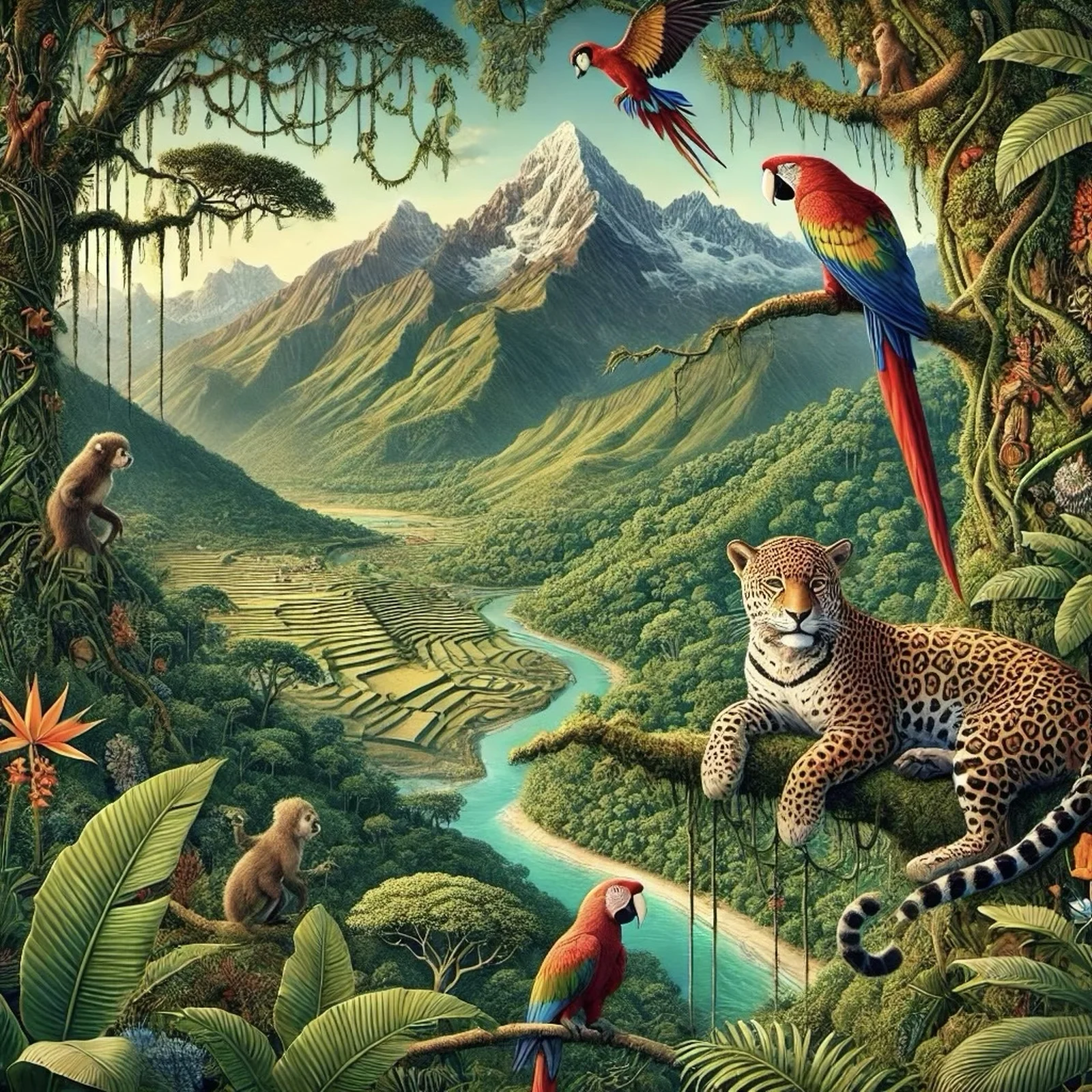
South America (with civilization) ©2024-25 Electric Prism, Inc. All rights reserved.
Groups
Commodities
Subjects
Regions

South America
View →Subregions
