
Control of the city of Diyarbakir and …
Years: 1516 - 1516
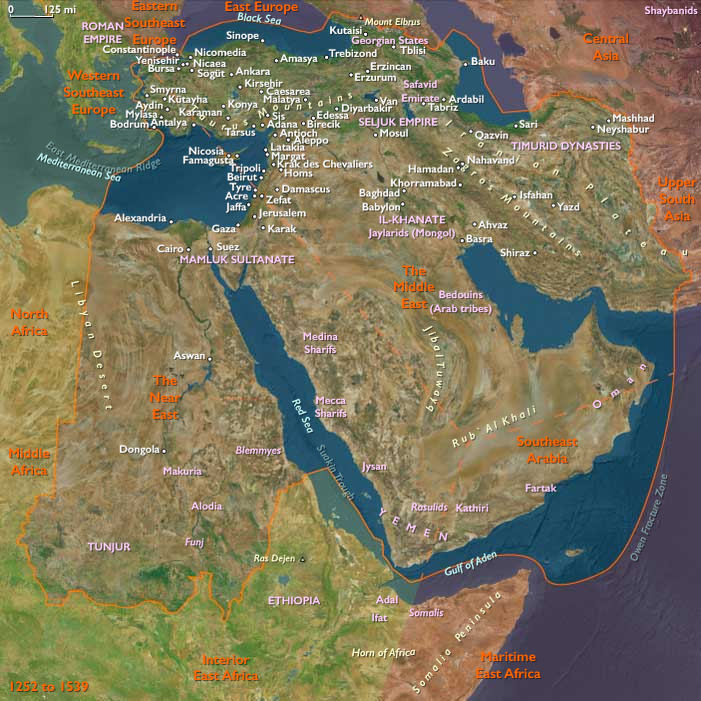
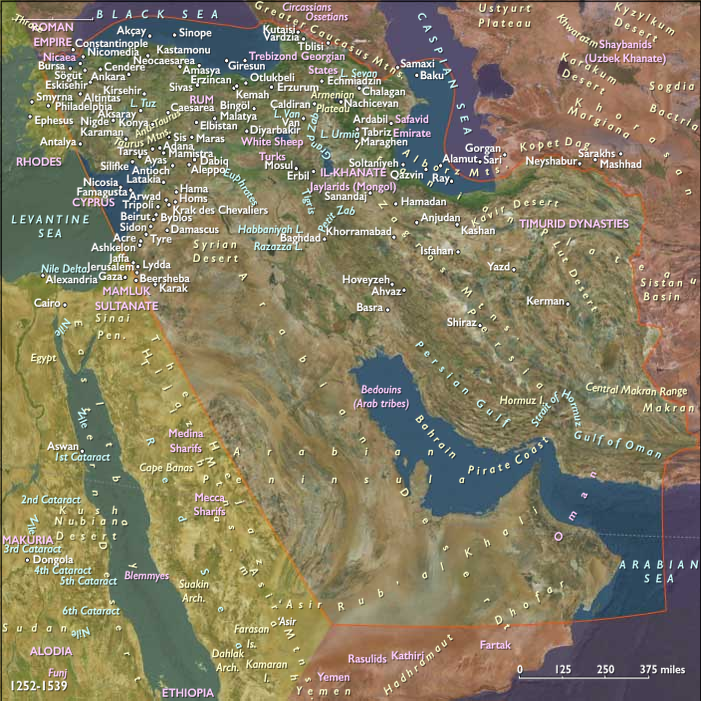
Control of the city of Diyarbakir and the much wider Eastern Anatolia region (comprising eastern and southeastern Anatolia) will long be heavily contested between the Persian Safavids and the Ottoman Turks.
When the city was initially conquered from the Safavids in 1515 by the Ottoman Turks through the campaigns of Bıyıklı Mehmet Paşa following the Battle of Chaldiran, they had established an eyelet with its center in Diyarbakır.
The Ottoman eyelet of Diyarbakır corresponds to modern Turkey's southeastern provinces, a rectangular area between Lake Urmia to Palu and from the southern shores of Lake Van to Cizre and the beginnings of the Syrian desert, although its borders will see some changes over time.
The relationship between the Ottomans and the Mamluks has been adversarial since the Fall of Constantinople to the Ottomans in 1453: both states vie for control of the spice trade, and the Ottomans aspire to eventually take control of the Holy Cities of Islam.
An earlier conflict, which lasted from 1485 to 1491, had led to a stalemate.
By 1516, the Ottomans are free from other concerns—Sultan Selim I had recently vanquished the Safavid Persians at the Battle of Chaldiran in 1514—and turn their full might against the Mamluks, who rule in Syria and Egypt, to complete the Ottoman conquest of the Middle East.
The war will consist of several battles.
The Mamluk army is largely traditional, consisting mainly of cavalry using bows and arrows, whereas the Ottoman army, and especially the Janissary corps, is modern, using arquebuses.
The Mamluks, who remain proudly traditional, tend to disregard the use of firearms.
Locations
People
Groups
- Iranian peoples
- Kurdish people
- Oghuz Turks
- Islam
- Muslims, Sunni
- Muslims, Shi'a
- Turkmen people
- Egypt and Syria, Mamluk Burji Sultanate of
- Ottoman Empire
- Qizilbash or Kizilbash, (Ottoman Turkish for "Crimson/Red Heads")
- Persia, Safavid Kingdom of
Topics
Commodoties
Subjects
Regions
Subregions
Related Events
Showing 10 events out of 39076 total
Years: 1516 - 1516
Locations
People
Groups
- Iranian peoples
- Kurdish people
- Oghuz Turks
- Islam
- Muslims, Sunni
- Muslims, Shi'a
- Turkmen people
- Egypt and Syria, Mamluk Burji Sultanate of
- Ottoman Empire
- Qizilbash or Kizilbash, (Ottoman Turkish for "Crimson/Red Heads")
- Persia, Safavid Kingdom of
Topics
Commodoties
Subjects
Regions
Subregions