
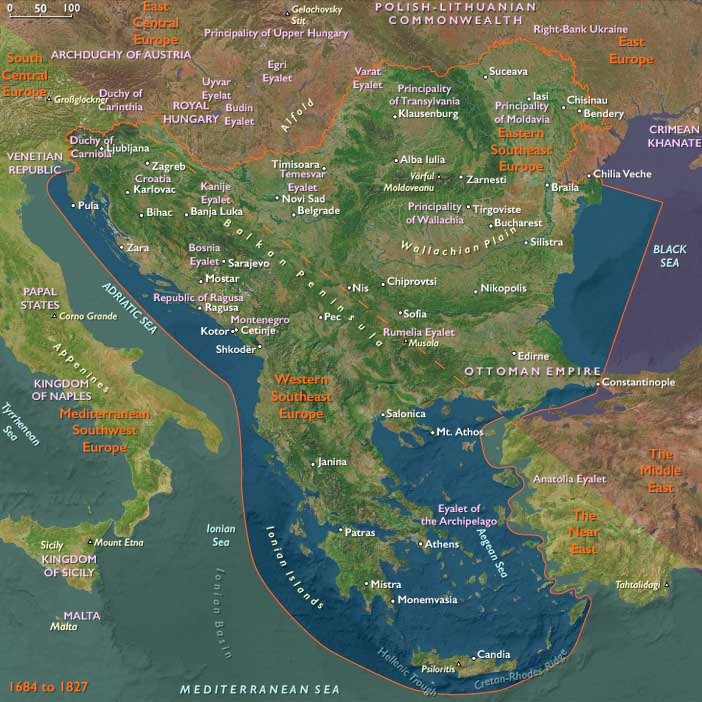
...Croatia, and Transylvania. The Treaty of Karlowitz…
January 1699 CE
...Croatia, and Transylvania.
The Treaty of Karlowitz diminishes significantly Ottoman influence in Transylvania, and Thököly is forced to spend his remaining years in exile in Turkey.
Independent Transylvania has suffered a series of feckless and distracted leaders, and throughout the seventeenth century, Transylvania's Romanian peasants have lingered in poverty and ignorance.
Although an imperial decree reaffirms the privileges of Transylvania's nobles and the status of its four "recognized" religions, Vienna assumes direct control of the region and the emperor plans annexation.
The Romanian majority remains segregated from Transylvania's political life and almost totally enserfed; Romanians are forbidden to marry, relocate, or practice a trade without the permission of their landlords.
Besides oppressive feudal exactions, the Orthodox Romanians must pay tithes to the Roman Catholic or Protestant church, depending on their landlords' faith.
Barred from collecting tithes, Orthodox priests live in penury, and many labor as peasants to survive.
Under Habsburg rule, Roman Catholics dominate Transylvania's more numerous Protestants, and Vienna mounts a campaign to convert the region to Catholicism.
The imperial army delivers many Protestant churches to Catholic hands, and anyone who breaks from the Catholic church is liable to receive a public flogging.
The Habsburgs also attempt to persuade Orthodox clergymen to join the Uniate Church, which retains Orthodox rituals and customs but accepts four key points of Catholic doctrine and acknowledges papal authority.
Jesuits dispatched to Transylvania promise Orthodox clergymen heightened social status, exemption from serfdom, and material benefits.
Locations
Groups
Commodities
Subjects
Regions
Southeast Europe
View →Subregions
