Henry Kissinger, now Nixon’s Secretary of State,…
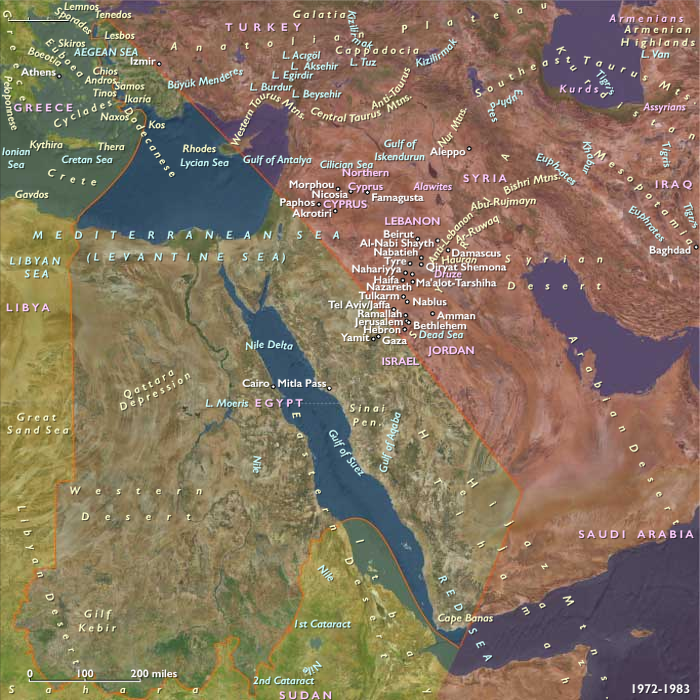
October 1973 CE
He quickly agrees, together with the Soviet Union, to call for a UN cease-fire.
Following Kissinger’s return to Washington, the Soviets announce that Israel has broken the terms of the cease-fire and is threatening to destroy the besieged Egyptian Third Army.
Soviet leader Leonid Brezhnev curtly warns Nixon of possible Soviet military intervention, which the United States moves to deter, perhaps recklessly, with a worldwide alert of its military forces.
Sadat persuades Kissinger that his country is ready to abandon both its Soviet and Syrian allies for a fresh start with the United States; only Washington, in Sadat’s view, can effectively influence Israel to return the Sinai without further bloodshed.
Kissinger, supported by Nixon, successfully pressures Israel to end the war short of a complete Egyptian military defeat.
Finally, Kissinger threatens a cutoff of arms deliveries unless Israel halts its offensive, and the final cease-fire takes effect on October 25.
People
Groups
Golan Heights
View →
United States of America (US, USA) (Washington DC)
View →
Union of Soviet Socialist Republics (USSR), or Soviet Union
View →
Lebanon, Republic of
View →
Syria, or Syrian Arab Republic
View →
Palestinians
View →
Israel
View →
West Bank
View →
Gaza Strip
View →
Jordan, Hashemite Kingdom of
View →
Egypt, Arab Republic of
View →
Topics
Commodities
Regions

The Near and Middle East
View →Subregions