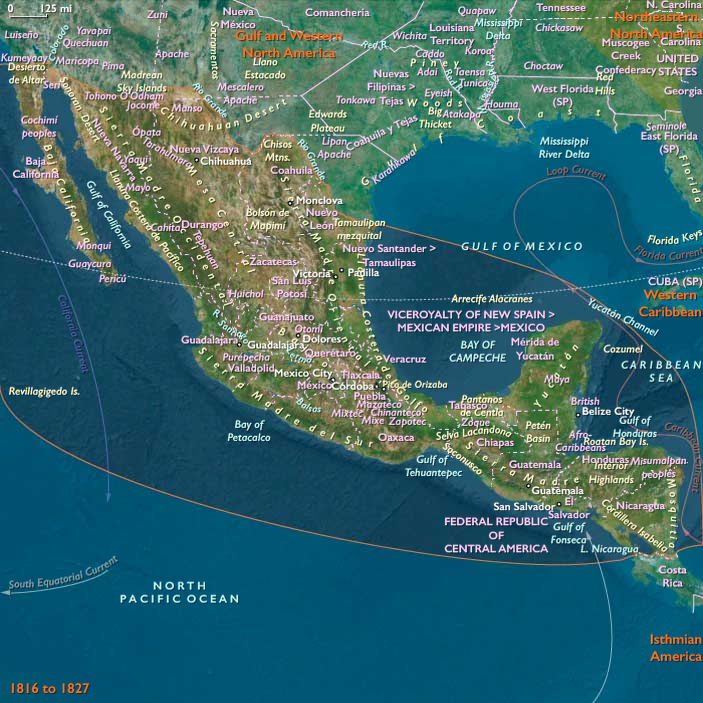
Woodcutting is seasonal work that requires workers…
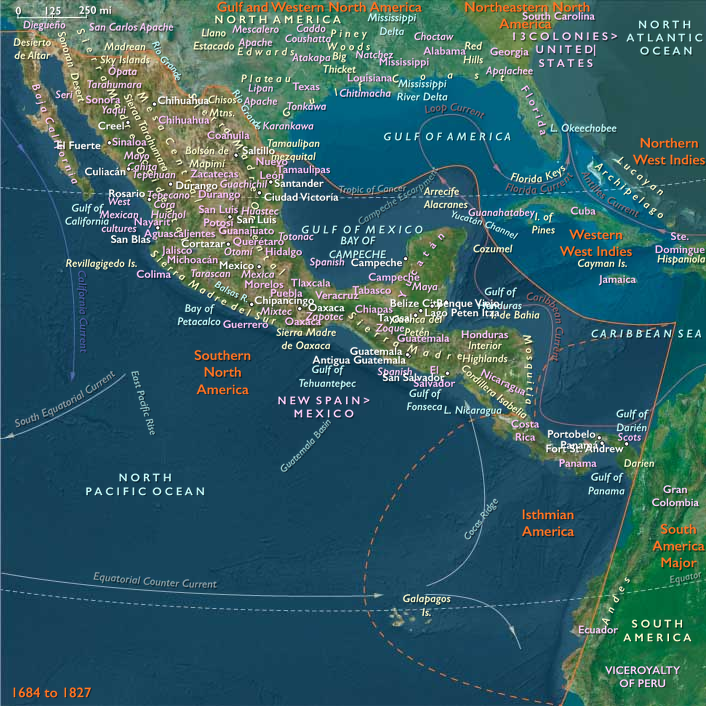
1684 CE to 1827 CE
Settlers need only one or two slaves to cut logwood, a small tree that grows in clumps near the coast, but as the trade shifts to mahogany in the last quarter of the eighteenth century, the settlers need more money, land, and slaves for larger-scale operations.
After 1770 about eighty percent of all male slaves aged ten years or more cut timber.
Huntsmen find the trees, which are then cut, trimmed, and hauled to the riverside.
During the rainy season, settlers and slaves float rafts of untrimmed logs downriver, where the wood is processed for shipment.
Huntsmen are highly skilled and valued slaves, as are the axmen who cut the trees while standing on a springy platform four to five meters high.
Another group of slaves cares for the oxen that pull the huge logs to the river.
Others trim the trees and clear the tracks.
The use of small gangs of slaves for cutting wood reduces the need for close supervision; whip- wielding drivers, who are ubiquitous on large plantations elsewhere, are unknown in the settlement.
The colonial masters use domestic slaves, mostly women and children, to clean their houses; sew, wash, and iron their clothes; prepare and serve their food; and raise their children.
Some slaves cultivate provisions that will either be sold or used to save their owners some of the cost of importing food.
Other slaves work as sailors, blacksmiths, nurses, and bakers.
Few slaves, however, hold jobs requiring a high level of skill.
Young people start work by waiting on their masters' tables, where they are taught to obey; most of the young women then continue in domestic work while the young men become woodcutters.
This rigid division of labor and the narrow range of work experience of most slaves will limit their opportunities after legal emancipation in 1838.
The slaves' experience, although different from that on plantations in other colonies in the region, is nevertheless oppressive.
They are frequently the objects of "extreme inhumanity," as a report published in 1820 states.
The settlement's chaplain reports "instances, many instances, of horrible barbarity" against the slaves.
The slaves' own actions, including suicide, abortion, murder, escape, and revolt, suggest how they view their situation.
Slaves who live in small, scattered, and remote groups can escape with relative ease if they are willing to leave their families.
Many escaped to the Yucatan in the eighteenth century, and in the early nineteenth century a steady flow of runaways goes to Guatemala and down the coast to Honduras.
Some runaways establish communities, such as one near the Sibun River, that offer refuge to others.
When freedom can attained by slipping into the bush, revolt is not such a pressing option.
Nevertheless, numerous slave revolts take place.
The last revolt in 1820, led by two enslaved black men, Will and Sharper, involves a considerable number of well-armed individuals who "had been treated with very unnecessary harshness by their Owner, and had certainly good grounds for complaint."
Locations
Groups
Commodities
Regions
Middle America
View →Subregions