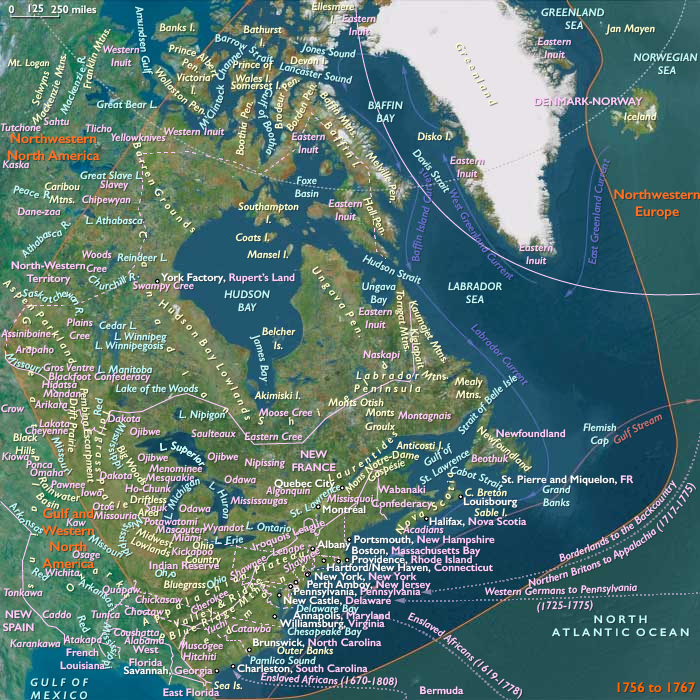
There are eyewitness reports that outbreaks of…
July 1763 CE
Colonists had also caught smallpox from natives at a peace conference in 1759, which had then led to an epidemic in Charleston and the surrounding areas in South Carolina.
Historians are at odds as to how much damage the attempt to spread smallpox at Fort Pitt caused.
Historian Francis Jennings will conclude that the attempt was "unquestionably successful and effective" and inflicted great damage to the natives.
Historian Michael McConnell will write that, "Ironically, British efforts to use pestilence as a weapon may not have been either necessary or particularly effective", noting that smallpox was already entering the territory by several means, and natives were familiar with the disease and adept at isolating the infected.
Historians widely agree that smallpox devastated the native population.
People
Groups
Iroquois (Haudenosaunee, also known as the League of Peace and Power, Five Nations, or Six Nations)
View →
Wyandot, or Wendat, or Huron people (Amerind tribe)
View →
Miami (Amerind tribe)
View →
Lenape or Lenni-Lenape (later named Delaware Indians by Europeans)
View →
Ojibwa, or Ojibwe, aka or Chippewa (Amerind tribe)
View →
Odawa, or Ottawa, people (Amerind tribe)
View →
Seneca (Amerind tribe)
View →
Mascouten (Amerind tribe)
View →
Kickapoo people (Amerind tribe)
View →
Potawatomi (Amerind tribe)
View →
Wea (Amerind tribe)
View →
Piankeshaw (Amerind tribe)
View →
Shawnees, or Shawanos (Amerind tribe)
View →
Ohio Country
View →
Illinois Country
View →
Britain, Kingdom of Great
View →
Mingo (Seneca-Cayuga Tribe of Oklahoma)
View →
Topics
Regions
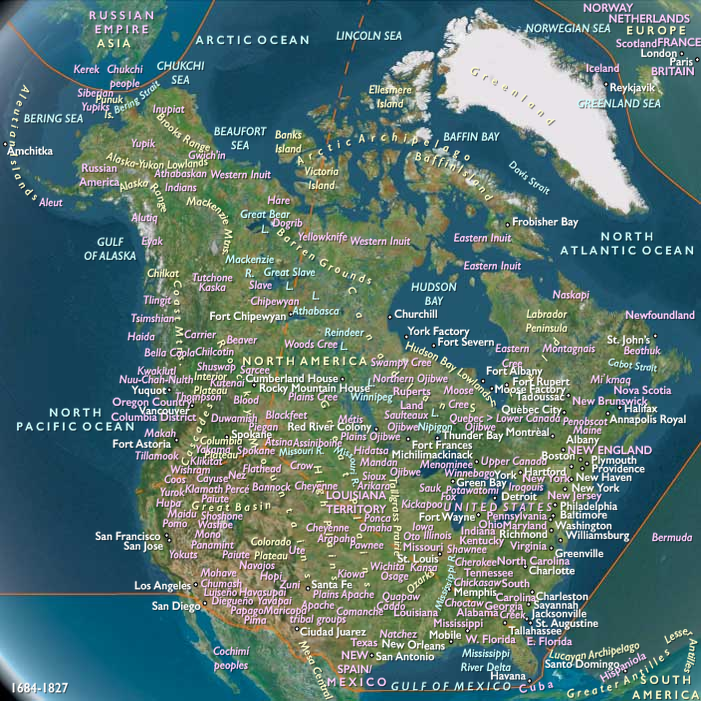
Northern North America
View →Subregions