
East Central Europe (1960–1971 CE): Gradual Liberalization, …
Years: 1960 - 1971
East Central Europe (1960–1971 CE): Gradual Liberalization, Economic Struggles, and Political Realignments
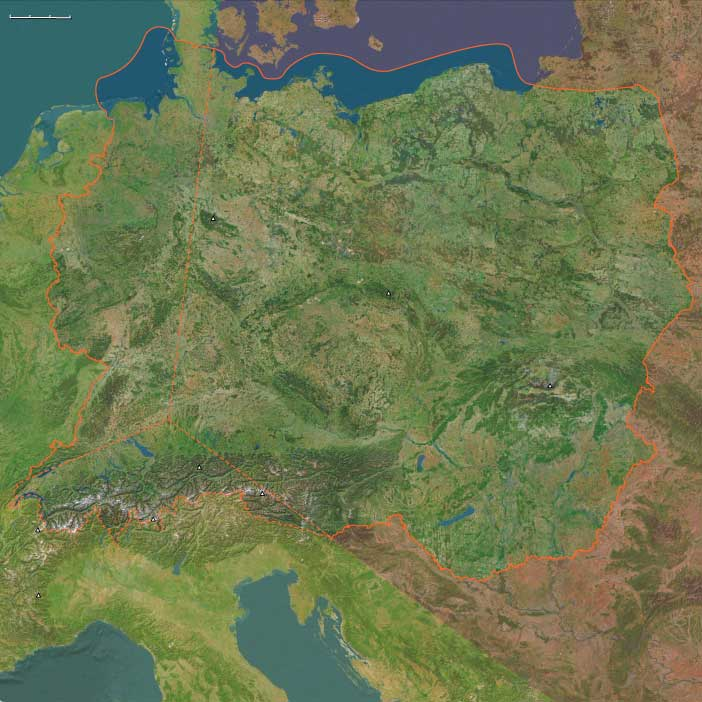
Between 1960 and 1971, East Central Europe—encompassing modern-day Poland, Czechia, Slovakia, Hungary, and eastern portions of Germany and Austria east of 10°E and north of the boundary line running from roughly 48.2°N at 10°E southeastward to the Austro-Slovenian border near 46.7°N, 15.4°E—experienced incremental political relaxation within a broader context of continuing Soviet control, economic stagnation, and societal tensions. This period, notably marked by the Prague Spring and subsequent Soviet invasion, profoundly shaped regional politics and Cold War dynamics.
Political and Military Developments
The Prague Spring and Soviet Invasion (1968)
-
In January 1968, Alexander Dubček became the leader of Czechoslovakia’s Communist Party, initiating a reformist movement known as the Prague Spring, which advocated "socialism with a human face," liberalizing political expression, loosening censorship, and promoting greater democratization.
-
The reforms alarmed the Soviet Union, prompting a military invasion by Warsaw Pact forces on August 20–21, 1968, crushing the movement, removing Dubček from power, and installing a pro-Soviet leadership under Gustáv Husák, who initiated a period of "normalization" marked by renewed authoritarian control.
East German Isolation and the Berlin Wall (1961)
-
In August 1961, the East German government erected the Berlin Wall, permanently dividing Berlin and symbolically cementing Cold War divisions. The wall significantly reduced East German emigration but became a global symbol of Soviet oppression.
Polish Political Turbulence and Gomulka’s Decline
-
Poland experienced growing social unrest, economic discontent, and political tension throughout the 1960s under Władysław Gomułka. Severe food shortages and unpopular economic policies triggered massive protests, notably the December 1970 uprising, violently suppressed, ultimately leading to Gomułka's ouster and replacement by Edward Gierek.
Hungary’s Continued Liberalization under Kádár
-
Hungary, under János Kádár, maintained a cautious path of gradual liberalization known as "Goulash Communism," emphasizing modest economic reforms, improved living standards, and limited cultural openness, avoiding direct confrontation with Soviet authority.
Economic and Technological Developments
Economic Struggles and Attempts at Reform
-
Regional economies struggled with chronic inefficiency, stagnation, and persistent shortages due to inflexible central planning. Czechoslovakia and Hungary attempted modest economic reforms aimed at decentralization and consumer-oriented production.
-
Poland’s economic deterioration culminated in widespread worker protests, reflecting widespread dissatisfaction with living conditions and state control.
Industrial Development and Infrastructure
-
Despite inefficiencies, significant investments continued in heavy industry, energy infrastructure, and urban development, notably expanding industrial centers in Poland’s Silesia, Hungary’s industrial belt, and East Germany’s manufacturing regions.
Cultural and Social Developments
Cultural Liberalization and Constraints
-
Before Soviet suppression, Czechoslovakia briefly experienced a cultural flowering during the Prague Spring, marked by flourishing literature, film, and intellectual debate.
-
Hungary’s controlled cultural liberalization permitted limited artistic freedom, contributing to a vibrant but still carefully monitored cultural landscape.
Religious Institutions and Passive Resistance
-
Religious organizations, particularly the Catholic Church in Poland and Hungary, continued as focal points of passive resistance against communist ideology, subtly shaping social dissent and preserving alternative cultural identities.
Settlement and Urban Development
Socialist Urban Expansion
-
East Central Europe saw continued state-driven urban expansion, creating standardized housing complexes and infrastructure improvements, reshaping urban spaces and daily life under socialist planning models.
Long-Term Consequences and Historical Significance
The era from 1960 to 1971 proved critical for East Central Europe. The Prague Spring’s suppression reaffirmed Soviet hegemony but exposed underlying tensions, while limited liberalization in Hungary and turmoil in Poland underscored persistent economic and social pressures. These events significantly shaped regional identity and resistance strategies, laying the foundations for future political realignments and ultimately contributing to the late-century collapse of Soviet control.
People
Groups
- Christians, Roman Catholic
- Saxony, German State of
- Bavaria, Free State of
- Union of Soviet Socialist Republics (USSR), or Soviet Union
- Saxony-Anhalt, German State of
- Czechoslovakia (restored)
- Hungary, Republic of
- Germany, East (German Democratic Republic)
- Germany, West (Federal Republic of Germany)
- Bavaria, (German Federal) Free State of
- Poland, People's Republic of Poland, or Polish People's Republic
- Austria, (Second) Republic of
Topics
Subjects
Regions
Subregions
Years: 1960 - 1971
People
Groups
- Christians, Roman Catholic
- Saxony, German State of
- Bavaria, Free State of
- Union of Soviet Socialist Republics (USSR), or Soviet Union
- Saxony-Anhalt, German State of
- Czechoslovakia (restored)
- Hungary, Republic of
- Germany, East (German Democratic Republic)
- Germany, West (Federal Republic of Germany)
- Bavaria, (German Federal) Free State of
- Poland, People's Republic of Poland, or Polish People's Republic
- Austria, (Second) Republic of
Topics
Subjects
Regions
Subregions