
East Central Europe (1972–1983 CE): Late Cold …
Years: 1972 - 1983
East Central Europe (1972–1983 CE): Late Cold War Stability, Economic Stagnation, and Growing Dissent
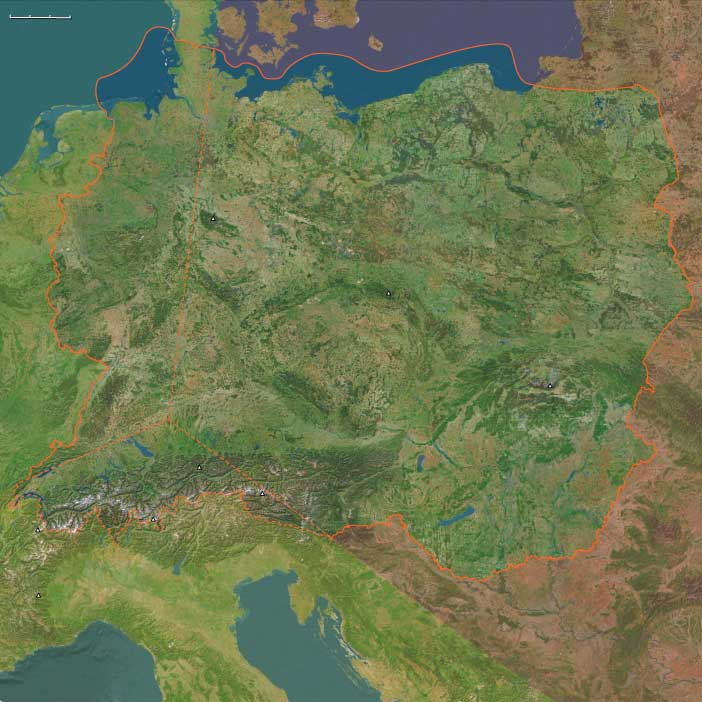
Between 1972 and 1983, East Central Europe—comprising Poland, Czechia, Slovakia, Hungary, and eastern regions of Germany and Austria east of 10°E and northeast of the defined boundary—remained firmly within the Soviet-led Eastern Bloc. This era was marked by relative political stability under entrenched Communist regimes, persistent economic stagnation, increasingly overt social dissatisfaction, and notable movements of dissent, particularly in Poland.
Political and Military Developments
Entrenched Communist Regimes
-
East Germany (GDR) under Erich Honecker (1971–1989) maintained rigid political control, heavily reliant on the Stasi secret police.
-
Czechoslovakia under Gustáv Husák's "normalization" policies maintained tight control following the suppressed Prague Spring, limiting political dissent but fueling passive resistance and cultural disillusionment.
-
Hungary under János Kádár's more moderate "Goulash Communism" cautiously implemented minor economic reforms and increased consumer goods availability, maintaining relative political calm.
Poland: Rising Opposition and Martial Law
-
1978: Polish Cardinal Karol Wojtyła elected Pope John Paul II, profoundly influencing national morale and Catholic identity.
-
1980–1981: The emergence of Solidarity (Solidarność), the first independent trade union behind the Iron Curtain, led by Lech Wałęsa, rapidly gathered massive popular support, demanding economic reforms, workers’ rights, and political liberalization.
-
December 1981: Polish Communist leader General Wojciech Jaruzelski imposed martial law, outlawing Solidarity, arresting thousands, and imposing strict military governance, attempting to restore Communist authority.
Cold War Tensions and NATO-Warsaw Pact Relations
-
Amid escalating Cold War tensions between the United States and the USSR, East Central European countries remained key frontline Warsaw Pact states, hosting significant Soviet military forces, especially in East Germany and Czechoslovakia.
Economic and Technological Developments
Economic Stagnation and Shortages
-
Socialist command economies in East Germany, Poland, Hungary, and Czechoslovakia faced chronic inefficiency, shortages of consumer goods, poor productivity, and growing public dissatisfaction.
-
Poland experienced severe economic crises characterized by soaring inflation, food shortages, rationing, and widespread strikes throughout the early 1980s, fueling Solidarity’s growth.
Limited Technological Advancement
-
Centralized planning and isolation from Western technological innovations hindered technological modernization, despite some limited advances in industrial infrastructure and energy production (especially nuclear power plants in East Germany and Czechoslovakia).
Cultural and Artistic Developments
Cultural Controls and Dissent
-
Communist authorities maintained tight control over cultural production, with censorship and Socialist Realism predominating, particularly in East Germany and Czechoslovakia.
-
Nevertheless, underground literary circles, samizdat (self-published) literature, and unofficial artistic movements thrived discreetly, notably in Poland and Hungary, fostering intellectual dissent and social critique.
Influence of Pope John Paul II
-
John Paul II’s visits to Poland in 1979 and 1983 profoundly energized Polish society, fueling cultural resilience and anti-regime sentiments, significantly contributing to the legitimacy and momentum of the Solidarity movement.
Settlement and Urban Development
Socialist Urban Planning
-
Urban development continued along established socialist planning principles, with large-scale standardized housing blocks (Plattenbau), notably in East Berlin, Warsaw, Budapest, Bratislava, and Prague, addressing chronic housing shortages yet often criticized for impersonal architectural uniformity.
Social and Religious Developments
Growth of Religious and Social Dissent
-
Religion became a powerful source of opposition, especially in predominantly Catholic Poland, where the Church openly supported societal dissent against Communist rule.
-
In other East Central European countries, religious organizations subtly offered spaces for social cohesion and quiet resistance to regime-imposed atheism.
Long-Term Consequences and Historical Significance
The era 1972–1983 proved pivotal in East Central Europe, as entrenched yet increasingly fragile Communist regimes confronted growing social dissatisfaction, economic stagnation, and organized dissent. Events in Poland, notably the rise of Solidarity and the imposition of martial law, symbolized a critical turning point, undermining Communist legitimacy and foreshadowing broader systemic crises. These developments laid critical foundations for the dramatic political transformations and revolutions that unfolded across East Central Europe in the late 1980s and early 1990s.
People
Groups
- Christians, Roman Catholic
- Saxony, German State of
- Bavaria, Free State of
- Union of Soviet Socialist Republics (USSR), or Soviet Union
- Saxony-Anhalt, German State of
- Czechoslovakia (restored)
- Hungary, Republic of
- Germany, East (German Democratic Republic)
- Germany, West (Federal Republic of Germany)
- Bavaria, (German Federal) Free State of
- Poland, People's Republic of Poland, or Polish People's Republic
- Austria, (Second) Republic of
Topics
Subjects
Regions
Subregions
Years: 1972 - 1983
People
Groups
- Christians, Roman Catholic
- Saxony, German State of
- Bavaria, Free State of
- Union of Soviet Socialist Republics (USSR), or Soviet Union
- Saxony-Anhalt, German State of
- Czechoslovakia (restored)
- Hungary, Republic of
- Germany, East (German Democratic Republic)
- Germany, West (Federal Republic of Germany)
- Bavaria, (German Federal) Free State of
- Poland, People's Republic of Poland, or Polish People's Republic
- Austria, (Second) Republic of
Topics
Subjects
Regions
Subregions