
East Central Europe (1984–1995 CE): Collapse of …
Years: 1984 - 1995
East Central Europe (1984–1995 CE): Collapse of Communism, Democratic Transition, and New National Realities
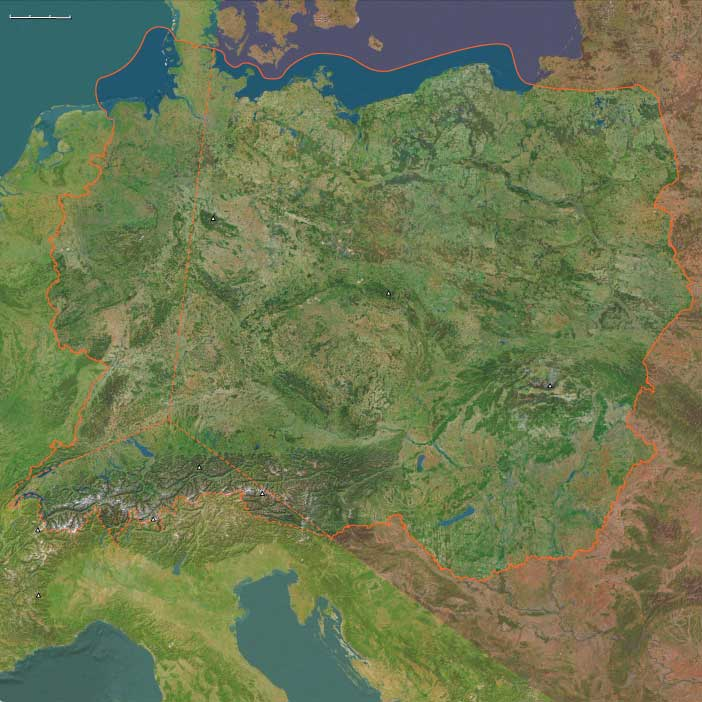
Between 1984 and 1995, East Central Europe—encompassing modern-day Poland, Czechia, Slovakia, Hungary, and the eastern parts of Germany and Austria east of 10°E and northeast of the defined boundary—underwent monumental transformations marked by the collapse of Communist regimes, rapid democratization, economic liberalization, and profound geopolitical realignment. The fall of the Berlin Wall, the reunification of Germany, and the peaceful dissolution of Czechoslovakia reshaped the political and cultural landscape, decisively ending the Cold War division of Europe.
Political and Military Developments
Dissolution of Communist Regimes (1989–1990)
-
East Germany (1989):
-
Mass demonstrations, notably in Leipzig and East Berlin, culminated in the opening of the Berlin Wall on November 9, 1989. This pivotal event symbolized the collapse of Eastern Bloc authority.
-
East Germany dissolved swiftly, paving the way for formal German reunification on October 3, 1990.
-
-
Czechoslovakia (Velvet Revolution, 1989):
-
Peaceful demonstrations in Prague and Bratislava led by figures such as Václav Havel dismantled the Communist regime in a nonviolent revolution.
-
Democratic governance quickly restored civil liberties and initiated extensive political reforms.
-
-
Poland (1989):
-
Following prolonged negotiations between the Communist government and Solidarity, semi-free elections in June 1989 produced a landslide victory for the opposition. Tadeusz Mazowiecki became the region's first non-Communist prime minister in over 40 years, setting a precedent for democratic transitions across Eastern Europe.
-
-
Hungary (1989–1990):
-
Hungary peacefully transitioned from Communist rule to democracy, holding free parliamentary elections in 1990. It became a regional model for economic liberalization and stable democratic reform.
-
Dissolution and Emergence of New States
-
German Reunification (1990):
-
The absorption of the German Democratic Republic (East Germany) into the Federal Republic of Germany (West Germany) in October 1990 decisively ended Cold War-era divisions, reshaping geopolitical realities.
-
-
Dissolution of Czechoslovakia (1993):
-
Peacefully splitting into the Czech Republic and Slovakia on January 1, 1993 ("Velvet Divorce"), these states quickly stabilized and established democratic political structures and market economies.
-
Military and Strategic Realignments
-
The withdrawal of Soviet military forces from East Germany, Poland, Hungary, and Czechoslovakia significantly altered regional security structures.
-
These nations subsequently sought closer integration with Western institutions, including NATO and the European Union.
Economic and Technological Developments
Economic Liberalization and Transition to Market Economies
-
East Central Europe experienced a challenging shift from centrally planned economies to market-oriented systems, marked by rapid privatization, deregulation, and influxes of Western investment, particularly noticeable in Hungary, Poland, and Czechia.
-
While economic reforms initially caused significant hardship, rising unemployment, and social dislocation, they laid crucial foundations for future economic growth.
Technological Integration and Modernization
-
Rapid adoption of Western technologies significantly improved communication infrastructure, transportation networks, and consumer markets, facilitating deeper economic integration with Western Europe.
-
Advances in information technology and telecommunications significantly increased connectivity and productivity, underpinning economic and social modernization.
Cultural and Artistic Developments
Flourishing of Cultural Expression and Media Freedom
-
Following decades of censorship, the media, literature, and arts flourished, embracing previously banned themes such as political critique, historical memory, and social reflection.
-
Cultural revival, particularly in literature and cinema (for example, Czech filmmaker Miloš Forman’s international acclaim), symbolized renewed creativity and freedom of expression.
Reassertion of National and Regional Identities
-
Cultural revival reinforced national identity, notably in Slovakia and the Czech Republic, emphasizing distinct historical, linguistic, and cultural traditions, ultimately supporting their peaceful separation.
Settlement and Urban Development
Post-Communist Urban Renewal
-
Major cities such as Berlin, Prague, Warsaw, Budapest, and Bratislava underwent significant transformations, including restoration of historical architecture, removal or repurposing of Communist-era monuments, and revitalization of public spaces.
-
Urban redevelopment combined historic preservation with modern infrastructure investment, significantly reshaping cityscapes.
Social and Religious Developments
Religious and Social Liberalization
-
Churches regained substantial influence, particularly the Roman Catholic Church in Poland, actively shaping national identity and policy.
-
Increased freedoms spurred rapid social changes, including more open discussions on civil liberties, social equity, and historical reconciliation.
Social Challenges and Population Movements
-
Socioeconomic transition caused significant population mobility, with migrations both within and beyond the region, as people pursued better economic opportunities or fled instability.
-
Urban areas, especially national capitals, expanded considerably, becoming vibrant hubs of economic and social innovation.
Long-Term Consequences and Historical Significance
The era 1984–1995 marked a decisive turning point for East Central Europe, characterized by the rapid and mostly peaceful collapse of Communist regimes, the triumph of democratic movements, and the reorientation of political, economic, and cultural life towards integration with Western Europe. These dramatic changes ended the Cold War division of the continent, permanently transforming the region’s political geography, economic structures, and cultural landscapes, and laying robust foundations for future European integration and stability into the 21st century.
People
Groups
- Christians, Roman Catholic
- Union of Soviet Socialist Republics (USSR), or Soviet Union
- Germany, West (Federal Republic of Germany)
- Hungary, Republic of
- Germany, East (German Democratic Republic)
- Poland, People's Republic of Poland, or Polish People's Republic
- Austria, (Second) Republic of
- Czechoslovak Socialist Republic
- Czech and Slovak Federal Republic
- Germany, Federal Republic of
- Russian Federation
- Poland, Republic of
- Slovakia (Second Slovak Republic)
- Czech Republic
Topics
Subjects
Regions
Subregions
Years: 1984 - 1995
People
Groups
- Christians, Roman Catholic
- Union of Soviet Socialist Republics (USSR), or Soviet Union
- Germany, West (Federal Republic of Germany)
- Hungary, Republic of
- Germany, East (German Democratic Republic)
- Poland, People's Republic of Poland, or Polish People's Republic
- Austria, (Second) Republic of
- Czechoslovak Socialist Republic
- Czech and Slovak Federal Republic
- Germany, Federal Republic of
- Russian Federation
- Poland, Republic of
- Slovakia (Second Slovak Republic)
- Czech Republic
Topics
Subjects
Regions
Subregions