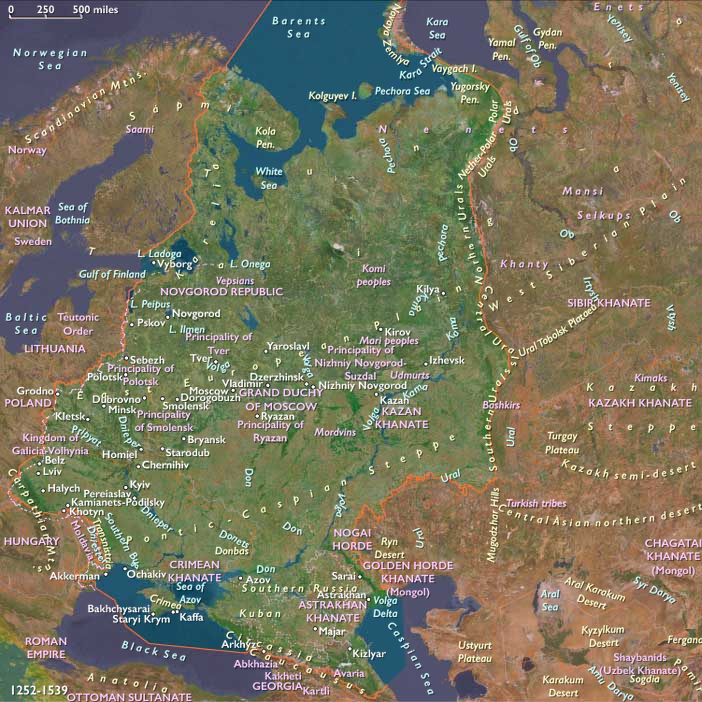
East Europe (1396–1407 CE): Muscovite Consolidation and…
1396 CE to 1407 CE
East Europe (1396–1407 CE): Muscovite Consolidation and Regional Stabilization
Political and Military Developments
Stabilization after Mongol Decline
Between 1396 and 1407 CE, East Europe experienced relative stabilization following the collapse of Golden Horde authority. The absence of Mongol oversight allowed regional powers, particularly Muscovy, to further solidify their political control and administrative frameworks.
Muscovite Territorial and Administrative Consolidation
Moscow strengthened its hold over the united Grand Principality of Vladimir, enhancing central governance and integrating various appanages under firm Muscovite rule. This consolidation solidified Moscow's role as the political and administrative center of East Europe.
Management of Ethnic Diversity
Ethnic groups such as the Mari, Mordvins, Udmurts, Komi, and Vepsians continued their integration into Muscovite structures. Cooperative governance mechanisms promoted greater political and social cohesion across diverse communities.
Economic and Technological Developments
Economic Growth and Autonomy
Muscovy, along with other cities like Novgorod and Tver, experienced sustained economic growth, bolstered by stable internal trade networks and sustained participation in broader Eurasian commerce. Increasing economic autonomy further strengthened regional economies.
Advancement of Military Capabilities
Continued refinement of military tactics and fortification technologies enhanced regional security and defense capabilities, helping Muscovy maintain and expand its territorial integrity and influence.
Cultural and Artistic Developments
Cultural Flourishing and Innovation
The rich fusion of Rus', Mongol, and various ethnic cultural traditions continued to yield unique artistic and architectural developments. Religious and secular arts further evolved, contributing significantly to East Europe's distinct cultural identity.
Sustained Intellectual and Literary Production
Intellectual activity remained robust, with chroniclers and scholars actively documenting historical, religious, and cultural developments, thereby reinforcing and preserving regional heritage and continuity.
Settlement Patterns and Urban Development
Expansion and Urban Stability
Cities, notably Moscow, expanded steadily, supporting growing populations through infrastructure improvements and increasingly sophisticated urban planning and administrative capabilities.
Strengthened Defensive Infrastructure
Urban fortifications and defense mechanisms were further enhanced, strategically protecting cities against internal dissension and external threats.
Social and Religious Developments
Social Cohesion and Ethnic Integration
Social structures evolved to better integrate diverse ethnic communities, reinforcing Muscovy's administrative cohesion and aristocratic stability. The increasingly complex social hierarchy accommodated the diverse composition of the regional population.
Orthodox Church Influence
The Orthodox Church continued its influential role, shaping education, cultural norms, and community cohesion. It played a crucial role in preserving societal stability and cultural continuity.
Long-Term Consequences and Historical Significance
The era from 1396 to 1407 CE marked a critical period of consolidation and stabilization under Muscovite rule, following the definitive end of Mongol dominance. These developments significantly influenced East Europe's path toward a centralized Russian state and a culturally diverse identity.
Groups
Commodities
Subjects
Regions
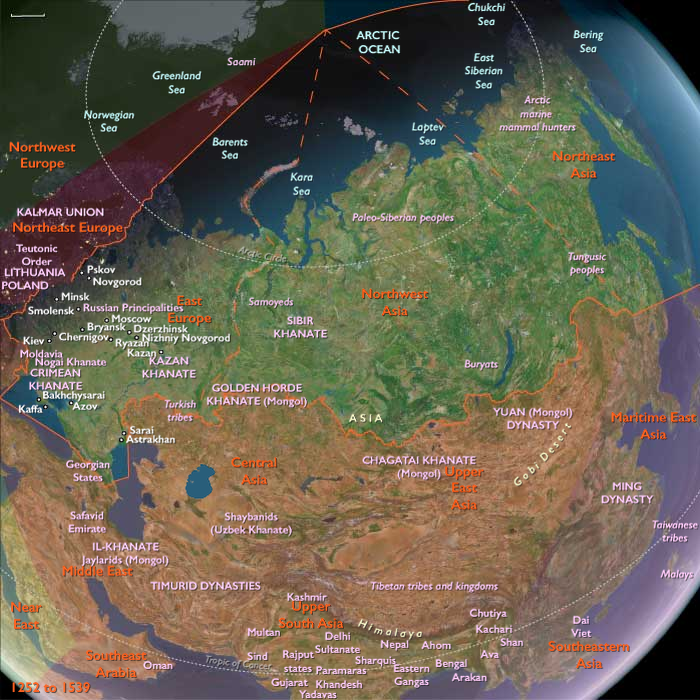
Northeastern Eurasia
View →Subregions