
East Europe (1756–1767 CE): Strengthened Imperial Influence…
1756 CE to 1767 CE
East Europe (1756–1767 CE): Strengthened Imperial Influence and Enlightenment Reforms
Political and Military Developments
Imperial Consolidation
From 1756 to 1767 CE, Russia further consolidated its imperial territories, strengthening central governance and streamlining administrative structures. This period saw continued efforts to manage and integrate diverse regions effectively into the empire.
Military Achievements and Reforms
Russia significantly enhanced its military capabilities, reflecting the continued emphasis on modernization and strategic readiness. Military reforms improved organization, training, and tactics, reinforcing Russia’s dominance in regional affairs.
Active Diplomacy and European Influence
Russia maintained active diplomacy, expanding its influence in European affairs through strategic alliances and proactive engagement in continental politics. These diplomatic efforts elevated Russia’s international standing significantly.
Economic and Technological Developments
Continued Economic Growth
Economic expansion continued robustly, driven by sustained industrialization, agricultural improvements, and trade activities. Increased production in mining, manufacturing, and agriculture further solidified economic stability and prosperity.
Infrastructure Enhancement
Continued investments in infrastructure, particularly transportation networks and urban developments, significantly improved administrative efficiency and economic productivity. Enhanced fortifications also strengthened regional security.
Cultural and Artistic Developments
Vibrant Cultural Patronage
Cultural life flourished under the continued patronage of the elite, supporting impressive advancements in architecture, art, and literature. European artistic and intellectual influences further enriched Russia's cultural landscape.
Expansion of Intellectual Life
Intellectual and academic activities continued to expand, with the establishment and growth of educational institutions. Scholarly exchanges with Europe further stimulated intellectual development and cultural sophistication.
Settlement Patterns and Urban Development
Urban Growth and Improvement
Major cities, notably Saint Petersburg and Moscow, experienced ongoing growth and modernization, characterized by strategic urban planning and infrastructure enhancements. These improvements elevated urban living standards and economic vitality.
Enhanced Security and Fortifications
Strategic fortification enhancements persisted, ensuring robust defenses for urban centers and key strategic locations. These security improvements protected against external threats and supported stable regional development.
Social and Religious Developments
Enhanced Social Integration
Social cohesion continued to strengthen, bolstered by progressive integration policies that accommodated diverse ethnic and regional groups. Enlightenment-inspired reforms fostered stability and societal harmony.
Evolving Church-State Relations
Relations between the Orthodox Church and the Russian state continued evolving, reflecting ongoing efforts to integrate religious institutions closely with state objectives. These adjustments significantly reshaped the societal role and influence of the Church.
Long-Term Consequences and Historical Significance
The period from 1756 to 1767 CE marked continued imperial consolidation, military enhancement, and cultural advancement. These developments significantly strengthened Russia’s geopolitical influence, laying critical foundations for sustained growth, stability, and international prominence.
People
Commodities
Regions
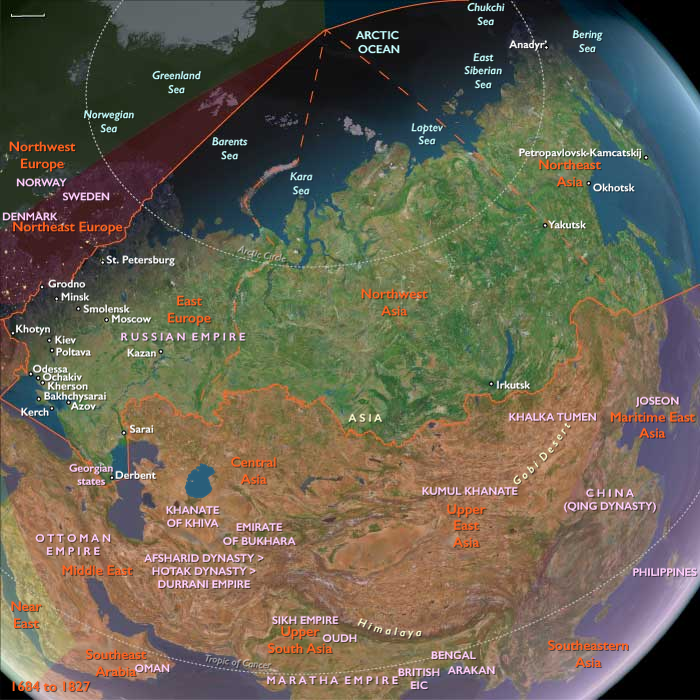
Northeastern Eurasia
View →Subregions
