
East Europe (1840–1851 CE): Reforms, Nationalism, and …
Years: 1840 - 1851
East Europe (1840–1851 CE): Reforms, Nationalism, and Geopolitical Challenges
Political and Military Developments
Autocratic Consolidation under Nicholas I
During this period, Tsar Nicholas I continued to strengthen autocratic control through centralized administrative reforms and expanded censorship. His regime emphasized stability and order, increasingly repressing nationalist movements and liberal ideologies throughout Eastern Europe.
Revolutions of 1848
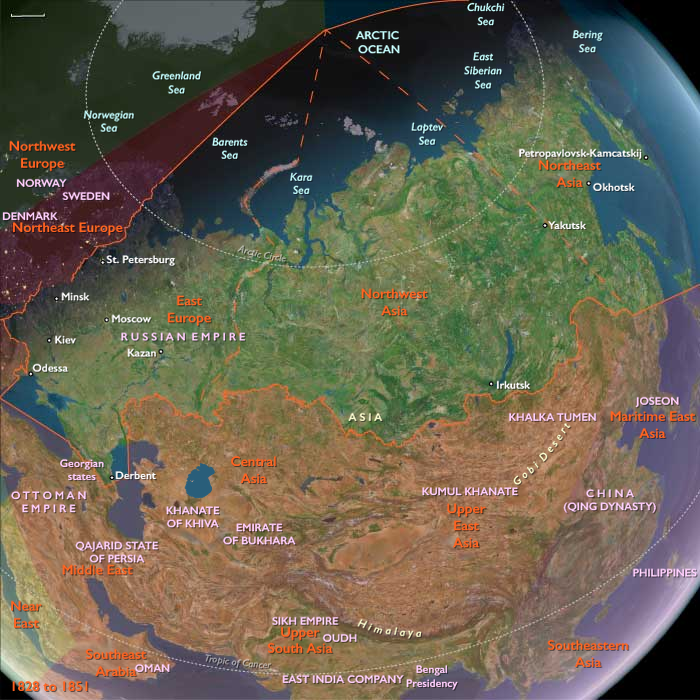
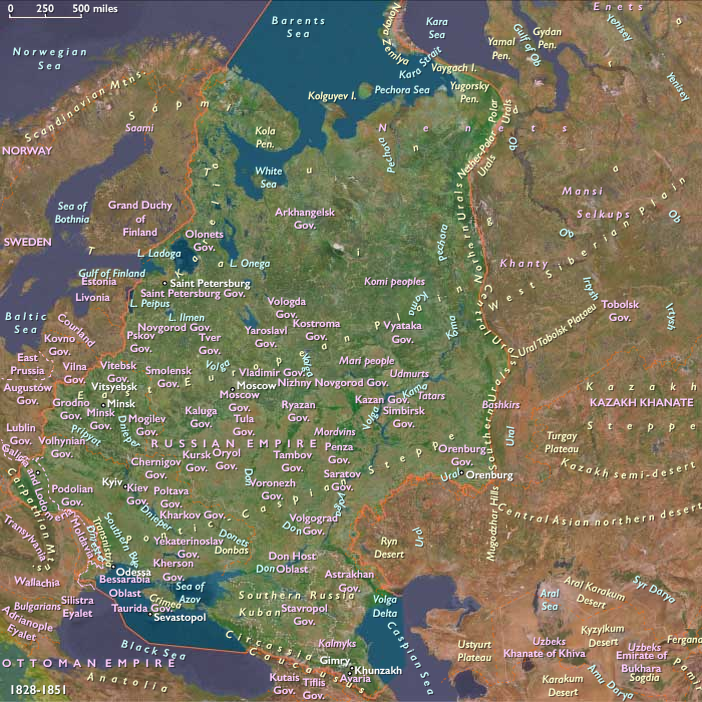
The revolutionary wave of 1848 significantly impacted Eastern Europe, with nationalist uprisings erupting in Hungary, Poland, and various Slavic territories. While initial momentum posed considerable threats, Nicholas I's forces intervened decisively, particularly in Hungary, to restore monarchical authority, effectively reinforcing Russian dominance in regional affairs.
Crimean War Prelude
Tensions increased between Russia and the Ottoman Empire due to disputes over protection rights for Orthodox Christians in Ottoman territories. Diplomatic and military preparations during this era foreshadowed the forthcoming Crimean War (1853–1856).
Economic and Technological Developments
Steady Industrial Progress
Russia experienced sustained industrial growth, especially in iron and textile production. Urban centers like Saint Petersburg and Moscow continued to expand industrially, reflecting broader European technological influences and economic integration.
Transportation and Communication Advances
Significant advancements were made in transportation, notably the expansion of railway networks. The Moscow–Saint Petersburg Railway opened in 1851, markedly enhancing trade, communication, and military logistics.
Cultural and Artistic Developments
Literary and Intellectual Flourishing
Russian literature entered a vibrant era, highlighted by prominent literary figures such as Fyodor Dostoevsky and Ivan Turgenev, whose works reflected profound societal tensions and evolving national consciousness.
Expansion of Educational Institutions
Educational reforms under Nicholas I promoted scientific and technical studies, although intellectual life remained constrained by state censorship. Nonetheless, universities expanded, significantly enhancing Russia’s educational infrastructure.
Settlement Patterns and Urban Development
Continued Urban Expansion
Major urban areas experienced ongoing growth and modernization, with urban planning improving living conditions, sanitation, and infrastructure. Strategic enhancements to administrative centers strengthened economic resilience and governance effectiveness.
Strengthened Border Fortifications
Investments in fortifications along Russia’s western borders continued, aimed at bolstering defenses against potential military threats from Europe and the Ottoman territories.
Social and Religious Developments
Increased Social Regulation
Nicholas I's administration heightened control over social structures, emphasizing obedience, discipline, and loyalty to the state. Social reforms often prioritized stability and integration, though with limited concessions to broader demands for liberalization.
Church-State Alignment
The alignment between the state and the Russian Orthodox Church further solidified, reinforcing the church's role in promoting state interests and social cohesion, particularly in suppressing dissent and nationalist agitation.
Long-Term Consequences and Historical Significance
The period from 1840 to 1851 CE was marked by significant geopolitical and internal challenges, highlighted by revolutionary uprisings and growing international tensions. Nicholas I's autocratic consolidation and decisive responses to the Revolutions of 1848 preserved Russia’s dominant geopolitical status while setting the stage for major conflicts, notably the Crimean War. The era's developments shaped the trajectory of Eastern Europe, profoundly influencing subsequent social, political, and military dynamics.
People
Groups
Topics
Commodoties
Subjects
Regions
Subregions
Years: 1840 - 1851
People
Groups
Topics
Commodoties
Subjects
Regions
Subregions