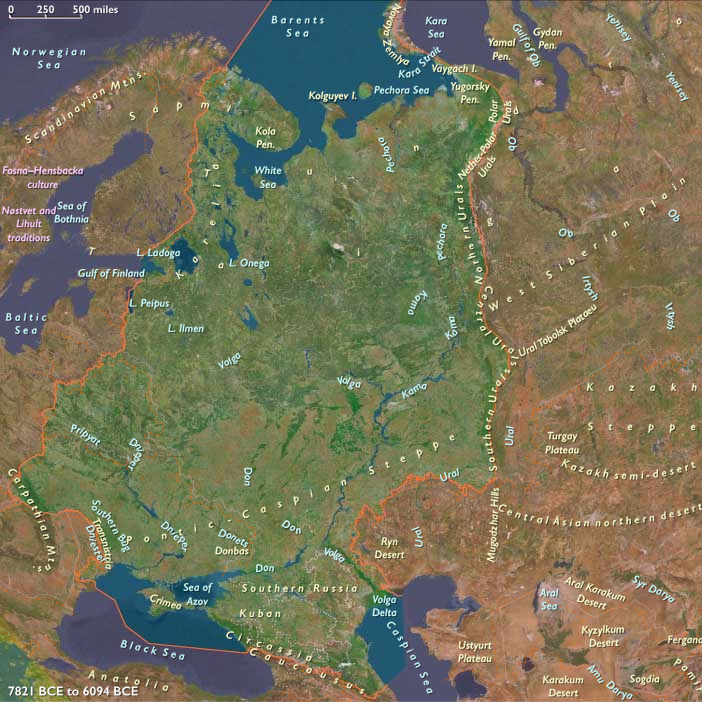
East Europe (7,821 – 6,094 BCE) Early…
7821 BCE to 6094 BCE
East Europe (7,821 – 6,094 BCE) Early Holocene — Taiga Mesolithic, First Pottery, and Riverine Villages
Geographic and Environmental Context
East Europe includes Belarus, Ukraine, and European Russia west of the Urals (including the forest, forest-steppe, and steppe zones and the Russian republics west of the Urals).
-
Anchors: Upper Volga–Oka forest rivers, Dnieper rapids/side channels, Upper Dvina lake belts, Pripet marshes.
Climate & Environmental Shifts
-
Holocene thermal optimum: warmer, wetter; conifer–mixed forests expanded; river discharge stabilized.
Subsistence & Settlement
-
Semi-sedentary riverine villages with pit-houses and storage; fishing (sturgeon, pike), hunting elk/boar, gathering hazelnut/berries.
-
Net-weirs and fish fences appear; wetland waterfowl collecting seasonal peaks.
Technology & Material Culture
-
Among the earliest hunter-gatherer pottery (Upper Volga–Oka, 7th millennium BCE): fiber/grit-tempered jars for boiling fish/meat and storage.
-
Ground-stone adzes/axes, bone harpoons and fish gaffs; early nets and floats.
Movement & Interaction Corridors
-
Canoe travel along Volga–Oka–Dnieper–Dvina linked resource zones and pottery horizons; portages stitched watersheds.
Cultural & Symbolic Expressions
-
Cemeteries with ochre and grave goods; riverbank ritual places appear; carved antler/bone figurines.
Environmental Adaptation & Resilience
-
Storage ceramics + salmon/sturgeon weirs enabled overwintering; multi-niche rounds (river–lake–forest) balanced risk.
Transition
Toward 6,094 BCE, durable taiga fishing villages anchored Holocene lifeways and ceramic traditions.
Topics
Subjects
Regions

Northeastern Eurasia
View →Subregions