
East Europe (532–675 CE): Aftermath of Hunnic …
Years: 532 - 675
East Europe (532–675 CE): Aftermath of Hunnic Rule and Emergence of Slavic Dominance
Political and Military Developments
Fragmentation after Hunnic Decline
The period from 532 to 675 CE marked the aftermath of Hunnic domination, characterized by political fragmentation and the emergence of new regional powers. With the collapse of centralized Hunnic authority, various tribes competed for dominance in East Europe, significantly altering political structures.
Emergence and Expansion of Slavic Tribes
This era saw the rapid rise of the Slavic peoples, who expanded into territories previously controlled by Goths and Huns. The Slavs developed organized tribal confederations, becoming the dominant demographic and political presence in East Europe, particularly in modern-day Ukraine, Belarus, and western Russia.
Avar and Bulgarian Incursions
Nomadic groups such as the Avars and early Bulgars entered East Europe, exerting significant pressure on Slavic communities and contributing to ongoing shifts in territorial control and alliances.
Economic and Technological Developments
Renewal and Reorientation of Trade Routes
Despite political fragmentation, trade routes gradually stabilized and expanded, reflecting the growing economic activity of Slavic tribes and their neighbors. New regional trade networks formed, emphasizing river-based and overland routes connecting East Europe to the Byzantine Empire and Western Europe.
Continued Military Adaptations
Slavic, Avar, and Bulgar warfare tactics evolved, drawing from Hunnic and Byzantine influences. Cavalry and infantry formations adapted new tactics and weaponry, reflecting ongoing technological and strategic innovations.
Cultural and Artistic Developments
Rise of Early Slavic Culture
Early Slavic culture flourished, characterized by distinct pottery, metalwork, and ornamentation styles that blended local traditions with influences from neighboring nomadic and Byzantine cultures. Slavic settlements produced unique artifacts demonstrating both aesthetic and functional craftsmanship.
Avar and Bulgar Cultural Influences
The interaction between Slavic, Avar, and Bulgar peoples contributed to significant cultural exchange. Artistic styles, burial practices, and material culture increasingly reflected this synthesis, enriching the region's cultural diversity.
Settlement Patterns and Urban Development
Expansion of Slavic Settlements
Slavic communities significantly expanded across East Europe, developing extensive agricultural settlements and small fortified towns (gorodishche). These settlements were strategically placed along river systems and fertile plains, facilitating growth and community resilience.
Fortifications and Defensive Structures
The presence of Avars and Bulgars led to increased fortification and defensive considerations in Slavic settlement patterns. Strategic defensive structures became prominent, marking significant developments in regional urban planning and defensive architecture.
Social and Religious Developments
Evolving Slavic Social Structures
Slavic society became increasingly organized into tribal confederations and chiefdoms, marked by emerging social hierarchies based on land ownership, agricultural productivity, and martial prowess.
Diverse Religious Practices
Religious life in East Europe continued to diversify, characterized by traditional Slavic pagan beliefs, alongside influences from neighboring nomadic and Christian traditions. Syncretic religious practices and rituals reflected the varied cultural interactions within the region.
Long-Term Consequences and Historical Significance
The period from 532 to 675 CE was pivotal in shaping East Europe's medieval trajectory, marked by the rise of Slavic populations and cultures, reshaped political alliances, and sustained interactions with nomadic groups. These developments laid foundational social, cultural, and political patterns influential for centuries to come.
Groups
- Polytheism (“paganism”)
- Goths (East Germanic tribe)
- Crimean Goths (East Germanic tribe)
- Bulgars
- Hunnic Empire
- Slavs, East
- Christianity, Chalcedonian
- Avars, Eurasian
- Antes (Slavic tribal confederation)
- Roman Empire, Eastern: Justinian dynasty
- Roman Empire, Eastern: Non-dynastic
- Roman Empire, Eastern: Heraclian dynasty
- Bulgaria, “the Old Great “, (Onogur) Khaganate of
- Bulgar Principalities
Topics
Commodoties
- Weapons
- Hides and feathers
- Gem materials
- Domestic animals
- Grains and produce
- Ceramics
- Strategic metals
- Slaves
- Sweeteners
- Beer, wine, and spirits
Subjects
Regions
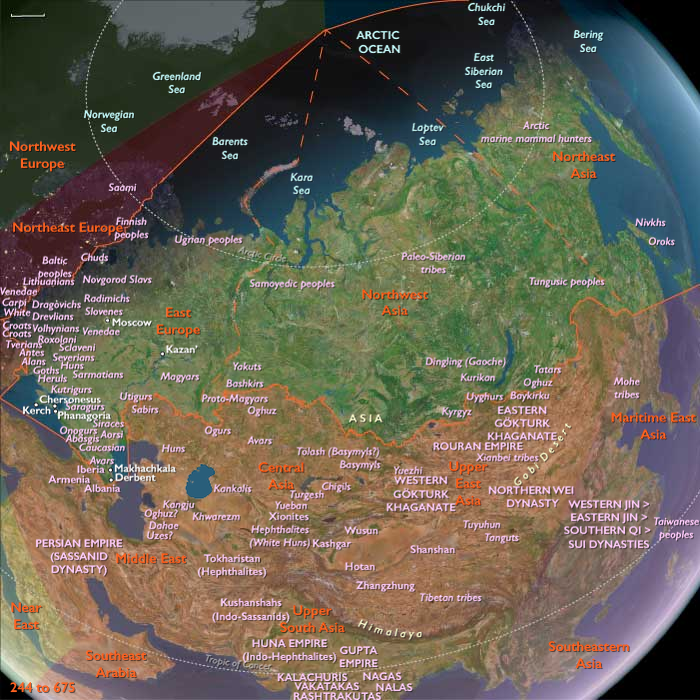
Subregions
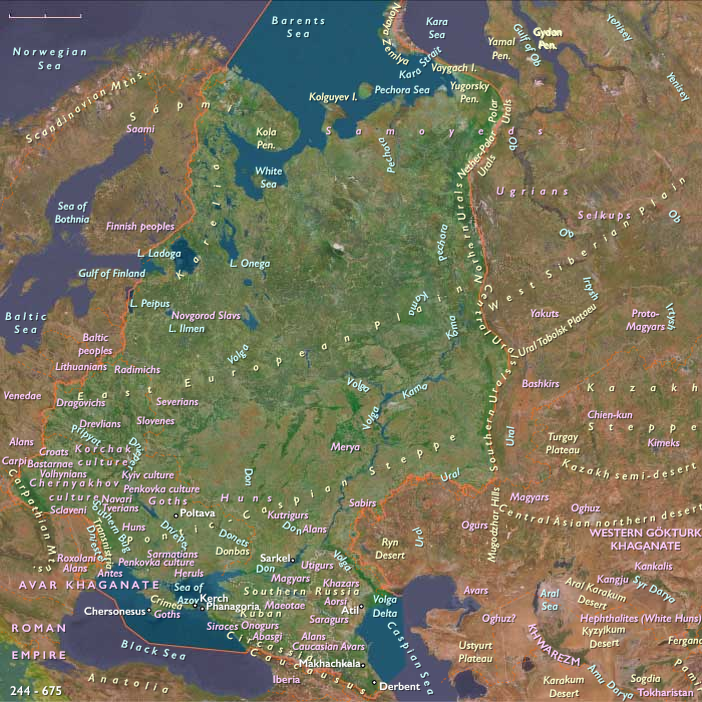
Related Events
Showing 10 events out of 58080 total
Years: 532 - 675
Groups
- Polytheism (“paganism”)
- Goths (East Germanic tribe)
- Crimean Goths (East Germanic tribe)
- Bulgars
- Hunnic Empire
- Slavs, East
- Christianity, Chalcedonian
- Avars, Eurasian
- Antes (Slavic tribal confederation)
- Roman Empire, Eastern: Justinian dynasty
- Roman Empire, Eastern: Non-dynastic
- Roman Empire, Eastern: Heraclian dynasty
- Bulgaria, “the Old Great “, (Onogur) Khaganate of
- Bulgar Principalities
Topics
Commodoties
- Weapons
- Hides and feathers
- Gem materials
- Domestic animals
- Grains and produce
- Ceramics
- Strategic metals
- Slaves
- Sweeteners
- Beer, wine, and spirits
Subjects
Regions
Subregions