Event
East Melanesia (1540–1683 CE): First European Encounters…
East Melanesia (1540–1683 CE): First European Encounters within an Enduring Island World
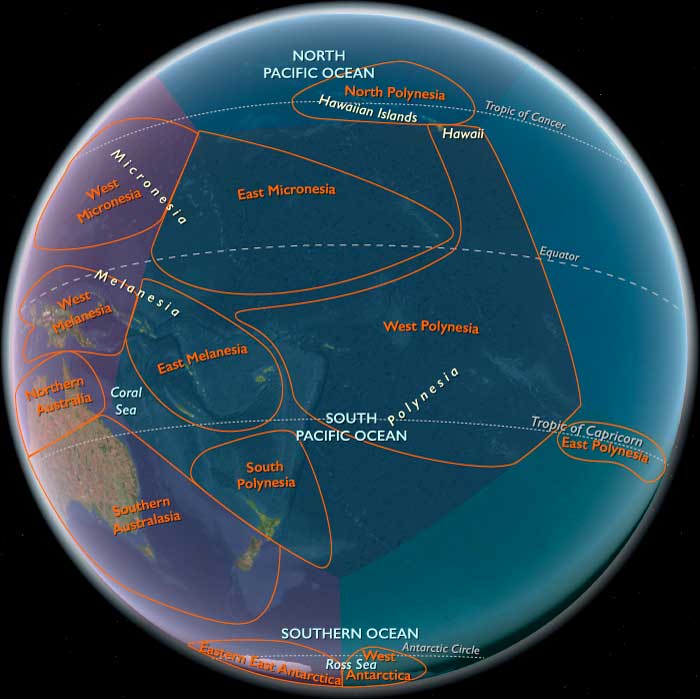
Geographic Parameters
The subregion remained defined by its volcanic islands, forested mountains, cultivated valleys, mangrove estuaries, reef lagoons, and maritime passages. Most communities continued to live beyond any regular contact with outsiders.
Environmental Continuity
Horticulture, arboriculture, fishing, and customary exchange continued to support island populations. Cyclones and droughts periodically disrupted local production, while volcanic eruptions and earthquakes affected particular islands.
Recovery remained organized through household labor, kinship support, inter-island exchange, and the replanting of diverse gardens. There was no regional environmental transformation associated with the first European voyages.
First European Maritime Encounters
The principal new historical system of the age was the appearance of European exploratory shipping. Spanish expeditions entered the Solomon Islands during the sixteenth century and reached Vanuatu in the early seventeenth. Dutch navigators later approached parts of Fiji and the wider southwest Pacific.
These encounters were rare, brief, and geographically limited. Most East Melanesians never saw a European ship during the age. Visitors lacked permanent settlements, reliable supply systems, and sustained political relationships with island communities.
Indigenous Interpretation of Visitors
Islanders encountered foreign ships through existing systems of hospitality, exchange, territorial defense, and sacred interpretation. Meetings could involve curiosity, barter, guarded observation, conflict, or withdrawal.
Metal, glass, cloth, and other imported objects were initially incorporated as unusual valuables. They did not immediately replace stone, shell, bone, fiber, or wooden technologies.
Continuing Political Development
Fijian chiefdoms continued to form and dissolve through warfare, marriage, ritual installation, and alliance. Interaction with Tonga remained more consequential than European contact.
Vanuatu’s graded and ceremonial systems continued to develop independently. New Caledonian clan territories remained organized through yam production and exchange. Solomon communities maintained localized canoe, ritual, and trading networks.
Agriculture and Settlement
Existing systems of terracing, ridging, drainage, fallow, and tree cultivation remained the productive base. Imported American crops may have begun to enter parts of the Pacific through complex post-contact routes, but their adoption was uneven and should not dominate the landscape of this age.
Settlements continued to range from open coastal villages to inland and fortified communities. No foreign-built town or mission system yet transformed the region.
Canoe and Craft Traditions
Indigenous canoes remained the principal means of transport. Skilled builders continued to adapt hulls, sails, lashings, and ornament to local seas and exchange requirements.
Woodcarving, mat weaving, barkcloth production, pottery in surviving ceramic regions, shell working, and ritual performance remained central expressions of community identity.
Belief and Ceremony
Ancestor relationships, first-fruit rites, funerary exchange, initiation, pig sacrifice, yam ceremonies, and kava observances continued with little direct foreign influence.
Stories of unusual ships or visitors could enter oral tradition, but they remained subordinate to older histories of migration, warfare, alliance, and sacred landscape.
Legacy of the Age
By 1683 CE, European ships had entered East Melanesian historical experience but had not yet created a lasting external system. The subregion remained overwhelmingly governed by Indigenous horticulture, canoe mobility, ritual authority, and local political relationships.
The significance of the age lay in first contact itself: an intermittent foreign presence that introduced unfamiliar objects and memories without yet reorganizing island landscapes.

-
{# Image navigates to the detail page; the magnifying-glass chip is the only Fancybox lightbox trigger (kept a separate sibling — anchors can't nest). #}
 Central Oceania
World
-
{# Image navigates to the detail page; the magnifying-glass chip is the only Fancybox lightbox trigger (kept a separate sibling — anchors can't nest). #}
 Melanesia
Region
-
{# Image navigates to the detail page; the magnifying-glass chip is the only Fancybox lightbox trigger (kept a separate sibling — anchors can't nest). #}
 East Melanesia
Subregion