Event
East Melanesia (1108–1251 CE): Ranked Communities and…
East Melanesia (1108–1251 CE): Ranked Communities and Territorial Coordination
Geographic Parameters
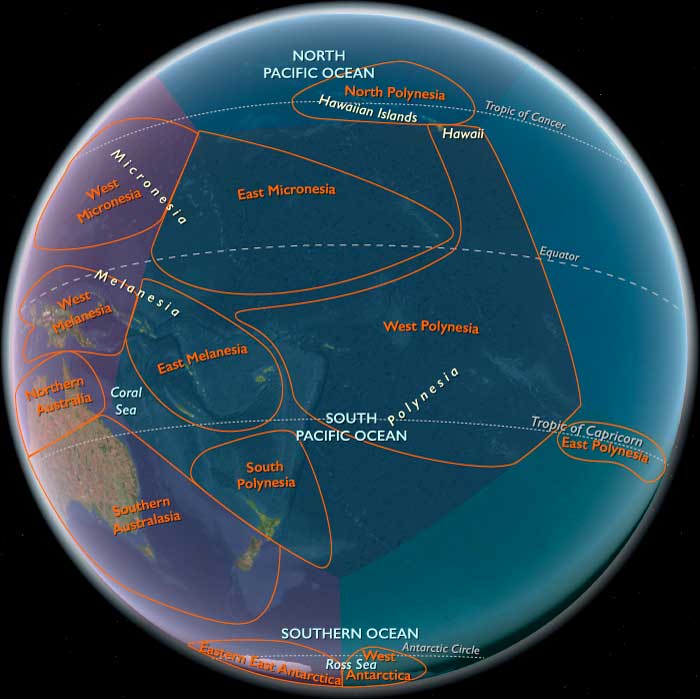
East Melanesia remained an archipelagic mosaic extending from the Solomon Islands through Vanuatu and New Caledonia to Fiji. Large islands contained several ecological and political zones rather than forming natural units of government.
Environmental Continuity
Cultivated valleys, ridged yam fields, taro gardens, tree-crop belts, reef fisheries, and forest reserves continued to sustain most communities. Population growth increased pressure in some fertile districts, but extensive forests and less densely settled uplands remained dominant.
Cyclone recovery depended upon reciprocal labor, stored planting material, dispersed tree crops, and support from allied communities.
Ranked Community Institutions
The principal new system of the age was the clearer formalization of social rank within local communities. Ceremonial achievement, genealogy, control of ritual knowledge, and the ability to mobilize labor increasingly differentiated leaders from ordinary householders.
In parts of Vanuatu, graded societies developed more structured sequences of advancement. Rank was displayed through pig sacrifice, feasts, ritual privileges, ornaments, and access to particular ceremonial spaces. These systems remained plural and island-specific.
In Fiji, hereditary precedence became more visible within some communities, though authority still depended upon councils, allied lineages, ritual experts, and control of productive land. New Caledonian clan systems placed increasing emphasis on precedence, hospitality, yam exchange, and relationships between founding and later-arriving groups.
Territorial Coordination
Leaders increasingly coordinated labor beyond single households. Irrigation channels, drainage systems, ceremonial grounds, canoe construction, and defensive works required cooperation among several kin groups.
Territories remained relatively small and overlapping. Authority weakened with distance and could be challenged by migration, alliance changes, or refusal to provide labor and tribute.
Settlement Organization
Larger villages appeared in favorable parts of Fiji, Vanuatu, New Caledonia, and the Solomons. Houses could be arranged around meeting grounds or ceremonial spaces, although many communities remained dispersed.
Some settlements moved toward ridges, hilltops, or naturally defensible spurs. These sites reflected local insecurity and territorial competition but existed alongside open coastal and river-valley villages.
Agricultural Intensification
Existing productive landscapes became more carefully maintained. Stone alignments, mounds, drainage works, irrigation channels, and terraced plots stabilized cultivation in selected districts.
Agricultural labor remained embedded in household and ceremonial obligations. Leaders could coordinate planting or harvesting, but they did not control all land as centralized rulers.
Canoes and Specialized Labor
Larger canoes required skilled timber selection, hull shaping, sail making, and collective labor. Expert builders gained prestige and could travel between allied communities.
Fiji’s eastern maritime zone became increasingly connected to Tonga. Canoe forms, titles, rituals, and prestige goods moved through these exchanges, although local communities selectively adapted outside influences.
Ritual Expression
Ceremonial houses, meeting grounds, slit-gongs, masks, carved figures, sacred stones, and first-fruit rites made social distinctions increasingly visible. Ritual spaces remained embedded within inhabited landscapes rather than forming isolated monumental complexes.
Ancestor relationships continued to legitimize access to land, gardens, fishing grounds, and chiefly or ritual office.
Legacy of the Age
By 1251 CE, East Melanesian communities had developed more explicit systems of rank and territorial coordination. The age did not produce centralized states; it produced durable local institutions capable of mobilizing labor, managing ritual cycles, and negotiating relations among several kin groups.
These institutions prepared the way for wider political alliances and more systematic fortification during the following centuries.

-
{# Image navigates to the detail page; the magnifying-glass chip is the only Fancybox lightbox trigger (kept a separate sibling — anchors can't nest). #}
 Central Oceania
World
-
{# Image navigates to the detail page; the magnifying-glass chip is the only Fancybox lightbox trigger (kept a separate sibling — anchors can't nest). #}
 Melanesia
Region
-
{# Image navigates to the detail page; the magnifying-glass chip is the only Fancybox lightbox trigger (kept a separate sibling — anchors can't nest). #}
 East Melanesia
Subregion