Event
East Polynesia (1828–1971 CE): Raids, Missions, Colonial…
East Polynesia (1828–1971 CE): Raids, Missions, Colonial Rule, and Island Survival
Geographic and Environmental Context
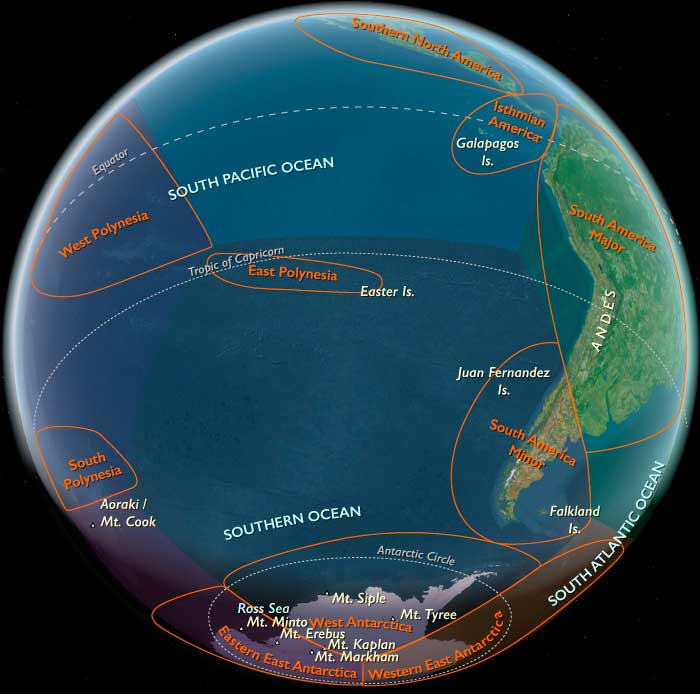
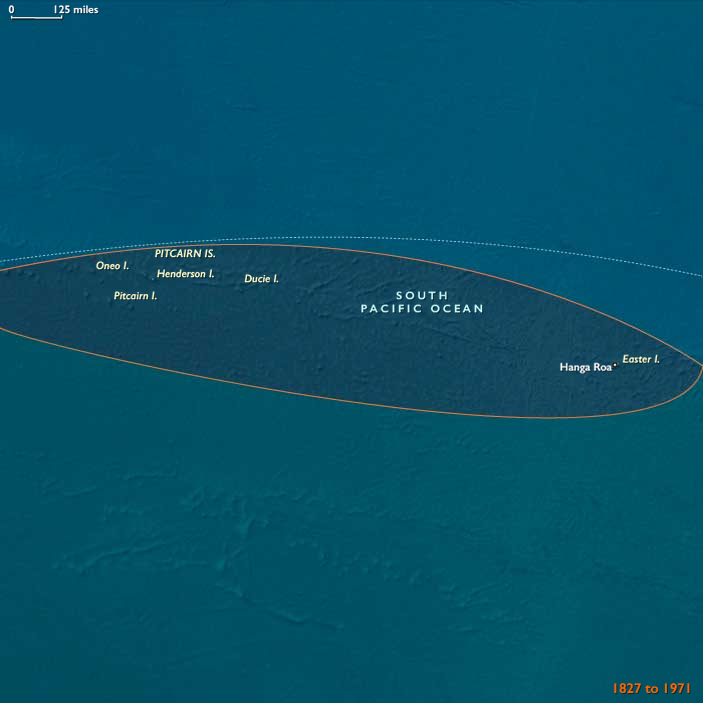
East Polynesia includes Rapa Nui and the Pitcairn Islands—Pitcairn, Henderson, Ducie, and Oeno. Both principal inhabited islands remained exceptionally remote during the nineteenth and twentieth centuries, but steam navigation, mission networks, colonial administration, and eventually aviation steadily increased their connection to the wider world.
Rapa Nui’s deforested volcanic landscape was increasingly reshaped by imported livestock and commercial ranching. Pitcairn remained a tiny garden settlement perched above difficult landing places.
Societies and Political Development
Rapa Nui experienced catastrophic outside intervention during the nineteenth century. Peruvian slave raiders attacked in 1862–63 and carried away many islanders, including people with specialized political, genealogical, and religious knowledge. Disease accompanying the forced movements and later returns compounded the destruction.
By 1877 the surviving Rapanui population had fallen to only 111 people.
Catholic missionaries established a permanent presence, and older institutions such as the birdman competition ended. Rapanui families nonetheless preserved language, genealogy, place memory, cultivation knowledge, and attachment to ancestral lands.
In 1888 Chile annexed Rapa Nui. Commercial sheep interests subsequently controlled much of the island, while Rapanui residents were for long periods effectively confined around Hanga Roa.
Pitcairn remained under British authority. Population growth eventually strained its limited land, and in 1856 the entire community relocated to Norfolk Island. Some families later returned, preserving a much smaller permanent settlement.
Productive Landscape and Economy
Rapanui subsistence gardening and fishing continued beneath commercial sheep ranching. Large grazing areas, fences, tracks, ranch structures, and imported livestock altered the older agricultural landscape.
Pitcairn households relied upon bananas, sweet potatoes, fruit trees, vegetables, chickens, pigs, fishing, handicrafts, and barter with passing vessels. Limited cultivable land required close cooperation and careful resource use.
Movement and Interaction Corridors
Rapa Nui became connected intermittently to Chilean and international shipping. Whalers, naval vessels, merchants, missionaries, and government ships linked the island with the outside world.
Pitcairn remained dependent upon passing ships and open-boat landings. Islanders became skilled in meeting vessels offshore, exchanging food and locally made goods for tools, clothing, mail, and manufactured products.
During the twentieth century, radio communications and eventually aviation began reducing the informational and physical isolation of Rapa Nui.
Technology and Material Culture
Mission churches, schools, ranch buildings, corrals, fences, metal tools, imported boats, radios, motor vehicles, and administrative buildings entered Rapa Nui gradually.
Pitcairn incorporated timber and corrugated-metal buildings, modern tools, longboats, radios, generators, and other imported technologies while retaining household gardening and maritime skills.
Religion and Cultural Expression
Catholicism became dominant on Rapa Nui, but older traditions persisted in carving, oral history, genealogical memory, music, language, and place-based identity.
Pitcairn adopted Seventh-day Adventism in the late nineteenth century. Its distinctive language, Pitkern, reflected English and Polynesian ancestry, while the Bounty story became an important element of collective identity.
Adaptation and Resilience
Rapa Nui survived demographic catastrophe and colonial dispossession through kinship, subsistence production, cultural memory, and continuing claims to ancestral land.
Pitcairn survived through a different form of resilience: extreme smallness, household cooperation, mixed subsistence, and the ability to maintain essential maritime contact without losing local autonomy.
Legacy of the Age
By 1971 CE, East Polynesia was no longer beyond the global system, but neither had remoteness disappeared. Rapa Nui had become a Chilean territory connected by modern transport yet marked by the legacies of slavery, missionization, ranching, and colonial restriction. Pitcairn remained a minute British community dependent upon maritime supply. Across both islands, older household economies and cultural identities survived beneath institutions imposed from far beyond the Pacific horizon.

-
{# Image navigates to the detail page; the magnifying-glass chip is the only Fancybox lightbox trigger (kept a separate sibling — anchors can't nest). #}
 The Ends of the Earth
World
The Ends of the Earth
World
-
{# Image navigates to the detail page; the magnifying-glass chip is the only Fancybox lightbox trigger (kept a separate sibling — anchors can't nest). #}
 Polynesia
Region
Polynesia
Region
-
{# Image navigates to the detail page; the magnifying-glass chip is the only Fancybox lightbox trigger (kept a separate sibling — anchors can't nest). #}
 East Polynesia
Subregion
East Polynesia
Subregion