Eastern Southeast Europe (1480–1491 CE): Vassalage, Ottoman…
1480 CE to 1491 CE
Eastern Southeast Europe (1480–1491 CE): Vassalage, Ottoman Consolidation, and Internal Challenges
Settlement and Migration Patterns
Moldavian and Wallachian Vassalage
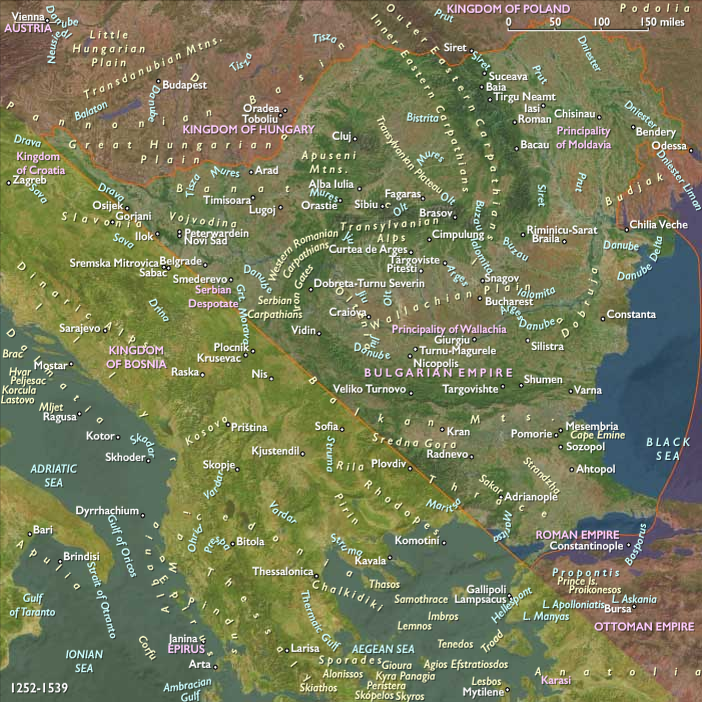
Between 1480 and 1491 CE, regional autonomy diminished as principalities increasingly fell under external control. Moldavia, under its prince, accepted vassalage to the Polish king, aligning itself politically with Poland-Lithuania. Concurrently, Wallachia became a vassal of the Ottoman Sultan, significantly altering the geopolitical landscape and solidifying Ottoman dominance in the region.
Economic and Technological Developments
Consolidation of Ottoman Economic Influence
Under Bayezid II (r. 1481–1512), the Ottoman Empire intensified its economic integration of conquered territories. Infrastructure improvements, including road maintenance and fortification upgrades, reinforced economic stability and facilitated greater resource extraction from vassal states like Wallachia, further fueling Ottoman imperial ambitions.
Cultural and Artistic Developments
Continuity Amidst Political Change
Despite political subordination, both Moldavia and Wallachia maintained distinctive cultural identities, preserving local traditions and Orthodox Christian practices. The arts and religious institutions within these principalities continued to flourish, albeit under increasingly complex external political constraints.
Social and Religious Developments
Religious and Social Autonomy
While formally becoming vassals, Moldavia and Wallachia preserved significant religious autonomy, maintaining Orthodox Christianity and local ecclesiastical structures. Social organization within these principalities continued largely undisturbed at local levels, sustaining internal community cohesion despite external political pressures.
Political Dynamics and Regional Rivalries
Bayezid II’s Consolidation and Cem’s Revolt
Sultan Bayezid II, succeeding his father Mehmed II in 1481, prioritized consolidating his inherited territories, laying groundwork for further expansion into the Arab world and Central Europe. However, his early reign was significantly challenged by internal strife, particularly the revolt led by his younger brother, Cem (Jem Sultan). Cem allied himself strategically with external powers, notably the Mamluks of Egypt and Syria and the papacy, seeking to undermine Bayezid’s authority. This internal conflict temporarily diverted Ottoman resources and attention from external conquests, affecting regional stability and imperial strategy.
Long-Term Consequences and Historical Significance
The period 1480–1491 CE marked critical adjustments in regional power dynamics within Eastern Southeast Europe, notably through formal vassalage of Moldavia and Wallachia, enhancing Ottoman and Polish influence respectively. Sultan Bayezid II’s consolidation efforts amidst internal dynastic struggles laid crucial foundations for later Ottoman expansions and influenced subsequent regional political and cultural trajectories.
Groups
Subjects
Regions
Southeast Europe
View →Subregions