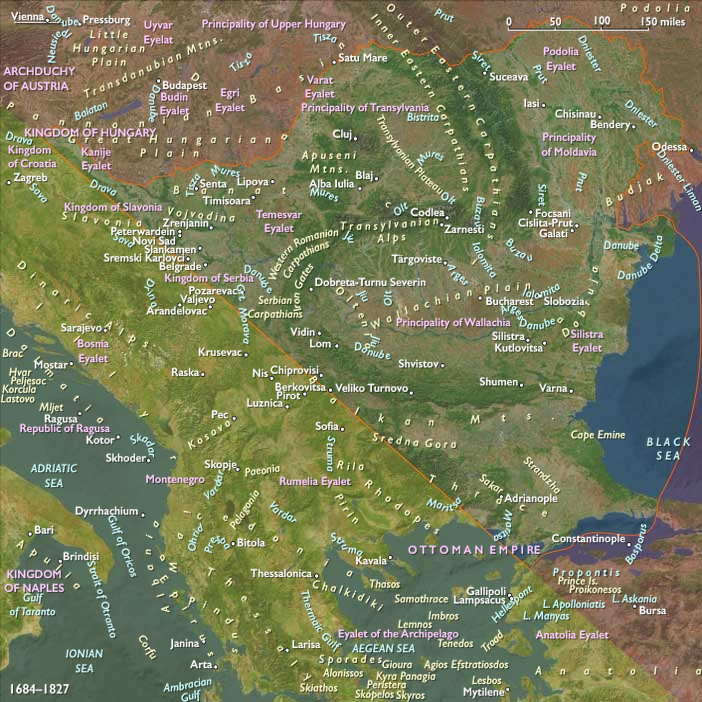
Eastern Southeast Europe (1768–1779 CE): Ottoman Decline,…
1768 CE to 1779 CE
Eastern Southeast Europe (1768–1779 CE): Ottoman Decline, Russian Expansion, and Emerging Nationalist Aspirations
Settlement and Migration Patterns
Continued Strategic Importance of Border Settlements
Settlement patterns continued to emphasize the strategic importance of border regions, particularly the Austrian Military Frontier, which served as a crucial buffer against Ottoman incursions. Communities such as the Serbs in these areas maintained their roles as military settlers, reinforcing Habsburg defenses.
Economic and Social Developments
Intensified Exploitation and Economic Strain
Exploitation and corruption under Ottoman and Phanariot administrations deepened economic distress across Wallachia and Moldavia. Rapid turnover of Phanariot princes intensified local grievances, creating severe socio-economic instability characterized by oppressive taxation, forced labor, and monopolization of trade by foreign merchants.
Impact of Russian-Ottoman Conflicts
The Russo-Ottoman War (1768–1774) significantly disrupted economic activities throughout the region. The devastating conflict, culminating in the Treaty of Kuchuk-Kaynarja (1774), severely weakened Ottoman control and exposed the empire's declining capacity to manage its territories economically and politically.
Cultural and Artistic Developments
Limited Cultural Patronage Amid Turmoil
Despite the prevailing economic hardships, limited cultural patronage continued, primarily driven by the educated elite and some Phanariot princes. Efforts persisted to sustain educational and literary traditions, although these remained overshadowed by broader social and economic distress.
Intellectual and Religious Developments
Rise of Nationalist Sentiments
Nationalist ideas increasingly penetrated the region, influenced by broader European Enlightenment thought and intensified by the weakening Ottoman authority. This period witnessed early stirrings of nationalist sentiment, particularly among Bulgarians and Serbs, who began expressing aspirations for greater autonomy and political freedom.
Russian Influence and Orthodox Solidarity
The Orthodox communities increasingly looked to Russia for support, encouraged by Russian advocacy for Orthodox subjects within Ottoman territories. Russia's involvement reinforced local Orthodox identities and resistance to Ottoman and Habsburg attempts at forced religious assimilation.
Political Dynamics and Regional Rivalries
Ottoman Decline and the Eastern Question
The Treaty of Kuchuk-Kaynarja (1774) underscored the Ottoman Empire's declining power, compelling the Porte to grant autonomy to the Crimean Khanate, permit Russian naval access to Ottoman waters, and concede increased autonomy to Trans-Danubian provinces. These developments elevated "the Eastern Question" in European diplomatic circles, as powers grappled with managing the weakened Ottoman Empire without disrupting continental political balance.
Russian Strategic Ambitions
Russia, under Catherine the Great, intensified efforts to dominate the northern shores of the Black Sea, seeking access to warm-water ports and maritime routes to the Mediterranean. Although full naval control eluded Russia during this period, significant territorial gains highlighted Russia's expanding influence at Ottoman expense.
Key Historical Events and Developments
-
The Russo-Ottoman War (1768–1774), ending with the significant Treaty of Kuchuk-Kaynarja.
-
Increased Russian influence among Orthodox populations in Ottoman territories.
-
Early nationalist aspirations emerging within Bulgarian and Serbian communities.
Long-Term Consequences and Historical Significance
The period from 1768 to 1779 CE was marked by critical geopolitical shifts, underscoring the Ottoman Empire’s weakening grip and Russia’s expanding influence. These developments set the stage for intensified nationalist movements, future conflicts, and the diplomatic complexities associated with managing Ottoman decline, significantly shaping the historical trajectory of Eastern Southeast Europe.
People
Groups
Subjects
Regions
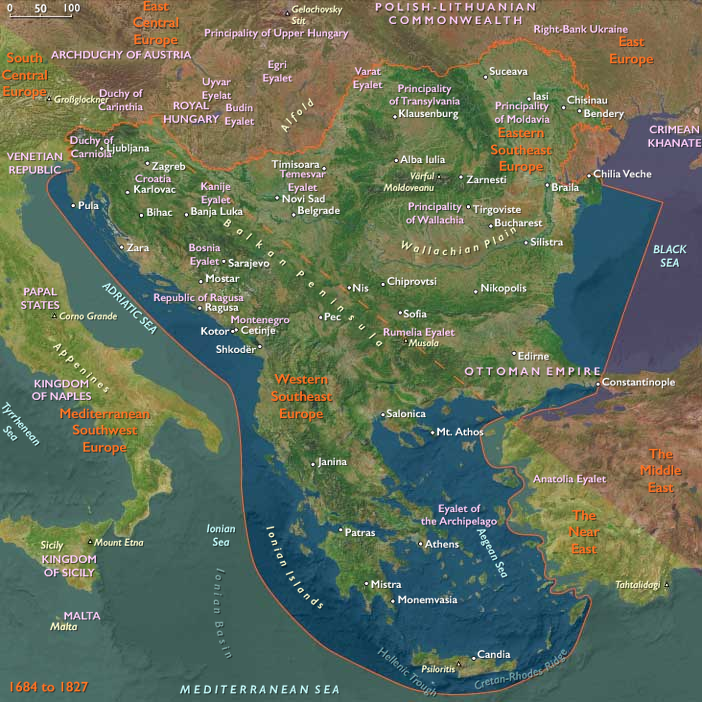
Southeast Europe
View →Subregions