
Eastern Southeast Europe (292–303 CE): Migration Pressures …
Years: 292 - 303
Eastern Southeast Europe (292–303 CE): Migration Pressures and Frontier Dynamics
Settlement and Migration Patterns
Movement of the Alans
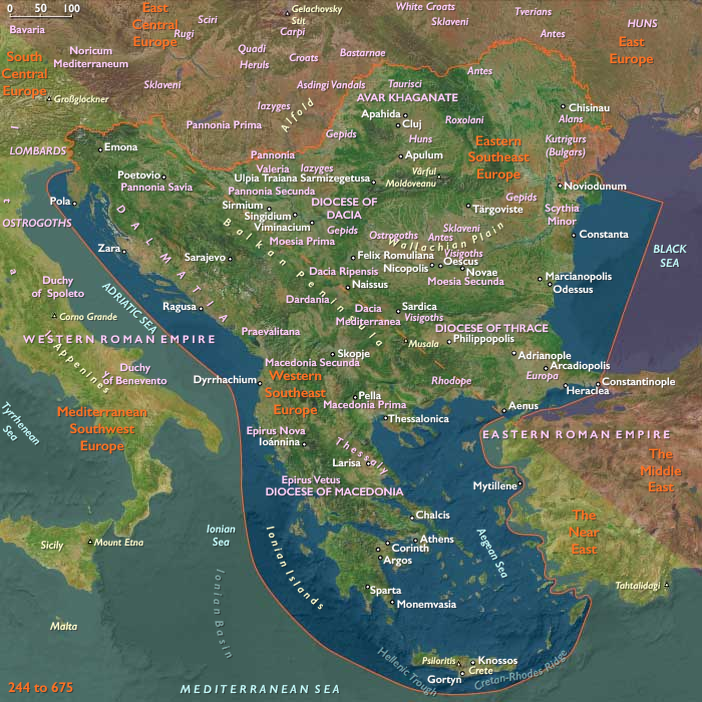
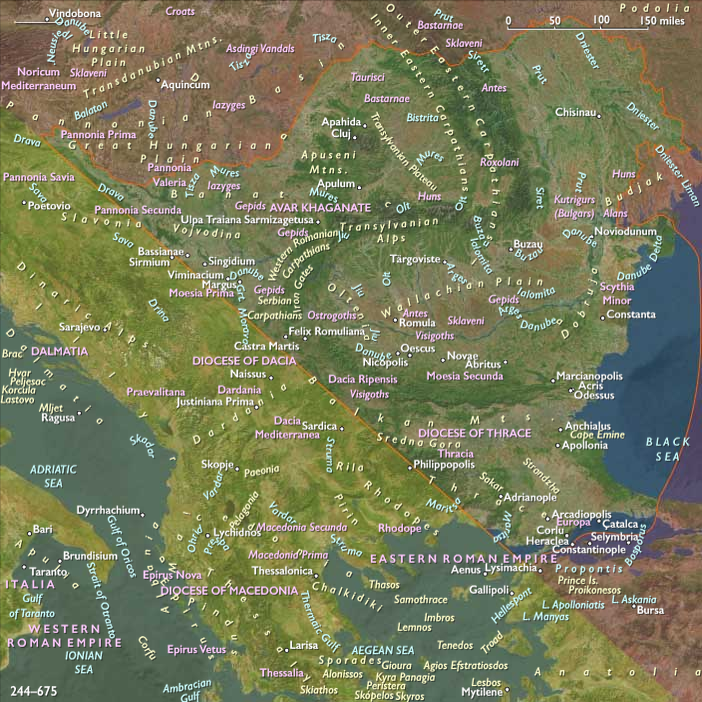
Around 300 CE, the Alans, a group of Iranian-speaking nomadic tribes, began moving toward the northwestern Black Sea coast. Their westward migration was likely driven by pressures from the advancing Huns from the East, significantly impacting local demographics and frontier stability.
Emergence of the Gepids
By the end of the third century, the Gepids, a Germanic tribe closely related to the Goths, established themselves north of the Carpathian Mountains, near modern-day Transylvania. Their presence in this region, particularly along the eastern foothills and valleys, positioned them strategically near Roman frontier provinces, influencing subsequent regional interactions and military dynamics.
Economic and Technological Developments
Strained Economic Conditions
Economic conditions became increasingly strained due to the continuous pressure from migrating groups, leading to disruptions in trade and agriculture. Nonetheless, key cities, including Constantinople and Philippopolis, maintained resilient economic activity, largely due to their strategic locations and fortified infrastructure.
Military and Infrastructure Adaptations
The increasing migrations and frontier pressures led to enhanced military readiness and fortifications. Infrastructure such as roads, bridges, and urban defenses were maintained and strengthened to counteract external threats, showcasing the adaptability and resilience of regional Roman governance.
Cultural and Artistic Developments
Continued Cultural Resilience
Despite external threats, cultural and artistic traditions persisted in major urban centers. Public art, religious monuments, and local craftsmanship continued to reflect a blend of Roman, Greek, and indigenous influences, underscoring the cultural resilience of the region.
Preservation of Classical Learning
Educational institutions in urban centers continued to preserve and transmit classical Greek and Roman learning. These institutions ensured intellectual continuity despite challenging circumstances, laying the foundation for future scholarly activity in the Byzantine period.
Social and Religious Developments
Governance and Administrative Stability
Roman provincial administration adapted to maintain regional stability amid external migrations and internal pressures. Enhanced provincial governance structures were crucial in effectively managing frontier regions and integrating local populations.
Religious Diversity and Syncretism
Religious practices continued to diversify, reflecting influences from Roman, Greek, indigenous Thracian, and emerging Christian traditions. The period witnessed increased religious syncretism, with various religious communities coexisting and interacting within urban and rural settings.
Long-Term Consequences and Historical Significance
The period from 292 to 303 CE was marked by significant migration pressures, frontier dynamics, and adaptive responses. The movements of tribes like the Alans and Gepids into Eastern Southeast Europe altered demographic and political landscapes, setting critical precedents for subsequent transformations in the region’s historical trajectory.
Groups
- Dacians, or Getae, or Geto-Dacians
- Transylvania, region of
- Alans (Sarmatian tribal grouping)
- Macedonia, Roman
- Thrace, Theme of
- Gepids (East Germanic tribe)
- Goths (East Germanic tribe)
- Christians, Early
- Thracia (Roman province)
- Moesia Inferior (Roman province)
- Dacia, Roman
- Huns
- Roman Empire: Tetrarchy
Topics
Commodoties
Subjects
Regions
Subregions
Related Events
Showing 10 events out of 60112 total
Years: 292 - 303
Groups
- Dacians, or Getae, or Geto-Dacians
- Transylvania, region of
- Alans (Sarmatian tribal grouping)
- Macedonia, Roman
- Thrace, Theme of
- Gepids (East Germanic tribe)
- Goths (East Germanic tribe)
- Christians, Early
- Thracia (Roman province)
- Moesia Inferior (Roman province)
- Dacia, Roman
- Huns
- Roman Empire: Tetrarchy
Topics
Commodoties
Subjects
Regions
Subregions