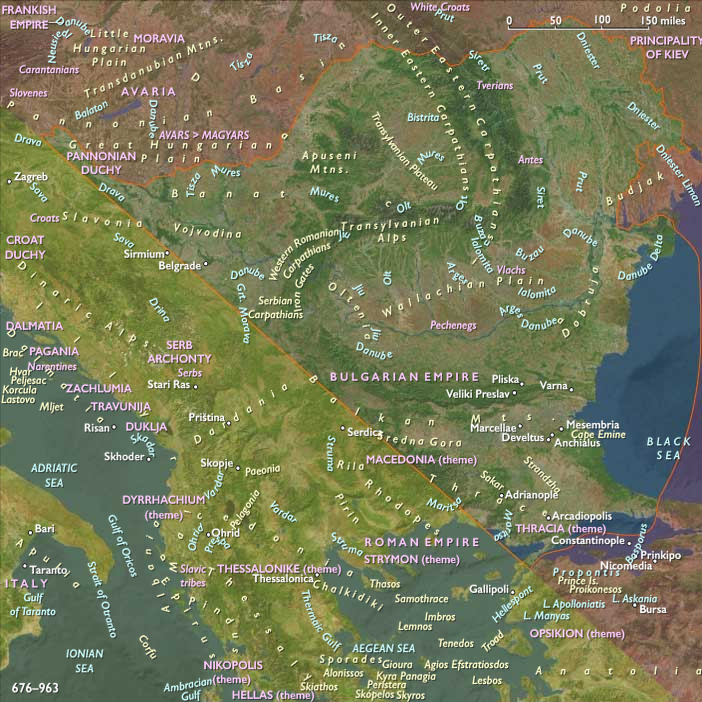
Eastern Southeast Europe (796–807 CE): Imperial Rivalries…
796 CE to 807 CE
Eastern Southeast Europe (796–807 CE): Imperial Rivalries and Cultural Division
Settlement and Migration Patterns
Stability Amid Regional Shifts
Between 796 and 807 CE, Eastern Southeast Europe maintained regional stability despite significant geopolitical shifts. The end of Avar hegemony, following their defeat by Charlemagne, resulted in the redistribution of regional power dynamics.
Political and Military Developments
Fall of the Avar Empire
The northern Balkans witnessed a critical shift as Charlemagne’s Frankish forces decisively defeated the Avar Empire, seizing its immense treasury accumulated through centuries of extortion from Byzantium. This substantial wealth contributed significantly to the Carolingian Renaissance, strengthening Frankish cultural and political influence.
Coronation of Charlemagne (800 CE)
On Christmas Day in the year 800, Pope Leo III crowned Charlemagne as "Augustus"—Roman Emperor—symbolically restoring the Western Roman Empire. This coronation represented a profound rupture for the Byzantine Empire, decisively ending Byzantine aspirations for reunification of the Latin West under Constantinople’s authority.
Diplomatic Realignment
Initially, Byzantium, under Empress Irene, vehemently rejected Charlemagne's imperial claim, viewing it as a direct challenge to its legitimacy. However, realpolitik eventually prevailed, leading Emperor Michael I Rangabe in 812 to cautiously acknowledge Charlemagne's title only as Emperor of the Franks, not as a Roman Emperor.
Economic and Technological Developments
Continued Economic Stability
Despite geopolitical upheavals, Eastern Southeast Europe enjoyed sustained economic prosperity, facilitated by effective defensive strategies that protected trade routes and agricultural production.
Strategic Defensive Measures
Ongoing investments in military and defensive infrastructure continued, ensuring readiness against external threats and preserving imperial stability during these significant geopolitical realignments.
Cultural and Artistic Developments
Cultural Resilience and Adaptation
Cultural and artistic life continued to thrive, benefiting from regional stability and ongoing support for religious and educational institutions. These cultural expressions further strengthened Byzantine identity and cohesion amid significant external changes.
Intellectual Continuity
Scholarly and educational institutions persisted in preserving classical, theological, and philosophical traditions, reinforcing the intellectual resilience and continuity of the region despite shifting political contexts.
Social and Religious Developments
Deepening East-West Ecclesiastical Division
Charlemagne’s coronation and Byzantium's subsequent reluctant recognition marked a critical deepening of divisions between Latin Western and Greek Eastern Christendom. This event significantly accelerated cultural, religious, and political divergences that would culminate in the Great Schism of 1054.
Strengthening of Eastern Orthodox Identity
The political and religious separation from Western Christendom bolstered Eastern Orthodoxy’s distinct identity. Religious institutions continued to strengthen their societal roles, reinforcing community cohesion and cultural identity within Eastern Southeast Europe.
Long-Term Consequences and Historical Significance
The period from 796 to 807 CE was characterized by significant geopolitical shifts, notably the fall of the Avar Empire and Charlemagne's imperial coronation. These events solidified the permanent division between the Byzantine and Latin worlds, laying foundations for enduring cultural, religious, and political distinctions shaping European history profoundly.
Groups
Commodities
Subjects
Regions
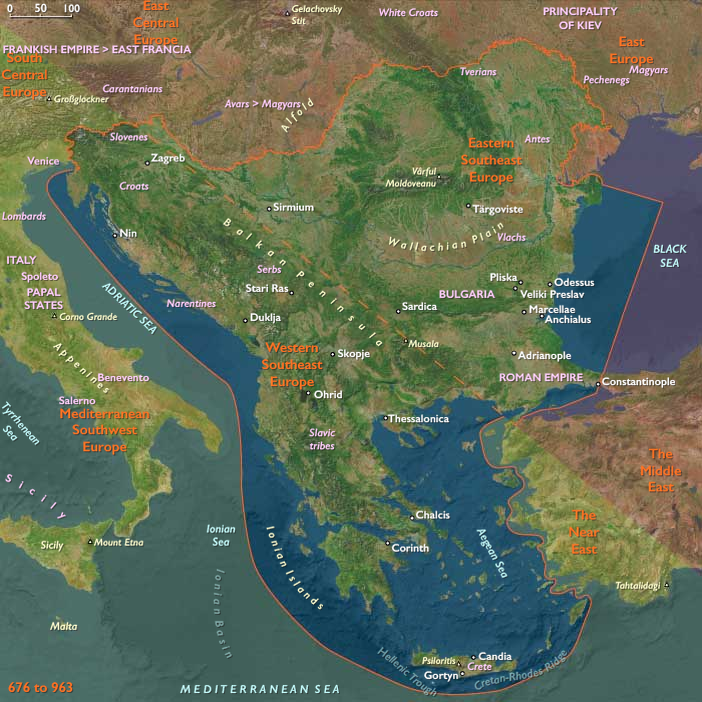
Southeast Europe
View →Subregions