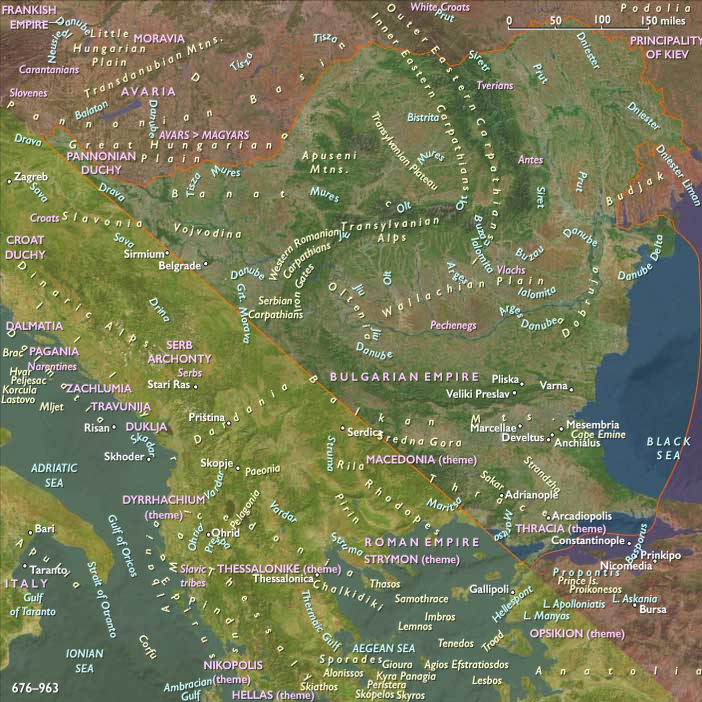
Eastern Southeast Europe (892–903 CE): Bulgarian Dominance…
892 CE to 903 CE
Eastern Southeast Europe (892–903 CE): Bulgarian Dominance and Ethnic Consolidation
Settlement and Migration Patterns
Completion of Romanian Ethnogenesis
Between 892 and 903 CE, the ethnogenesis of the Romanian people was likely completed. Following the earlier Romanization of the Geto-Dacians, the assimilation of the Slavs by the Daco-Romans culminated in the formation of a distinct Romanian ethnic identity by the start of the tenth century.
Political and Military Developments
Bulgarian Military Expansion
During this period, the Bulgarian Khan undertook significant military campaigns, notably conquering most of Serbia and repeatedly threatening Constantinople. His aggressive expansion compelled the Byzantine Empire to pay tribute, asserting Bulgarian dominance in the region.
Consequences of Bulgarian-Byzantine Conflict
The Bulgarian-Byzantine War of 889–897 concluded with a peace treaty obligating the Byzantine Empire to pay annual tribute to Khan Simeon. This treaty signaled a critical shift in regional power dynamics, reinforcing Bulgarian military and political supremacy.
Magyar Migration
The Bulgarian advances during this period also forced the Empire's Magyar allies into the Theiss Plain, which would subsequently become known as the Plain of Hungary. This migration significantly influenced regional settlement patterns and future historical developments.
Economic and Technological Developments
Economic Adjustments and Stability
Despite military pressures, regional economic stability was maintained. The Byzantine tribute payments to Bulgaria marked a shift in economic resource allocation, impacting regional trade and financial strategies.
Continued Influence of Maritime Trade
Trade dynamics continued to be shaped by Italian maritime republics—Venice, Genoa, and Amalfi—which maintained control over crucial Mediterranean trade routes, influencing local economies and commercial exchanges.
Cultural and Artistic Developments
Continuation of Artistic and Cultural Vibrancy
Cultural and artistic life remained vibrant, sustained by ongoing stability and scholarly production. Byzantine artistic traditions continued to flourish, reflecting broader cultural resilience and continuity despite political and military challenges.
Scholarly Endeavors
Educational and scholarly institutions maintained their role in preserving classical and theological traditions, further reinforcing regional intellectual resilience and cultural continuity.
Social and Religious Developments
Strengthened Bulgarian Identity
The solidification of a unified Bulgarian identity continued, underpinned by the widespread adoption of Slavic language in religious and cultural contexts. This period marked a consolidation of ethnic and cultural identity among Bulgars and Slavs, further strengthening regional cohesion.
Ongoing Religious and Ecclesiastical Stability
The resolution of previous ecclesiastical disputes continued to reinforce religious stability and cohesion. Eastern Orthodoxy's influence remained central, guiding social practices and reinforcing community identity throughout the region.
Long-Term Consequences and Historical Significance
The period from 892 to 903 CE saw significant military and political shifts, with Bulgarian dominance markedly altering regional dynamics. The completion of Romanian ethnogenesis, the realignment of regional power through Bulgarian expansion, and the resulting Magyar migration significantly shaped future developments in Eastern Southeast Europe, leaving enduring historical and cultural impacts.
People
Groups
Commodities
Regions
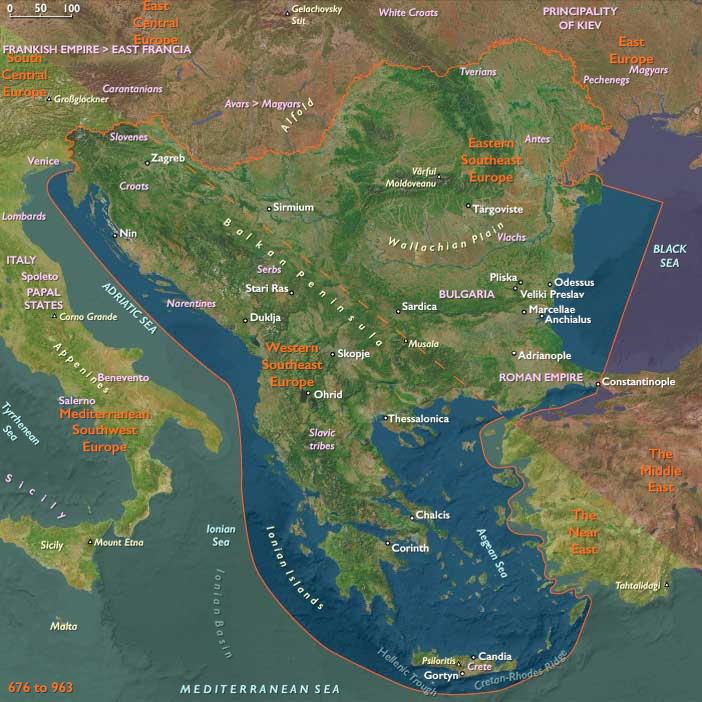
Southeast Europe
View →Subregions