The Caribbean's free villages, although largely independent,…
1852 CE to 1863 CE
The Caribbean's free villages, although largely independent, provide a potential labor pool that can be attracted to the plantations.
The growth of these free villages immediately after the emancipation of the slaves is astonishing.
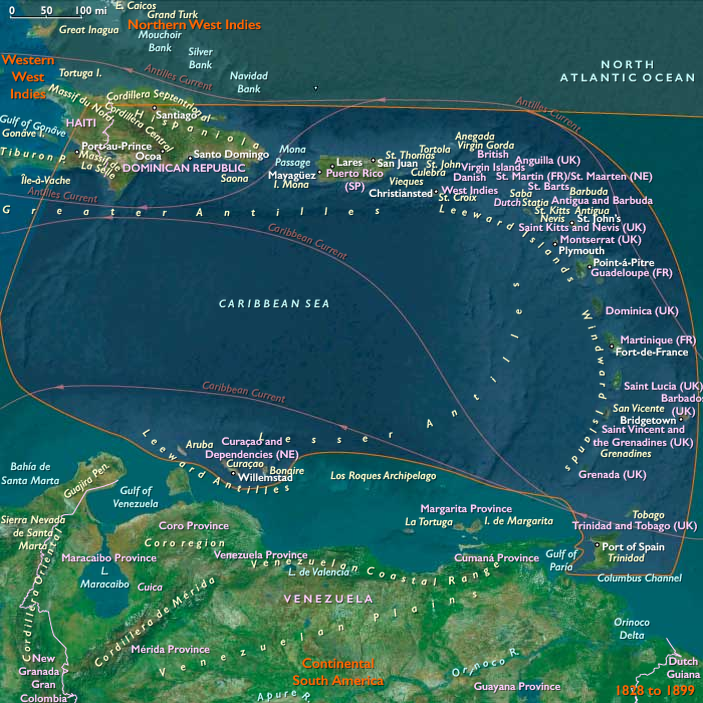
In Jamaica, black freeholders had increased from two thousand and fourteen in 1838 to more than seventy-eight hundred in 1840 and increase to more than fifty thousand in 1859.
In Barbados, where land is scarcer and prices higher, freeholders having fewer than two hectares each have increased from eleven hundred and ten in 1844 to three thousand five hundred and thirty-seven in 1859.
In St. Vincent, about eight thousand two hundred and nine persons have built their own homes and purchased and brought under cultivation over five thousand hectares between 1838 and 1857.
In Antigua, sixty-seven free villages with five thousand one hundred and eighty-seven houses and fourteen thousand six hundred and forty-four inhabitants have been established between 1833 and 1858.
The free villages produce new crops, such as coconuts, rice, bananas, arrowroot, honey, and beeswax, as well as the familiar plantation crops of sugarcane, tobacco, coffee, cacao, limes, and ground provisions.
Groups
Commodities
Regions