Event
The Mughal emperor in 1717, Farrukh-siyar (r.…
The Mughal emperor in 1717, Farrukh-siyar (r. 1713-19), gives the British—who by now have already established themselves in the south and the west—a grant of thirty-eight villages near Calcutta, acknowledging their importance to the continuity of international trade in the Bengal economy.
As do the Dutch and the French, the British bring silver bullion and copper to pay for transactions, helping the smooth functioning of the Mughal revenue system and increasing the benefits to local artisans and traders.
The fortified warehouses of the British bring extraterritorial status, which enables them to administer their own civil and criminal laws and offered numerous employment opportunities as well as asylum to foreigners and Indians.
The British factories successfully compete with their rivals as their size and population grow.
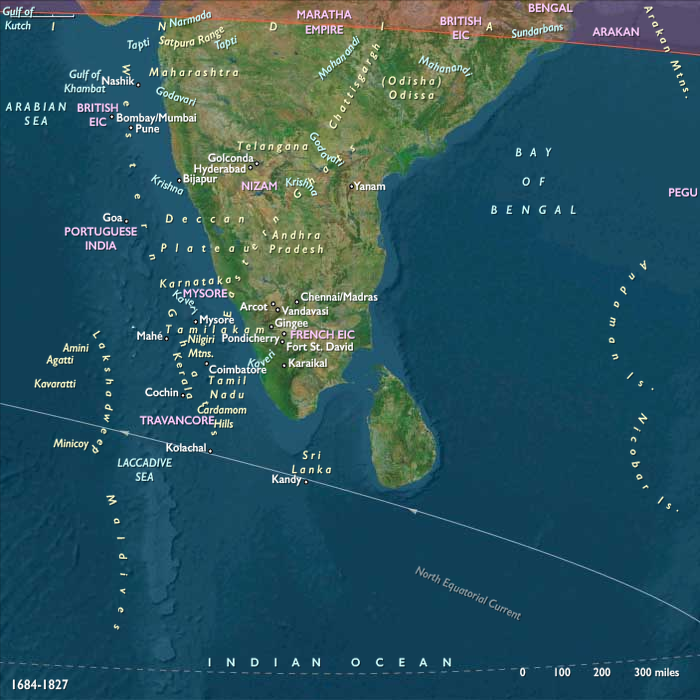
The original clusters of fishing villages (Madras and Calcutta) or series of islands (Bombay) become headquarters of the British administrative zones, or presidencies as they generally come to be known.
The factories and their immediate environs, known as the White-town, represent the actual and symbolic preeminence of the British—in terms of their political power—as well as their cultural values and social practices; meanwhile, their Indian collaborators live in the Black-town, separated from the factories by several kilometers.
-
{# Image navigates to the detail page; the magnifying-glass chip is the only Fancybox lightbox trigger (kept a separate sibling — anchors can't nest). #}
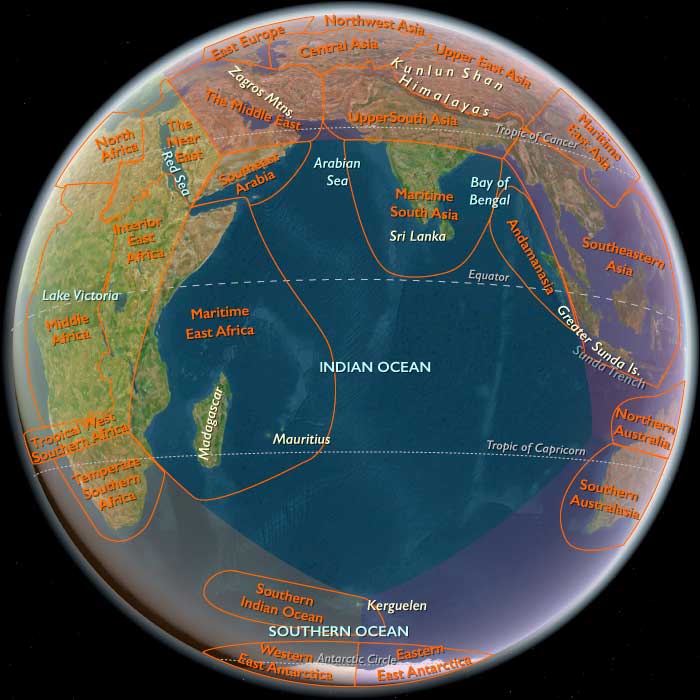
 The Indian Ocean Lands
World
-
{# Image navigates to the detail page; the magnifying-glass chip is the only Fancybox lightbox trigger (kept a separate sibling — anchors can't nest). #}
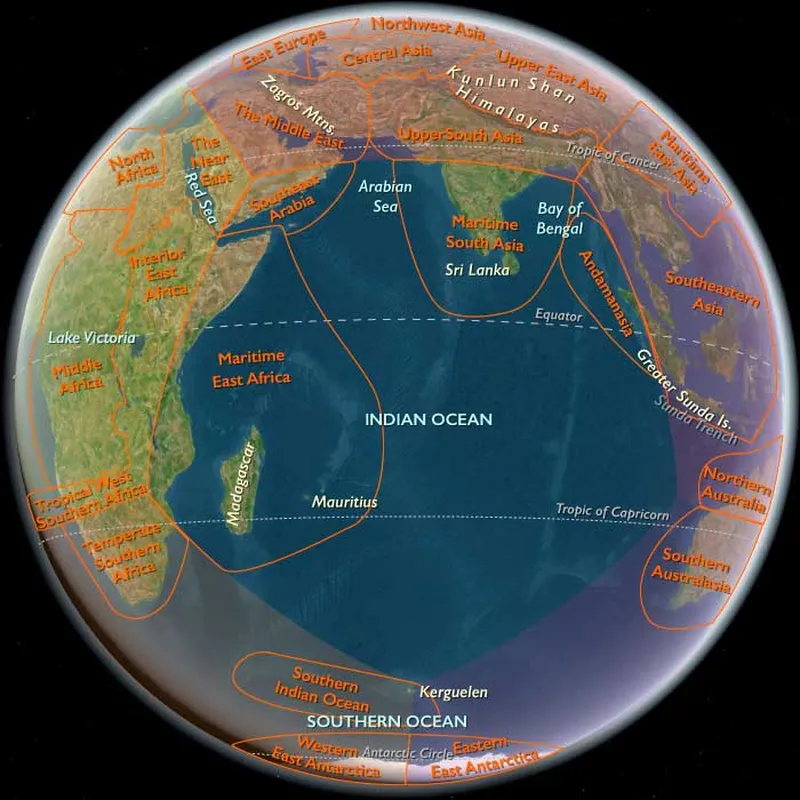
 The Great Crossroads
World
-
{# Image navigates to the detail page; the magnifying-glass chip is the only Fancybox lightbox trigger (kept a separate sibling — anchors can't nest). #}
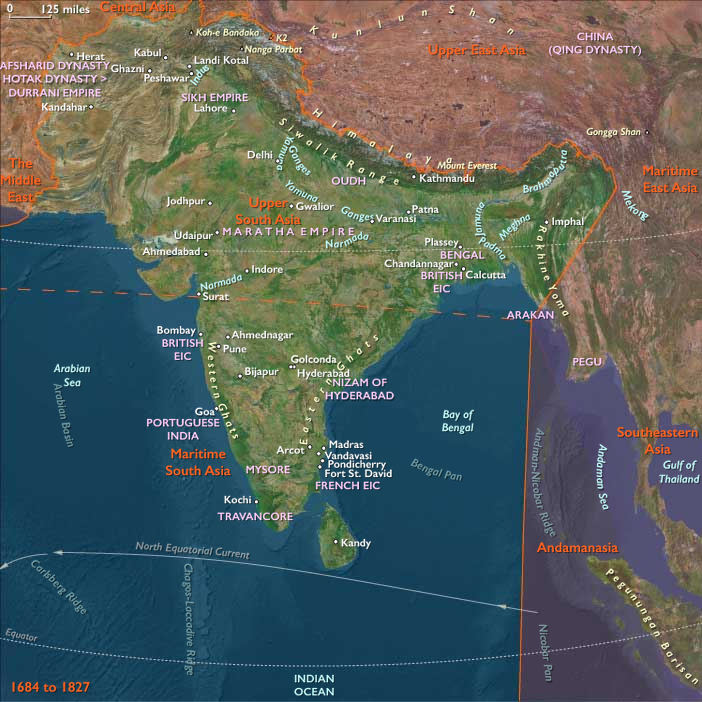 South Asia
Region
-
{# Image navigates to the detail page; the magnifying-glass chip is the only Fancybox lightbox trigger (kept a separate sibling — anchors can't nest). #}
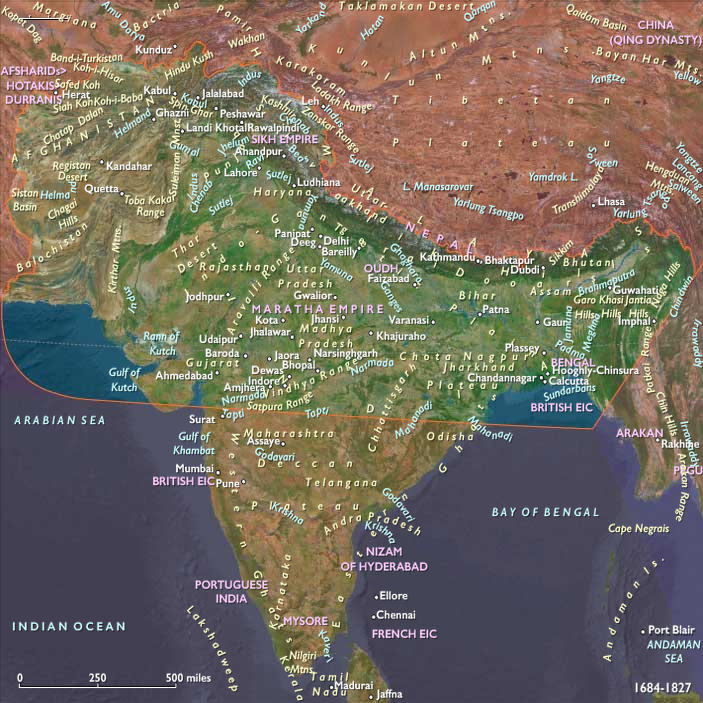 Upper South Asia
Subregion
-
{# Image navigates to the detail page; the magnifying-glass chip is the only Fancybox lightbox trigger (kept a separate sibling — anchors can't nest). #}
 Maritime South Asia
Subregion