Erasmus Composes The Handbook of the Christian…
1501 CE
Erasmus Composes The Handbook of the Christian Soldier (1501)
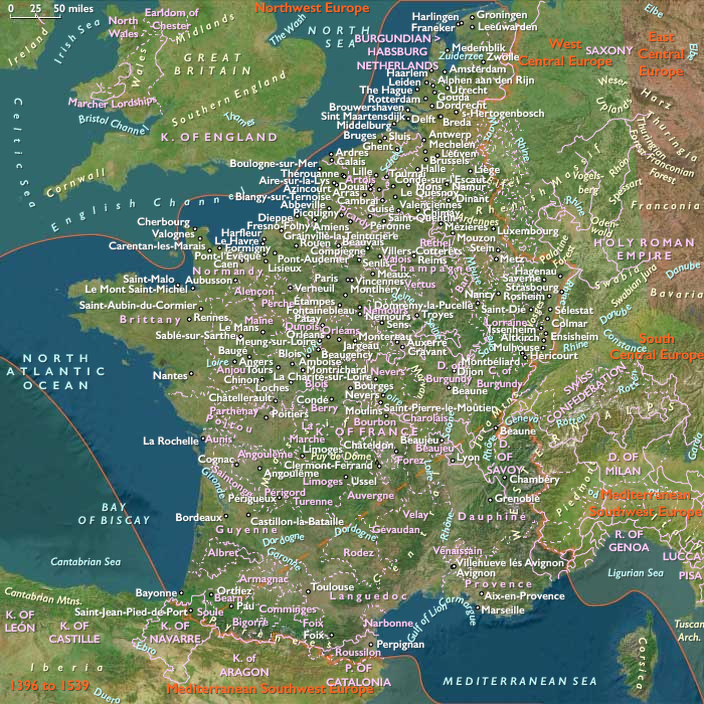
In 1501, Desiderius Erasmus composed one of his most influential moral treatises, the Enchiridion Militis Christiani(The Handbook of the Christian Soldier), later translated into English in 1533 by William Tyndale. This work originated from a personal request during Erasmus's stay at Tournehem Castle, near Saint-Omer, reflecting both his growing prominence as a moral thinker and his practical engagement with contemporary social concerns.
The origins of the Handbook lie in an episode involving Erasmus, his friend Battus, and a soldier stationed at Tournehem. Troubled by the soldier’s coarse and irreligious behavior, the soldier’s devout wife asked Battus, in turn, to request Erasmus’s assistance in reforming her husband. Erasmus responded by drafting a persuasive text aimed explicitly at the soldier, encouraging him toward moral and spiritual reform. The resulting piece evolved into the widely read treatise known as Enchiridion militis Christiani (The Handbook of the Christian Soldier), framing the Christian life metaphorically as spiritual warfare requiring discipline, faith, and moral vigilance.
Erasmus's text emphasized a practical spirituality deeply rooted in scriptural and patristic traditions, rejecting overly complex Scholastic methods in favor of clear, accessible moral instruction. Its straightforward call for personal responsibility, piety, and ethical self-improvement resonated powerfully across diverse social classes.
Cultural and Intellectual Significance:
The Handbook of the Christian Soldier represented a significant moment in the evolution of humanist religious thought, aligning Erasmus closely with the broader humanist agenda to reform society through education and moral persuasion. His engaging prose, practical moral advice, and scriptural clarity reinforced his position as one of Europe's most influential and widely read scholars.
Consequences and Legacy:
Erasmus’s Handbook profoundly influenced subsequent generations, contributing significantly to the spiritual and intellectual climate that shaped European religious reform movements, including early Protestantism. The English translation by William Tyndale, widely circulated during the English Reformation, further amplified Erasmus's influence, embedding his humanist ideas into the fabric of early modern religious and ethical discourse.
Locations
Subjects
Regions
West Europe
View →Subregions