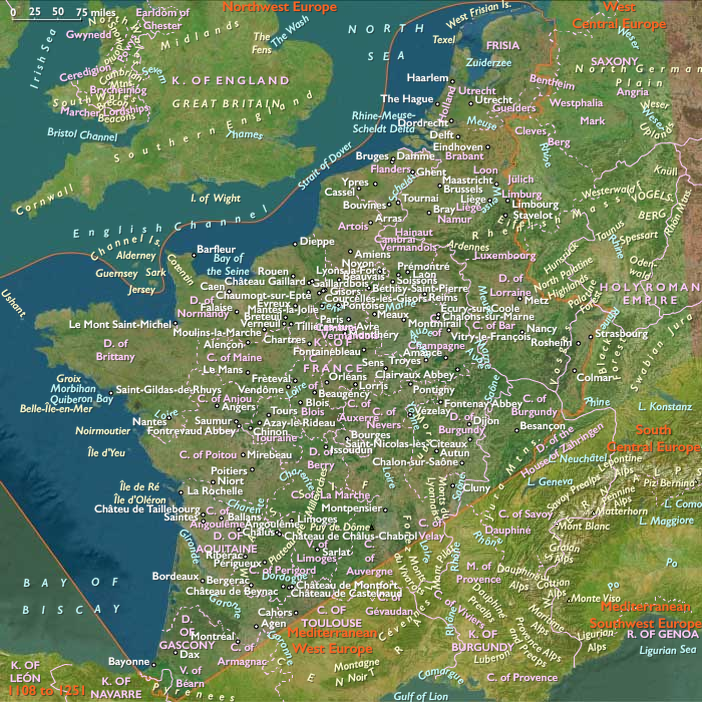
The Revolt of Eustace of Breteuil and…
February 1119 CE
The Revolt of Eustace of Breteuil and Juliana, Daughter of Henry I (1119 CE)
By early 1119, Eustace of Breteuil and his wife, Juliana, daughter of King Henry I of England, threatened to join the ongoing baronial revolt against Henry in Normandy. Their discontent arose from territorial disputes and growing tensions with the king, who was engaged in an increasingly desperate struggle to maintain control over rebellious Norman lords.
The Breakdown of Hostage Exchanges and Mutual Mutilations
In an effort to prevent open war, Henry and Eustace agreed to a hostage exchange, a common medieval practice meant to secure peace between feuding lords.
- Each side provided hostages, including children, as a guarantee of good faith.
- However, relations soon deteriorated, leading to a brutal escalation of violence.
- Both sides retaliated by mutilating their captives—a shocking act even by the standards of medieval conflict.
The Siege and Juliana’s Attempted Assassination of Her Father
With the truce broken, Henry launched a military campaign against Breteuil, determined to crush Eustace’s rebellion.
- Henry’s forces quickly stormed the town, overwhelming Eustace’s defenses.
- Juliana, in an act of desperation, attempted to kill her father with a crossbow as he approached the town.
- The attempt failed, and Henry responded mercilessly, ensuring that both Eustace and Juliana were stripped of nearly all their lands in Normandy.
Consequences and Aftermath
- Eustace and Juliana were left politically ruined, losing their strategic position in Normandy.
- Henry’s response reinforced his reputation for ruthless decisiveness, ensuring that other rebellious barons feared the consequences of defiance.
- The event highlighted the fragility of royal family alliances, as even Henry’s own daughter was willing to turn against him in the chaotic struggle for power in Normandy.
This family betrayal and violent suppression further consolidated Henry’s authority but also demonstrated the bitter personal cost of his unrelenting rule over his rebellious duchy.
People
Groups
Commodities
Subjects
Regions

West Europe
View →Subregions