
The Treaty of Hampton Court and the…
April 1526 CE
The Treaty of Hampton Court and the Diplomatic Shift (1526–1527)
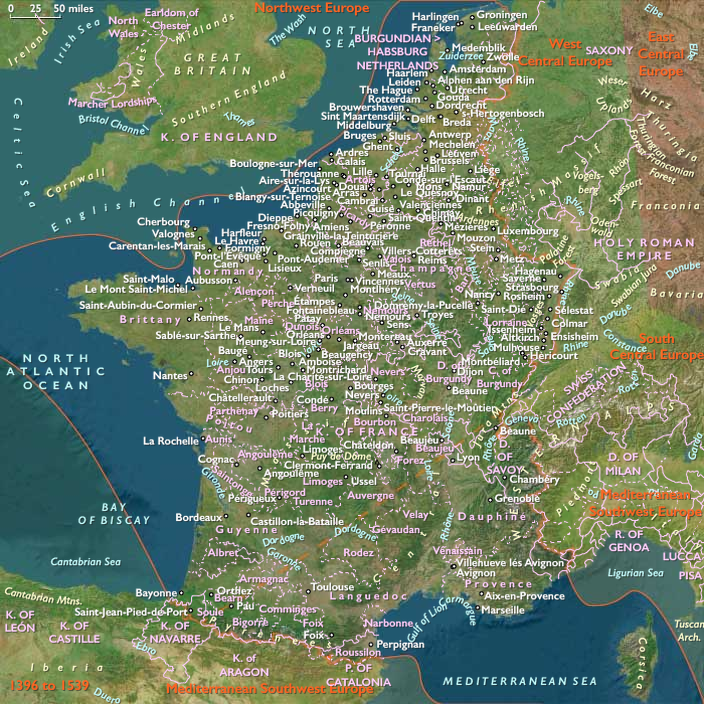
By early 1526, King Francis I of France had successfully negotiated the Treaty of Hampton Court with England, drafted at Hampton Court Palace by Cardinal Thomas Wolsey and the French ambassador. The treaty signals a warming in Anglo-French relations, a diplomatic pivot facilitated by the evident failure of Henry VIII to gain substantial advantage from the earlier agreements associated with Francis's captivity. A French delegation officially ratifies this treaty at Greenwich in April 1527.
Despite this diplomatic breakthrough, Francis remains openly determined to defy the obligations he had reluctantly accepted under the Treaty of Madrid (January 1526). On March 22, 1526, Francis publicly repudiates the treaty, declaring it invalid because he had signed it under duress, a declaration supported implicitly by Pope Clement VII. Clement, deeply concerned about the rapidly expanding influence of Emperor Charles V in Italy, now sees the alignment of France and England as crucial in curbing Habsburg domination on the Italian peninsula. The Pope thus sends envoys urging Francis and Henry VIII to form a broader anti-Habsburg alliance.
Henry VIII, having benefited little from the Treaty of Madrid and increasingly wary of the Emperor's ambitions, proves receptive to Clement's overtures, setting the stage for a significant realignment of European alliances.
Long-term Consequences and Significance
Francis's repudiation of the Treaty of Madrid and the subsequent alignment with England and the Papacy represent a pivotal diplomatic shift, intensifying the enduring rivalry between the Valois and Habsburg dynasties. This realignment not only prolongs the Italian Wars but also precipitates events such as the War of the League of Cognac (1526–1530). Moreover, the growing closeness of England and France serves as an essential context for Henry VIII’s eventual break with Rome, underscoring how political alliances during this period become entangled with broader religious and ideological conflicts.
Locations
People
Groups
Commodities
Subjects
Regions
West Europe
View →Subregions
