François de Coligny d'Andelot, younger brother of…
September 1558 CE
François de Coligny d'Andelot, younger brother of Gaspard, had first gained military experience in the Italian Wars, and so distinguished himself at the battle of Ceresole (1544) that Louis de Bourbon, still comte d'Enghien at that time, had knighted him on the battlefield.
He had been made inspector-general of the infantry in 1547, and commanded the French troops sent to Scotland to defend the rights of Mary, Queen of Scots (until 1559, queen-consort of France).
When war broke out again in Italy, he had returned, marching to Parma and getting trapped in the city when it soon afterwards came under siege.
Taken prisoner during a sortie, he had been taken to the castle of Milan, where he had remained until the treaty of Vaucelles in 1556.
In prison, he read books obtained for him from outside and confirmed the doubts about Catholicism which he had already derived from conversations with French Protestants.
On his return to France, he had replaced his brother Gaspard as Colonel-General of the infantry and, at almost the same moment, war was declared against Spain.
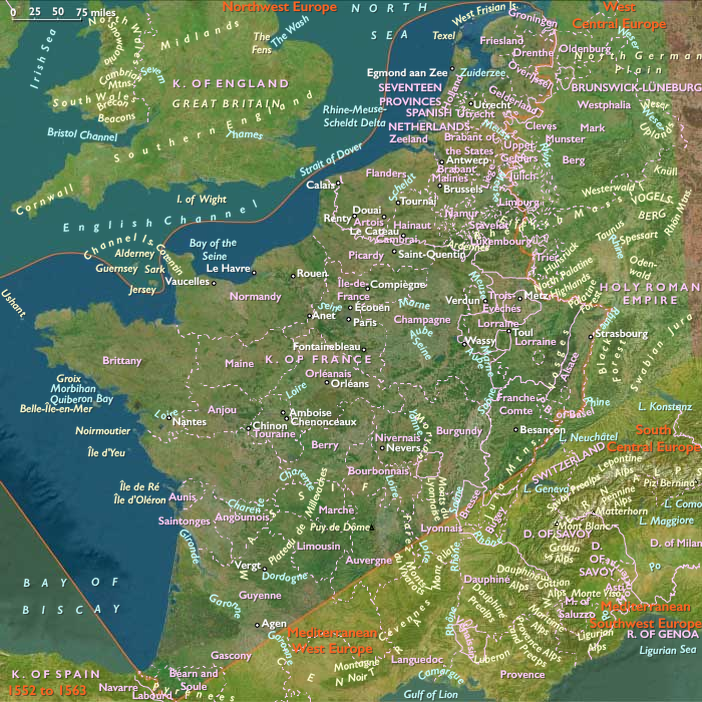
In charge of getting a relief column to Gaspard, who was defending Saint-Quentin, he found himself trapped there, but managed to prolong the siege and only surrendered when overwhelmed by the vast enemy numbers penetrating the city through the gaps they had blasted in the walls, when any resistance would have been useless.
He had succeeded in escaping the Spanish camp and rejoined the French army besieging Calais, where he had acted so bravely that, according to Brantôme, Francis, Duke of Guise (who is no friend of François's) stated that all he needed to conquer a world of places were Andelot, (Piero) Strozzi and (Antoine) d'Estrées.
When Andelot returned to Paris, the Guises, jealous of his favor with king Henry II, had blackened his name by reporting certain discourses he had had on religion.
The king had called Andelot before him and, on receiving confirmation from him that he had made these discourses, had flown into a rage, arrested him and had him taken to the castle of Melun, where he had remained until his uncle, constable Anne de Montmorency, got him bail.
Andelot is the first of the Châtillon family to take on the Protestant reforms, and one of their most zealous defenders.
Gaspard de Coligny, released from Savoyard captivity upon payment of a stiff ransom, has by 1558, also become a Huguenot, through the influence of his brother.
The first known letter which John Calvin addresses to him is dated September 4, 1558.
In this year also, Nostradamus publishes an expanded version of his Centuries.
Images
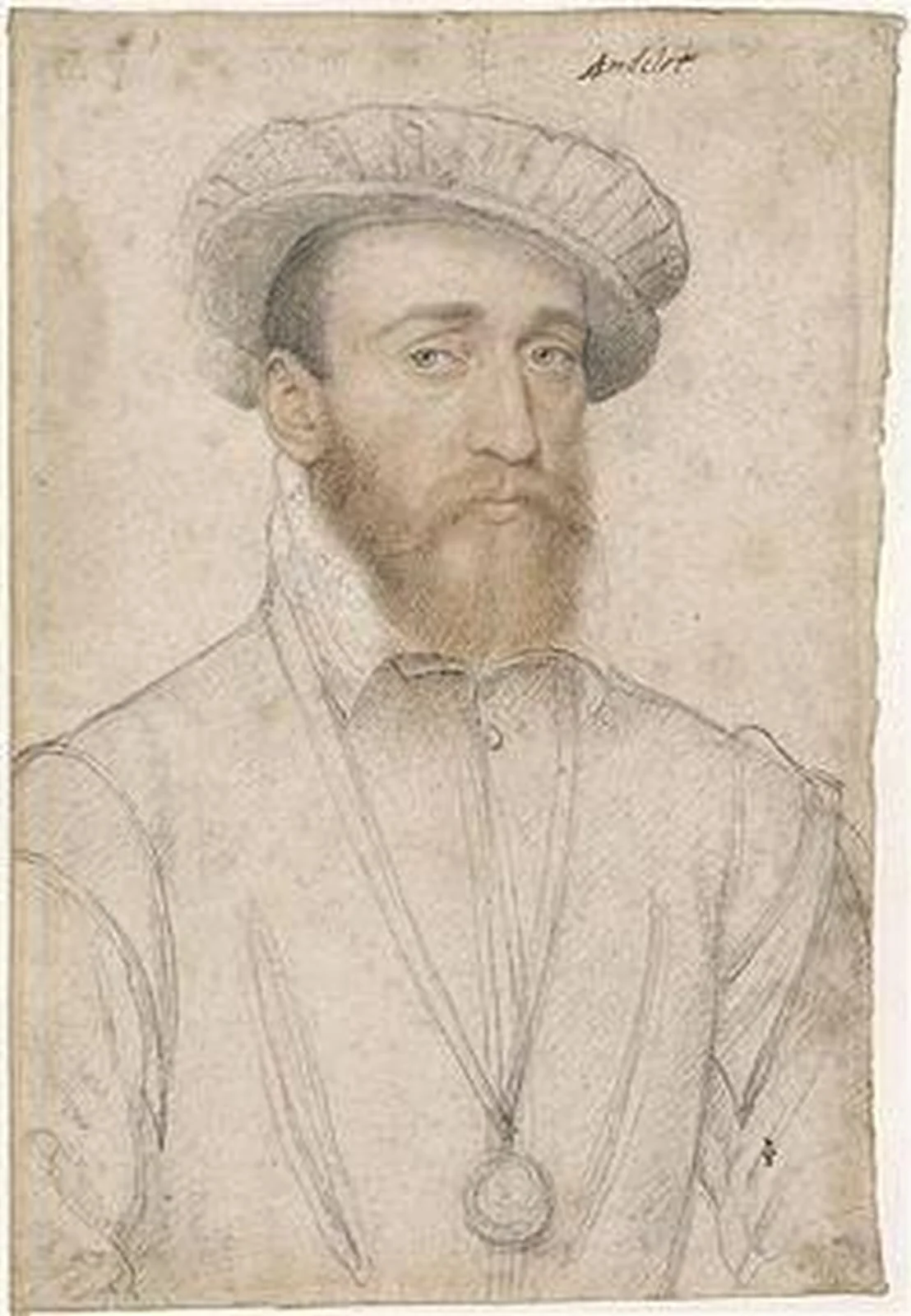
Studio of Jean Clouet: François de Coligny d'Andelot (c.1555)
Locations
People
Topics
Commodities
Subjects
Regions
West Europe
View →Subregions