
Nicolas Chanterene and the Introduction of Renaissance…
1517 CE
Nicolas Chanterene and the Introduction of Renaissance Sculpture in Portugal (1517)
The French sculptor Nicolas Chanterene became one of the most influential figures in Portuguese Renaissance art, first making his mark with his portal sculpture at the Jerónimos Monastery in Belém (c. 1517). His work reflected a blend of Late Gothic and early Renaissance influences, marking a shift in Portuguese sculpture toward greater naturalism and classical detail.
Early Career and Influence in Galicia (1511–1513)
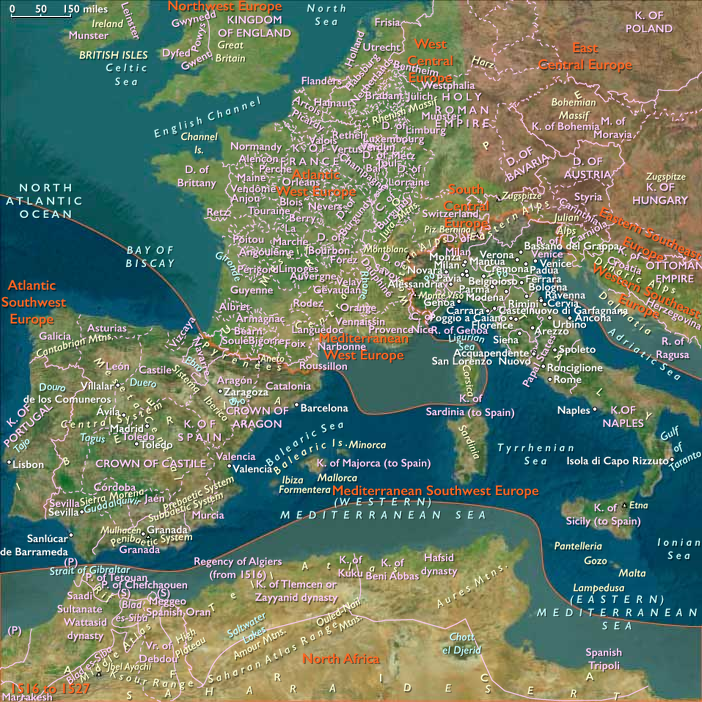
- Chanterene is first documented working in Santiago de Compostela, Spain, where he was paid for carving fifteen of the sixteen life-size statues on the transept columns of the Hospital Real (Hostal de los Reyes Católicos, founded 1492) between August 13, 1511, and 1513.
- His work introduced Italian Renaissance influences into Galician sculpture, particularly in:
- Realistic human figures with individual expressions.
- Greater attention to proportion and movement.
- Architectural elements inspired by classical antiquity.
Arrival in Portugal and Work at the Jerónimos Monastery (1517)
- By January 1517, Chanterene was working as a master contractor on the western portal of the Jerónimos Monastery in Belém, Lisbon.
- When he arrived, some Late Gothic elements had already been sculpted, including:
- Small angels on corbels holding the coat-of-arms.
- An armillary sphere (symbol of King Manuel I’s global ambitions).
- Three blooming twigs (symbolizing Queen Maria of Aragón).
- Chanterene added Renaissance-style sculptural details, integrating:
- Statues of King Manuel I and his second wife, Maria of Aragón, kneeling in a niche beneath an elaborate baldachin.
- Their patron saints, St. Jerome and St. John the Baptist, positioned flanking the royal figures.
- The tympanum decorated with the Annunciation, the Nativity, and the Epiphany, each scene set in tiny architectural niches.
- Two angels holding the arms of Portugal, closing the archivolt of the portal.
Chanterene’s Legacy in Portuguese Art
- His work at Jerónimos Monastery signified the transition from Manueline Gothic to Renaissance Classicismin Portuguese sculpture.
- He would later work on other major Portuguese landmarks, including:
- The cloisters of the Convent of Christ in Tomar.
- Royal tombs and sculptural elements in the Monastery of Batalha.
- Chanterene helped popularize the Renaissance style in Portugal, influencing local artists and future royal commissions.
Conclusion: A Turning Point in Portuguese Sculpture
Nicolas Chanterene’s arrival in Portugal in 1517 marked a new era in Portuguese art, blending Late Gothic grandeur with Renaissance humanism and naturalism. His sculptural work at the Jerónimos Monastery portal became a masterpiece of Manueline Renaissance fusion, securing his place as one of Portugal’s most influential sculptors.
Locations
People
Regions
Southwest Europe
View →Subregions
