Girolamo Aleandro, born on February 13, 1480,…
May 1521 CE
Girolamo Aleandro, born on February 13, 1480, in Motta di Livenza, in the province of Treviso, part of the Republic of Venice, had studied in Venice, where he had become acquainted with Erasmus and Aldus Manutius, and at an early age was reputed one of the most learned men of the time.
He had gone to Paris in 1508 on the invitation of Louis XII as professor of belles lettres, and held for a time the position of Rector of the University of Paris.
He was an early teacher of Greek at the University and edited texts by Isocrates and Plutarch printed in 1509/1510 by Gilles de Gourmont.
Entering the service of Eberhard, prince-bishop of Liège, he had been sent by that prelate on a mission to Rome, where Pope Leo X had retained him, in 1519 giving him the office of librarian of the Vatican.
He had gone to Germany in the following year to be present as papal nuncio at the coronation of Emperor Charles V.
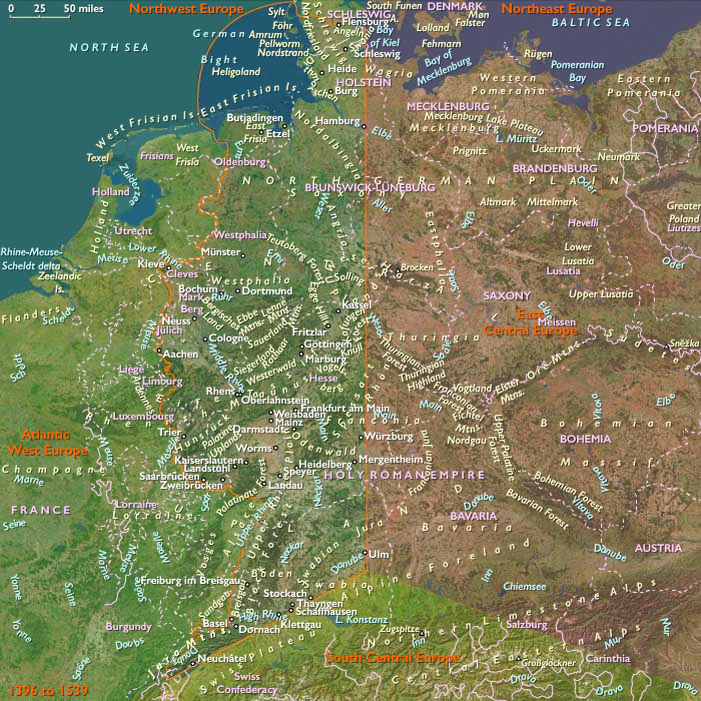
He is also present at the Diet of Worms, where he heads the opposition to Luther, advocating the most extreme measures to repress the doctrines of the reformer.
His conduct evokes the fiercest denunciations of Luther, but it also displeases more moderate men, especially Erasmus.
The edict against the reformer, which is finally adopted by the emperor and the diet, is drawn up and proposed by Aleandro.
The Edict of Worms, promulgated on May 25, declares Luther to be an obstinate heretic and bans the reading or possession of his writings.
This is the culmination of the ongoing struggle between Martin Luther and the Catholic Church over reform, especially in practice of donations for indulgences.
However, there are other deeper issues that revolve around both theological concerns: on a theological level, Luther has challenged the absolute authority of the Pope over the Church by maintaining that the doctrine of indulgences, as authorized and taught by the Pope, is wrong.
Luther maintains that salvation is by faith alone (sola fide) without reference to good works, alms, penance, or the Church's sacraments.
Luther maintains that the sacraments are a "means of grace," meaning that while grace is imparted through the Sacraments, the credit for the action belongs to God and not to the individual.
He has also challenged the authority of the Church by maintaining that all doctrines and dogmata of the Church not found in Scripture should be discarded (sola scriptura).
To protect the authority of the Pope and the Church, as well as to maintain the doctrine of indulgences, ecclesiastical officials persuade Charles V that Luther is a threat and persuade him to authorize his condemnation by the Holy Roman Empire.
Despite the agreement that Luther can return home safely, it is privately understood that he will soon be arrested and punished.
To protect him from this fate, Prince Frederick will seize him on his way home and hide him in Wartburg Castle.
Locations
People
Groups
Commodities
Subjects
Regions
Central Europe
View →Subregions