
A guiding motive and justification for Spain's …
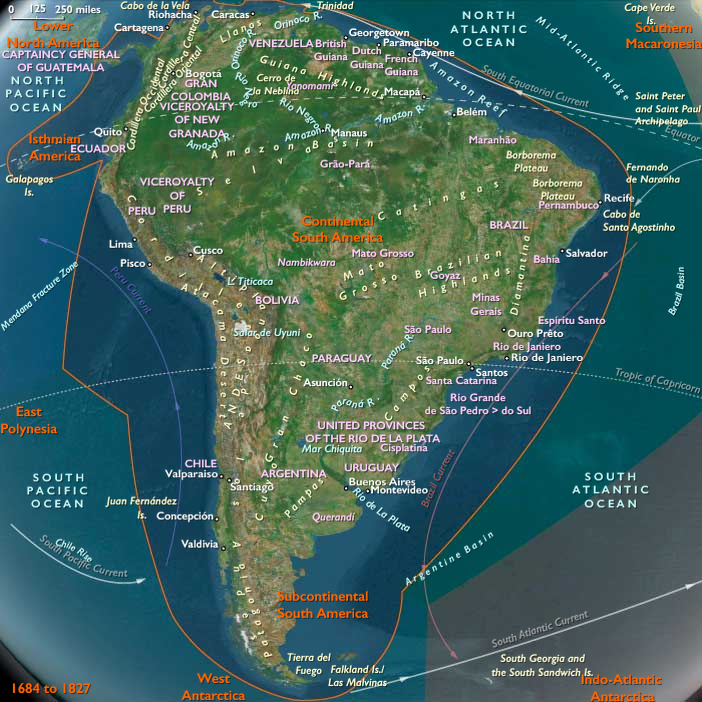
Years: 1684 - 1827
A guiding motive and justification for Spain's conquests in America is cited at this time as the conversion of the indigenous population to Christianity; it is cited still today by traditionalists who reject the pervasive Black Legend of Spanish cruelty to the native inhabitants.
Proselytism in New Granads had at least superficially been a great success, with most of the native population quickly adopting the new religion.
As elsewhere in America, the native converts had not necessarily abandoned all previous beliefs or ascribe the same meaning to Roman Catholic rituals as did Hispanic Christians, but they had conformed outwardly to those rituals, helped build churches and chapels, and showed the Roman Catholic clergy due respect.
Spanish colonizers are sometimes annoyed when a priest or friar protests against mistreatment of the native population or of enslaved blacks, but they are eager to see the church established on a solid footing in the new lands and give generously of their often ill-gotten gains to that effect.
Likewise, the Spanish state, both from sincere conviction and from a realization of the church's value as an instrument of social control, helps endow the church with property, support its missionary activity, and, to the extent possible, suppress religious dissent.
Extirpation of heresy and heretics, by burning as a last resort, is the special responsibility of the Spanish Inquisition, which has one of its three American headquarters (the least active of the three) at Cartagena.
In the late colonial period, both state support and the missionary enthusiasm of the clergy tend to diminish, but by this time the Roman Catholic Church is firmly entrenched as an institution, with roughly one priest or friar per seven hundred and fifty inhabitants, extensive property holdings, and additional wealth from investments, fees, and the compulsory payment of tithes by the faithful.
This strong position will inevitably influence the course of Colombian history after independence.
Saints' portraits and other religious themes dominate colonial painting, including much popular art of the period, and religious festivals are regular occasions for public entertainment (commonly marked by drunkenness and rowdy behavior that the clergy disapproved).
Formal education is largely in the hands of the clergy, who control the only university-level institutions and are active at other levels too.
The great majority of the population remains illiterate.
For most of the colonial period, the literate are dependent on imported reading matter because the first press is set up in Santa Fe only in 1738, and the first real newspaper does not appear until 1791.
However, the latter development coincides with a wider intellectual awakening to new currents in science and philosophy emanating from the European Enlightenment.
A leader in this movement is José Celestino Mutis, a Spanish-born priest who settled in Santa Fe and won acclaim from European scientists for his work in studying botanical species of the viceroyalty.
Several criollo disciples of Mutis will be active participants in the early nineteenth-century movement for independence.
Proselytism in New Granads had at least superficially been a great success, with most of the native population quickly adopting the new religion.
As elsewhere in America, the native converts had not necessarily abandoned all previous beliefs or ascribe the same meaning to Roman Catholic rituals as did Hispanic Christians, but they had conformed outwardly to those rituals, helped build churches and chapels, and showed the Roman Catholic clergy due respect.
Spanish colonizers are sometimes annoyed when a priest or friar protests against mistreatment of the native population or of enslaved blacks, but they are eager to see the church established on a solid footing in the new lands and give generously of their often ill-gotten gains to that effect.
Likewise, the Spanish state, both from sincere conviction and from a realization of the church's value as an instrument of social control, helps endow the church with property, support its missionary activity, and, to the extent possible, suppress religious dissent.
Extirpation of heresy and heretics, by burning as a last resort, is the special responsibility of the Spanish Inquisition, which has one of its three American headquarters (the least active of the three) at Cartagena.
In the late colonial period, both state support and the missionary enthusiasm of the clergy tend to diminish, but by this time the Roman Catholic Church is firmly entrenched as an institution, with roughly one priest or friar per seven hundred and fifty inhabitants, extensive property holdings, and additional wealth from investments, fees, and the compulsory payment of tithes by the faithful.
This strong position will inevitably influence the course of Colombian history after independence.
Saints' portraits and other religious themes dominate colonial painting, including much popular art of the period, and religious festivals are regular occasions for public entertainment (commonly marked by drunkenness and rowdy behavior that the clergy disapproved).
Formal education is largely in the hands of the clergy, who control the only university-level institutions and are active at other levels too.
The great majority of the population remains illiterate.
For most of the colonial period, the literate are dependent on imported reading matter because the first press is set up in Santa Fe only in 1738, and the first real newspaper does not appear until 1791.
However, the latter development coincides with a wider intellectual awakening to new currents in science and philosophy emanating from the European Enlightenment.
A leader in this movement is José Celestino Mutis, a Spanish-born priest who settled in Santa Fe and won acclaim from European scientists for his work in studying botanical species of the viceroyalty.
Several criollo disciples of Mutis will be active participants in the early nineteenth-century movement for independence.
Locations
People
Groups
- Tairona
- Arawak peoples (Amerind tribe)
- Kalinago (Amerind tribe)
- Christians, Roman Catholic
- Muisca (Amerind tribe)
- Inquisition, Spanish
- Spain, Habsburg Kingdom of
- Spaniards (Latins)
- Granada, New Kingdom of (Spanish colony)
- Peru, Viceroyalty of
- Spain, Habsburg Kingdom of
- Quito, Real Audiencia of
- Bogotá, Audiencia de Santa Fe de (Captaincy General of New Granada)
- Venezuela Province
- New Granada, Viceroyalty of
- New Granada, Viceroyalty of
- Venezuela, Captaincy General of
Topics
- Post-Classic Stage (Peru)
- Colonization of the Americas, Spanish
- Encomienda system
- Industrial Revolution, First
Commodoties
- Gem materials
- Domestic animals
- Oils, gums, resins, and waxes
- Grains and produce
- Textiles
- Ceramics
- Strategic metals
- Slaves
- Sweeteners
- Beer, wine, and spirits
- Land
- News
Subjects
Regions
Subregions
Related Events
Showing 10 events out of 30218 total
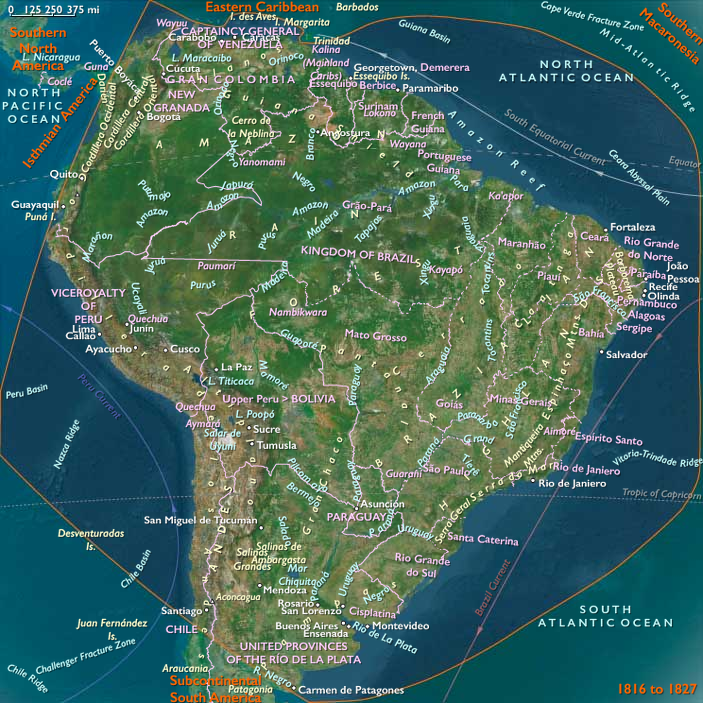
Years: 1684 - 1827
Locations
People
Groups
- Tairona
- Arawak peoples (Amerind tribe)
- Kalinago (Amerind tribe)
- Christians, Roman Catholic
- Muisca (Amerind tribe)
- Inquisition, Spanish
- Spain, Habsburg Kingdom of
- Spaniards (Latins)
- Granada, New Kingdom of (Spanish colony)
- Peru, Viceroyalty of
- Spain, Habsburg Kingdom of
- Quito, Real Audiencia of
- Bogotá, Audiencia de Santa Fe de (Captaincy General of New Granada)
- Venezuela Province
- New Granada, Viceroyalty of
- New Granada, Viceroyalty of
- Venezuela, Captaincy General of
Topics
- Post-Classic Stage (Peru)
- Colonization of the Americas, Spanish
- Encomienda system
- Industrial Revolution, First
Commodoties
- Gem materials
- Domestic animals
- Oils, gums, resins, and waxes
- Grains and produce
- Textiles
- Ceramics
- Strategic metals
- Slaves
- Sweeteners
- Beer, wine, and spirits
- Land
- News
Subjects
Regions
Subregions