
Gonzalo Fernández de Córdoba, a pioneer of…
December 1515 CE
Gonzalo Fernández de Córdoba, a pioneer of modern warfare, dies on December 2, 1515 at his villa near Granada from malaria at age sixty-two.
As a field commander, like Napoleon three centuries later, his goal was the destruction of the enemy army.
Córdoba systematically pursued defeated armies after a victory to minimize future resistance.
He helped found the first modern standing army, the nearly invincible Spanish infantry which will dominated European battlefields for most of the sixteenth and seventeenth centuries).
The best generals of Charles V, Holy Roman Emperor and Philip II of Spain are Córdoba's pupils or are trained by them.
His influence on military tactics is profound.
Wellington's Torres Vedras campaign resembles Córdoba's campaign at Barletta and the Battle of Assaye is comparable to his campaign at Garigliano.
Córdoba directed the first battle in history won by gunpowder small arms (the Battle of Cerignola).
At the end of the battle, he had issued a call to prayer (toque de oracion) when Córdoba saw the fields full of French bodies, he ordered the playing of three long tones and prayers for the fallen.
He leaves no sons, and is succeeded in his dukedoms by daughter Elvira Fernández de Córdoba y Manrique.
Córdoba's burial place, the Monastery of San Jerónimo in Granada, will be built in Renaissance style by his wife and daughter.
It will be desecrated by Napoleonic troops under the Corsican General Sebastiani at the beginning of the nineteenth century.
Stone from the tower will be used to build the Puente Verde bridge over the Genil.
The monastery will be fully restored at the end of the nineteenth century.
Córdoba's extensive knowledge has been passed on to the next generation through the men who served under him.
Several, such as his steward Amador de Lares, will accompany Hernán Cortés on his conquest of the Aztec Empire.
Locations
People
Groups
Commodities
Subjects
Regions
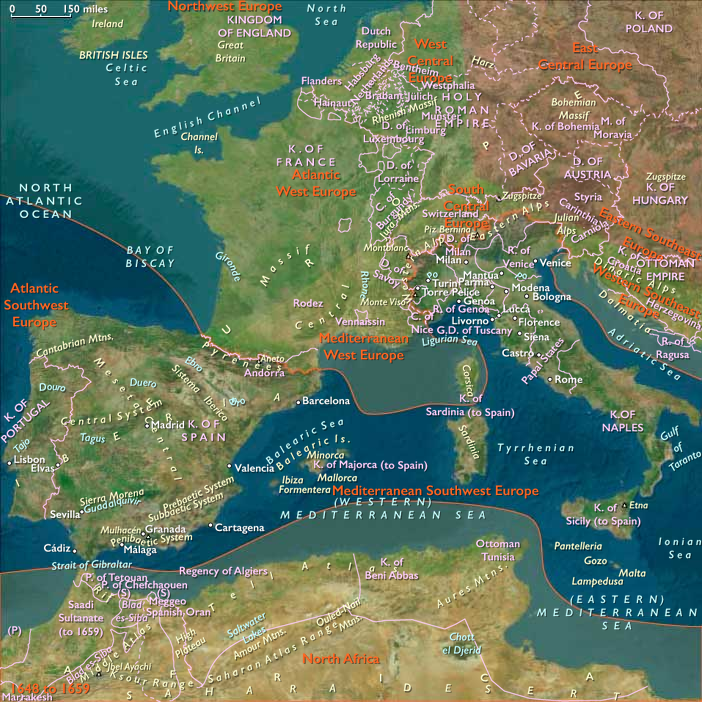
Southwest Europe
View →Subregions
