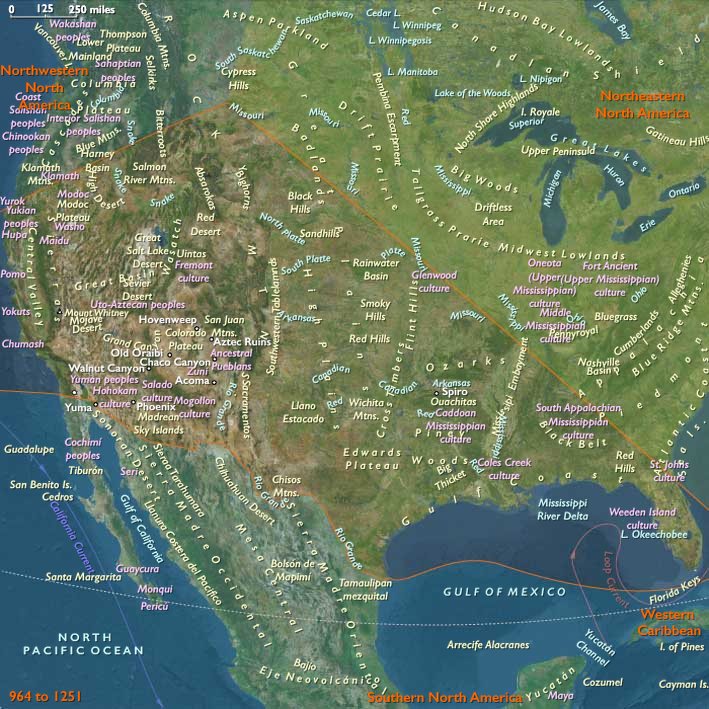
Gulf and Western North America (1108 –…
1108 CE to 1251 CE
Gulf and Western North America (1108 – 1251 CE): Mound Apex, Puebloan Shifts, and Pacific Bead Economies
Geographic and Environmental Context
Gulf and Western North America includes: Mississippi, Louisiana, Arkansas, Texas, Oklahoma, Kansas, New Mexico, Colorado, Wyoming, Arizona, Utah, Nevada, nearly all of California (except far northwest), Florida (except the Jacksonville corridor), southwestern Georgia, most of Alabama (except Huntsville corner), southwestern Tennessee, southern Illinois (Little Egypt), southwestern Missouri, most of Nebraska (except northeast around Omaha), southeastern South Dakota, southern Montana, southern Idaho, southeastern Oregon.
-
Anchors: Lower Mississippi centers (Natchez, Plaquemine), Etowah–Moundville–Spiro, Ancestral Pueblo towns (Mesa Verde, Chaco remnants, Kayenta), Hohokam Salt–Gila canals, Great Basin foragers, and California Chumash–Central Valley chiefdoms.
Climate and Environmental Shifts
-
Late Medieval Warm Period supported large harvests until early droughts struck the Southwest (~1200).
-
Mississippi flood cycles affected mound-town stability.
-
California remained agriculturally stable.
Societies and Political Developments
-
Mississippian apex: Cahokia’s zenith (~1200) influenced Gulf networks; Natchez, Etowah, Moundville, and Spiro flourished.
-
Puebloan transition: Chaco in decline; Mesa Verde and other pueblos aggregated into larger cliff dwellings and plazas.
-
Hohokam irrigation continued but faced salinity and water stress.
-
California Chumash: complex chiefdoms expanded canoe trade.
-
Great Basin foragers adjusted mobility under aridity.
Economy and Trade
-
Mississippian exchange: copper, shells, ceremonial art.
-
Pueblo trade: turquoise, pottery, obsidian.
-
Hohokam: cotton textiles, shell ornaments.
-
Chumash: shell beads as currency across Pacific coast.
-
Great Basin: obsidian and salt into Pueblo trade.
Belief and Symbolism
-
Mississippian ceremonial complex at peak.
-
Pueblo IV rituals emerging; katsina cult forming.
-
Chumash canoe cults and celestial bead cosmologies.
Long-Term Significance
By 1251, Gulf & Western North America displayed a dense Mississippian mound world, transitioning Puebloans, stressed Hohokam irrigation, and a thriving Chumash currency economy, prefiguring 14th-century reorganization.
Images

Gulf and Western North America (with civilization) ©2024-25 Electric Prism, Inc. All rights reserved.
Groups
Commodities
Subjects
Regions
Northern North America
View →Subregions