
The Treaty of Azay-le-Rideau: Henry II’s Final…
July 1189 CE
The Treaty of Azay-le-Rideau: Henry II’s Final Submission (July 4, 1189)
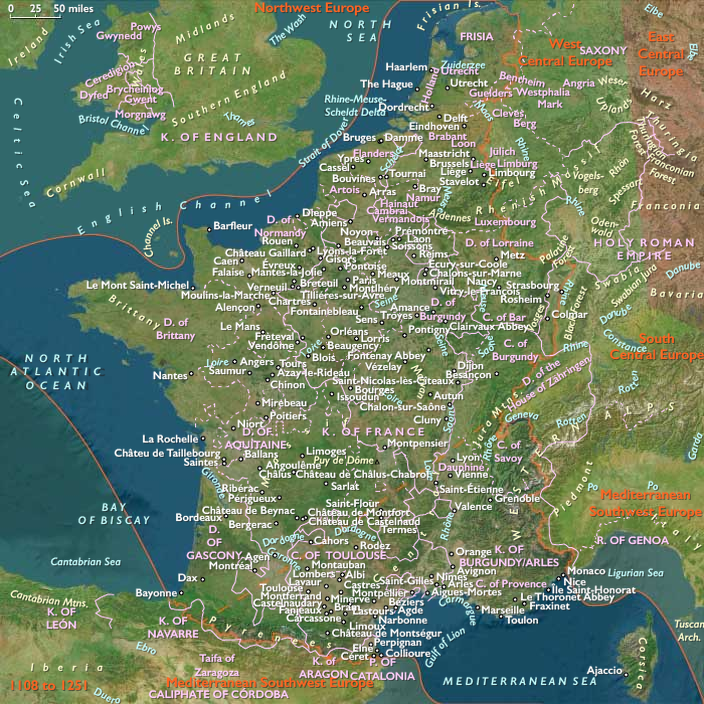
On July 4, 1189, after his defeat at Ballans, Henry II of England was forced to negotiate peace with Philip II of France. The resulting Treaty of Azay-le-Rideau marked Henry’s complete political humiliation, compelling him to renew his homage to Philip, recognize further territorial losses, and formally surrender his ambitions in central France.
Terms of the Treaty of Azay-le-Rideau (July 4, 1189)
-
Renewal of Henry’s Homage to Philip II
- As part of the peace settlement, Henry had to renew his vassalage to Philip, publicly acknowledging the King of France as his feudal overlord for his lands in France.
- This was a humiliating act, as Henry had long fought to resist Philip’s growing power and to maintain his independence as ruler of the Angevin Empire.
-
Territorial Concessions to Philip II
- Henry was forced to confirm the cession of Issoudun and Graçay, strengthening Philip’s control over Berry.
- He also renounced his claim to suzerainty over Auvergne, allowing Philip to extend Capetian authority into central France at the expense of the Angevin holdings.
-
Recognition of Richard as Heir
- In addition to his territorial losses, Henry had to formally acknowledge Richard as his heir, effectively surrendering to his rebellious son’s demands.
The Aftermath: Henry’s Death and Richard’s Rise
- Two days later, on July 6, 1189, Henry II died at Chinon, reportedly bitter and betrayed, particularly by John’s defection to Richard’s side.
- With Henry’s death, Richard I (the Lionheart) ascended to the English throne, beginning his reign as King of England and ruler of the Angevin Empire.
The Treaty of Azay-le-Rideau marked the final defeat of Henry II, ending his rule in humiliation and securing Philip II’s growing dominance in France, setting the stage for the next phase of the Angevin-Capetian conflict.
Locations
People
Groups
Commodities
Subjects
Regions
West Europe
View →Subregions
