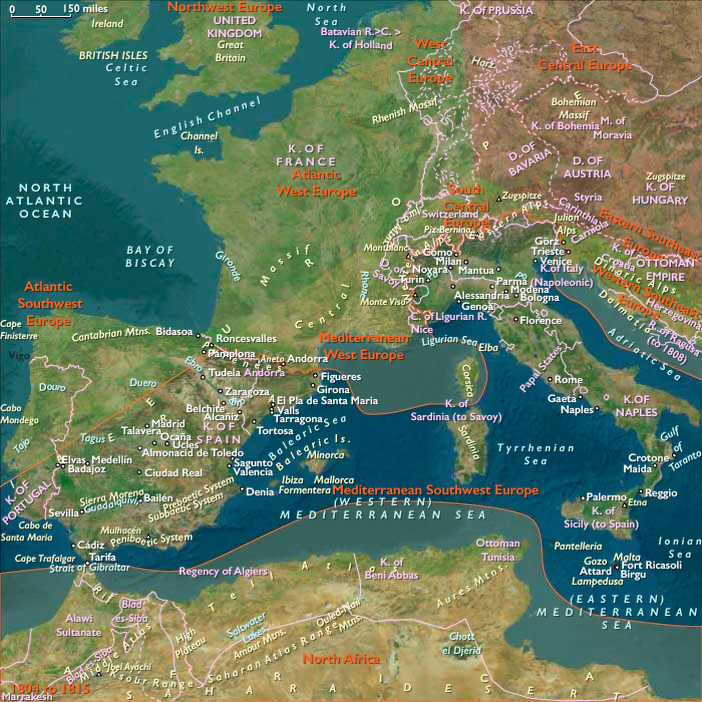
The Battle of Évora (July 29, 1808)…
July 1808 CE
The Battle of Évora (July 29, 1808) – A Brutal French Victory
As General Henri-Louis Loison’s French forces advanced through eastern Portugal, they reached Évora on July 29, 1808, where a hastily assembled Portuguese-Spanish force attempted to resist them. However, the battle ended in disaster for the defenders, leading to a massacre of the town’s inhabitants and a brutal sack by the French troops.
The Portuguese and Spanish Defense at Évora
- The Junta of Alentejo, headquartered in Évora, had named General Francisco de Paula Leite de Sousa as commander of its forces, but he struggled to arm and organize a strong defense.
- Leite’s force included:
- 1.5 battalions of Portuguese infantry.
- 120 Portuguese cavalrymen.
- Reinforcements arrived from Badajoz under Colonel Moretti, adding:
- 1.5 battalions of Spanish infantry.
- The María Luisa Hussar Regiment No. 5.
- Seven field guns.
- Behind them, Évora’s ancient walls were manned by townsmen and peasants, armed with bird guns and pikes.
- In total, the allied defenders numbered about 2,900 men, a force far weaker than Loison’s well-equipped French troops.
The Battle – Loison’s Attack and the Rout of the Defenders
- Instead of positioning their regulars behind Évora’s walls, Leite and Moretti chose to fight in the open, an error that played into French tactical superiority.
- Loison’s opening charge shattered the fragile battle line:
- The Spanish hussars immediately fled, abandoning the battlefield.
- Leite himself galloped off in a panic, leaving his men leaderless.
- Some infantry held their ground and rallied behind Évora’s walls, but the pursuing French forces broke into the town from multiple points.
The Sack of Évora – Massacre and Destruction
- The French troops massacred the ill-equipped defenders, cutting down the desperate townspeople and peasant fighters.
- Many non-combatants were likely killed as well, as the French rampaged through the city.
- After destroying the organized resistance, Loison’s men brutally sacked Évora, looting homes and businesses.
Aftermath – Spanish and French Brutality
- The Spanish retreating from Portugal behaved just as brutally as the French, ravaging the countryside in their retreat.
- Loison’s victory at Évora ensured continued French control in eastern Portugal, but resistance remained strong elsewhere.
Conclusion – A Crushing Defeat for the Portuguese Insurgents
The Battle of Évora was a disaster for Portuguese and Spanish resistance, marking one of the bloodiest engagements of the early Peninsular War. Despite local uprisings against French rule, the defenders at Évora were no match for Loison’s disciplined troops. However, French atrocities only fueled further Portuguese resentment, ensuring that resistance to Napoleon would continue to grow in Portugal.
Locations
People
Groups
Topics
Subjects
Regions
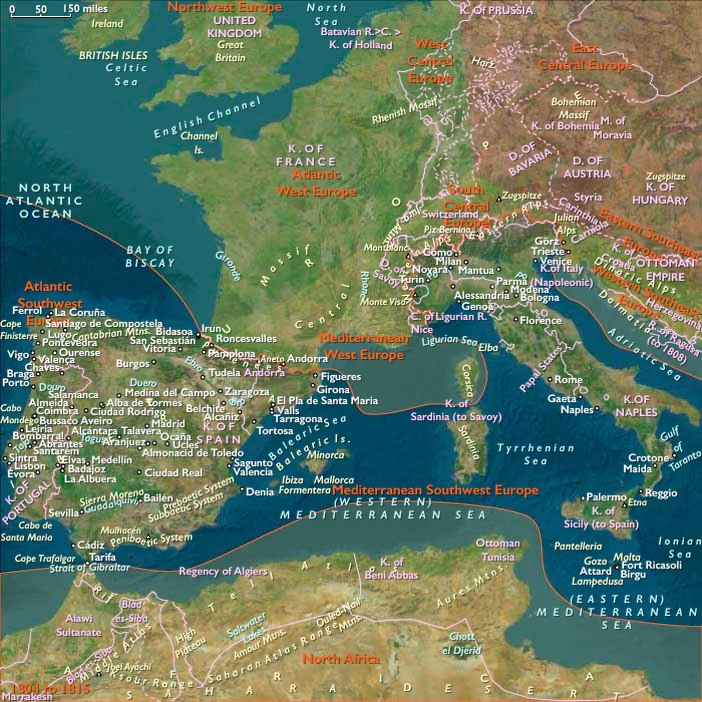
Southwest Europe
View →Subregions