
Political Intrigue and Conflict: The Fall of…
1433 CE
Political Intrigue and Conflict: The Fall of Georges de La Trémoille (1433)
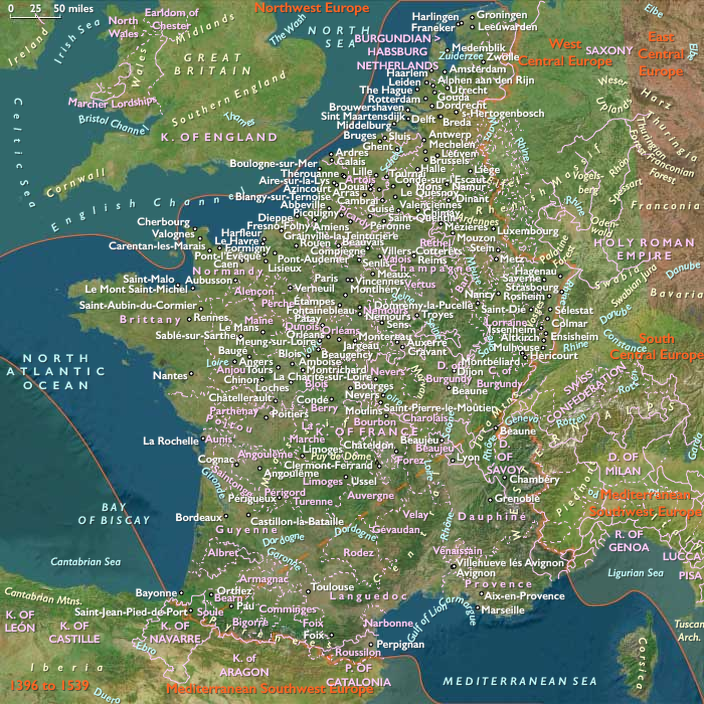
Amid the intricate web of power struggles that defined the reign of Charles VII of France, the undue influence and ambition of his chief minister, Georges de La Trémoille, ultimately led to instability and discord within the royal court. La Trémoille's tenure was characterized by corruption, manipulation, and ineffective leadership, drawing intense opposition from powerful nobles and officials. In June 1433, tensions culminated dramatically when Georges de La Trémoille was forcibly removed from power through a bold conspiracy led by Arthur de Richemont, Constable of France. Richemont and his supporters captured La Trémoille in Chinon, wounding him and detaining him until he agreed to resign.
This political upheaval had significant implications. Richemont's decisive action restored cohesion and authority to Charles VII's government, strengthening royal leadership. Militarily, it enabled a more unified response to the ongoing Hundred Years' War, notably improving France’s strategic position by revitalizing military operations against English-held territories. Economically, La Trémoille's fall reduced the rampant corruption draining the kingdom's resources, allowing for improved fiscal management and greater support from regional nobility.
John, Duke of Bedford: England’s Waning Hold on France (1429–1433)
John Plantagenet, Duke of Bedford, uncle to King Henry VI, had proven himself an exceptional military leader, nearly matching the brilliance of his late brother, Henry V, in maintaining English control over France during the early years of Henry VI’s reign.
However, the emergence of Joan of Arc in 1429 dramatically altered the course of the war. Despite Bedford’s tactical skill and administrative acumen, English fortunes in France began to decline, and by 1433, he was confronting not only military setbacks but also financial insolvency at home, making it increasingly difficult for England to continue the conflict.
I. The Turning Point: Joan of Arc’s Intervention (1429)
-
Until 1429, Bedford had successfully maintained English dominance, securing control over Paris, Normandy, and much of northern France.
-
The siege of Orléans (1428–1429) was expected to crush French resistance, but Joan of Arc’s arrival in April 1429 reversed English momentum.
-
The French victories at Orléans and Patay (June 1429) broke the English aura of invincibility, culminating in Charles VII’s coronation at Reims in July 1429—a direct challenge to Bedford’s authority.
II. Bedford’s Efforts to Hold the English Position (1429–1433)
-
Bedford attempted to rally English forces and maintain control, reinforcing garrisons and securing Burgundian support through diplomacy.
-
However, the Burgundian alliance grew unstable, particularly after Duke Philip the Good began negotiating with Charles VII.
-
Despite his continued military leadership, Bedford could not counter the growing legitimacy of Charles VII’s reign, which diminished English influence in France.
III. The Financial Crisis of 1433
-
By 1433, Bedford faced the stark reality that England was financially exhausted.
-
The war in France had been expensive to maintain, and England’s resources were stretched thin.
-
Bedford discovered that England was rapidly becoming too insolvent to prosecute the conflict, further hindering his ability to reinforce the war effort.
IV. Consequences: The Decline of English Power in France
-
The loss of Burgundian loyalty and growing French military resurgence made it increasingly difficult for Bedford to hold English territories.
-
The decline in England’s financial capability meant fewer troops, less logistical support, and an inability to sustain large-scale campaigns.
-
Bedford’s once-strong grip on northern France was slipping, foreshadowing England’s eventual expulsion from the continent in the later stages of the war.
By 1433, John, Duke of Bedford, had reached the limits of England’s ability to sustain the war in France, with Joan of Arc’s military successes and England’s growing financial crisis sealing the fate of English rule in France.
Locations
Groups
Topics
Commodities
Subjects
Regions
West Europe
View →Subregions
