Event
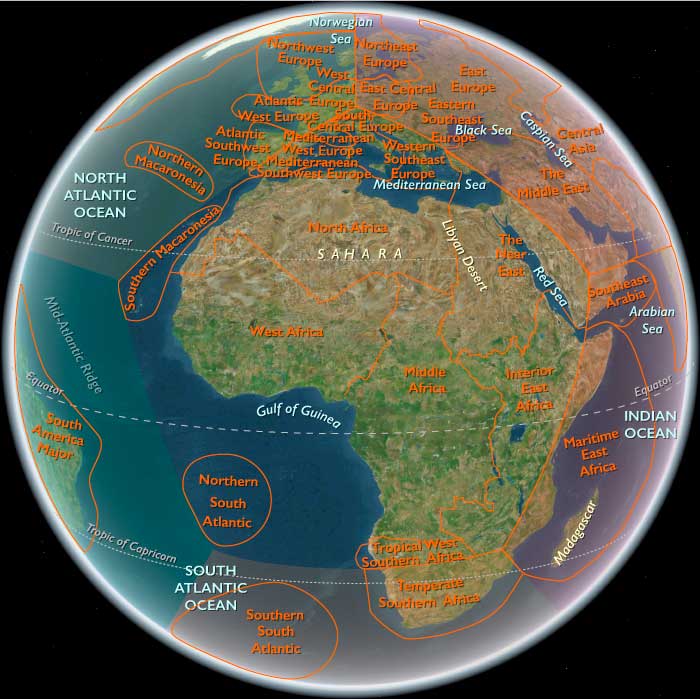
Interior East Africa (1504–1515 CE): Diplomacy, Dynastic…
Interior East Africa (1504–1515 CE): Diplomacy, Dynastic Shifts, and Religious Ambitions
Reign and Death of Emperor Na'od
Emperor Na'od (1494–1508), the second son of Baeda Maryam I and his second wife Kalyupe (also known as Calliope), assumed the Ethiopian throne amid ongoing internal dissension. Born in Gabarge and significantly influenced by the Queen Mother Eleni, Na'od struggled to maintain political stability. His reign was marked by religious and military ambitions, notably initiating construction of the lavish Mekane Selassie Church in Amhara province, a significant edifice adorned with gold leaf. However, Na'od did not live to see its completion, as he was killed in battle near Jejeno—possibly at the site of Mekane Selassie—while campaigning against Muslim forces. He was interred within the church itself, underscoring the intertwining of imperial authority and religious devotion.
Renewed European Diplomatic Relations
Diplomatic contact with Europe, intermittent since the early 15th century, intensified significantly during this period. While earlier attempts at communication, including emissaries sent by Emperor Yeshaq to Alfonso V of Aragon in 1428, had failed, sustained diplomatic relations commenced in earnest with Portugal under Na'od’s son, Emperor Dawit II (Lebna Dengel), who ascended the throne in 1508 following Na'od’s death.
Regency of Queen Mother Eleni
The young Lebna Dengel’s reign began under the regency of the influential Empress Mother Eleni. In her seventies, Queen Eleni wielded considerable authority, having converted to Christianity upon marrying Emperor Zara Yaqob. Her strategic acumen was evident when she orchestrated a palace coup in 1486 to remove Bitwoded Amda Mikael, subsequently becoming a key political figure throughout the reigns of her successors. Historian Paul B. Henze characterizes Eleni as virtually a "co-monarch" during the reign of Baeda Maryam, a status she maintained well into the reigns of Eskender and Na'od.
Portuguese Diplomatic Mission and the Ethiopian Embassy
Recognizing Ethiopia's vulnerability amid rising Ottoman influence, Queen Eleni proactively engaged European powers, dispatching Mateus (Matthew the Armenian), an Ethiopian of Armenian origin, as ambassador to Portugal and the Vatican around 1508. This diplomatic initiative followed the arrival of Portuguese envoys João Gomes, João Sanches, and Sid Mohammed, who had been sent by Tristão da Cunha in 1506 to locate Pêro da Covilhã. After a challenging journey, these envoys reached Shewa, but subsequently disappeared or were killed on their return. In response, Mateus carried a personal letter from Eleni to King Manuel I of Portugal, accompanied by a revered relic—a piece of the True Cross—signifying the depth of Ethiopian diplomatic and religious aspirations.
Key Historical Developments
-
Reign and premature death of Emperor Na'od in military conflict.
-
Extensive political influence and effective regency of Empress Mother Eleni.
-
Initiation of sustained Ethiopian-European diplomatic relations, particularly with Portugal.
-
Diplomatic exchanges led by Mateus (Matthew the Armenian) to Europe, aiming to secure allies against regional Islamic powers.
Long-Term Consequences and Historical Significance
Between 1504 and 1515 CE, Ethiopia experienced significant dynastic transitions and intensified its diplomatic engagements with Europe, particularly Portugal. These interactions marked the beginning of enduring international alliances and exposed Ethiopia to broader geopolitical dynamics, setting the stage for continued religious and political struggles within the Horn of Africa. Queen Eleni's diplomatic foresight would significantly shape Ethiopia's subsequent history, influencing its religious identity, political alliances, and internal stability.
-
{# Image navigates to the detail page; the magnifying-glass chip is the only Fancybox lightbox trigger (kept a separate sibling — anchors can't nest). #}
 The Middle of The Earth
World
The Middle of The Earth
World
-
{# Image navigates to the detail page; the magnifying-glass chip is the only Fancybox lightbox trigger (kept a separate sibling — anchors can't nest). #}
 East Africa
Region
East Africa
Region
-
{# Image navigates to the detail page; the magnifying-glass chip is the only Fancybox lightbox trigger (kept a separate sibling — anchors can't nest). #}
 Interior East Africa
Subregion
Interior East Africa
Subregion