
Isthmian America (1492–1503 CE): Arrival of Spanish…
1492 CE to 1503 CE
Isthmian America (1492–1503 CE): Arrival of Spanish Explorers
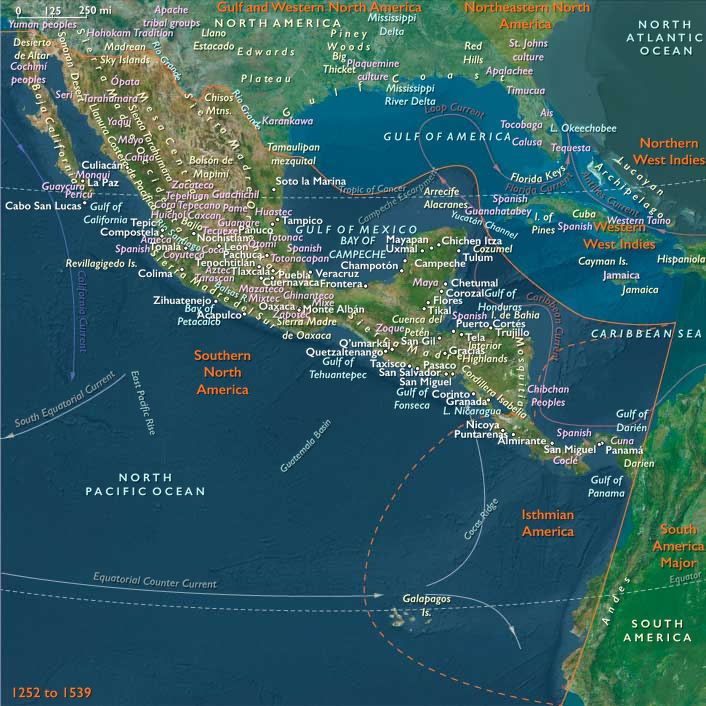
The arrival of Europeans profoundly altered the history of Isthmian America. Rodrigo de Bastidas, a wealthy notary from Seville, became one of the earliest Spanish explorers to reach this critical juncture between the continents. In 1501, sailing westward from Venezuela in search of gold and other riches, Bastidas explored approximately 150 kilometers of coastline, including territories that are now part of Panama and coastal regions near the Gulf of Urabá. Although he failed to find significant quantities of gold, his voyage marked the beginning of sustained European interest in the region.
The following year, in 1502, Christopher Columbus arrived on his fourth and final voyage to the New World. Columbus navigated along the Isthmian coast, exploring several points of interest including a sheltered, horseshoe-shaped harbor that he named Puerto Bello (“beautiful port”), subsequently known as Portobelo. Columbus’s explorations sparked renewed European attention, soon prompting further voyages focused on colonization and exploitation.
At the same time, the indigenous societies of the region—including the Manteño-Huancavilca civilization along the Ecuadorian coast, the sophisticated Gran Coclé culture in central Panama, and diverse peoples such as the Ngäbe, Guna, Naso, Bokota, and the resilient Chocoan-speaking peoples—began to experience increasing disruption. While initially European contacts remained brief, the groundwork was now laid for future confrontations and transformations that would permanently reshape their cultural, political, and economic landscapes.
Groups
Topics
Commodities
Subjects
Regions
Middle America
View →Subregions
