Jean Gerson: The Rise of a Theological…
1395 CE
Jean Gerson: The Rise of a Theological Reformer and Chancellor of the University of Paris (1363–1395)
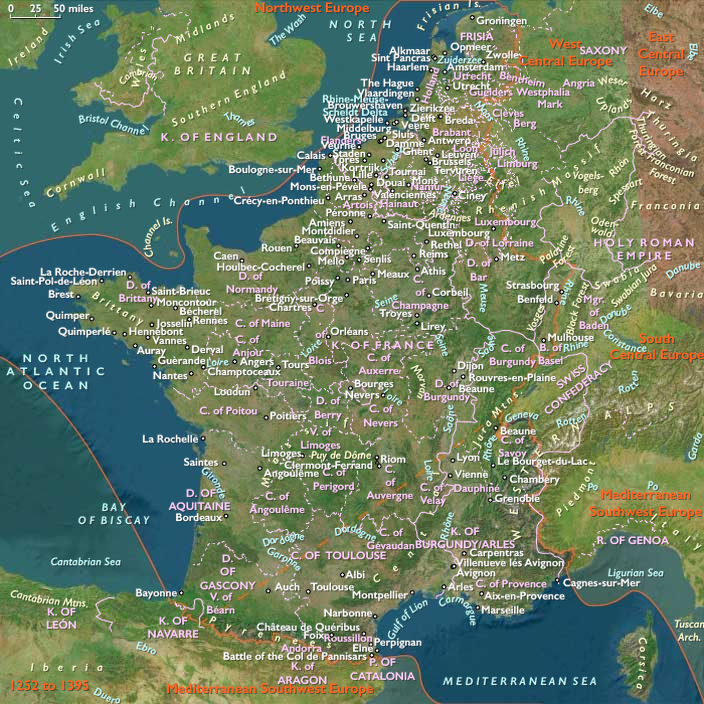
Jean Gerson (1363–1429) was a French theologian, university chancellor, and religious reformer, known for his efforts to unify the Church, improve clerical morals, and defend theological doctrine. Born in Gerson-lès-Barby, Champagne, he rose rapidly through the ranks of the University of Paris, becoming one of the most influential intellectuals in medieval Europe.
Early Life and Education
- Born into a devout peasant family, with seven of his twelve siblings entering religious life, Gerson was sent to Paris at age 14 to study at the prestigious Collège de Navarre.
- He obtained his licentiate in arts after five years of study and then pursued theology under two of the most celebrated scholars of the time:
- Gilles Deschamps (Aegidius Campensis)
- Pierre d'Ailly (Petrus de Alliaco), then rector of the Collège de Navarre, later bishop of Puy, archbishop of Cambrai, and a cardinal.
- Pierre d'Ailly became his lifelong friend and mentor, though in later years, Gerson would surpass him in influence.
Academic and Theological Career (1383–1395)
- In 1383 and again in 1384, Gerson was elected procurator for the French "nation" at the University of Paris, representing the French-speaking student body.
- By 1387, his influence had grown further, and he was sent to Avignon to represent the university before Pope Clement VII in a high-profile theological dispute.
The John of Montson Controversy (1387)
- John of Montson (Monzón), a Dominican theologian, had been condemned by the faculty of theology at Paris for denying the Immaculate Conception of the Virgin Mary.
- The Dominicans, fierce opponents of the doctrine, were expelled from the university, and Montson appealed to the pope at Avignon.
- Pierre d'Ailly, Gerson, and other delegates traveled to Avignon, personally supporting the Immaculate Conception, but primarily arguing that the university had the right to regulate its own theological teachings.
- Gerson’s journey to Avignon is often compared to Martin Luther’s later visit to Rome, as it deepened his resolve to reform both the Church and the university system.
Chancellor of the University of Paris (1395)
- After receiving his licentiate in 1392 and his doctorate in theology in 1394, Gerson was elected Chancellor of the University of Paris in 1395, at the remarkably young age of 32.
- His new position gave him immense influence, as the university was at the height of its prestige, attracting students from all over Europe.
- As chancellor, Gerson was responsible for defending the university’s rights against both king and pope and overseeing the intellectual and moral education of thousands of students.
Intellectual and Reformist Mission
- Gerson’s writings reveal his deep awareness of the moral and theological crises facing the Church.
- His mission included:
- Reforming the clergy and fighting corruption in the Church.
- Strengthening theological education and spiritualizing university life.
- Seeking an end to the Great Western Schism, which divided the papacy between Avignon and Rome.
Jean Gerson’s appointment as Chancellor of the University of Paris in 1395 marked the beginning of his prominent role in medieval intellectual life, as he worked to reform the Church, defend university autonomy, and guide a new generation of scholars and theologians
Locations
Regions
West Europe
View →Subregions