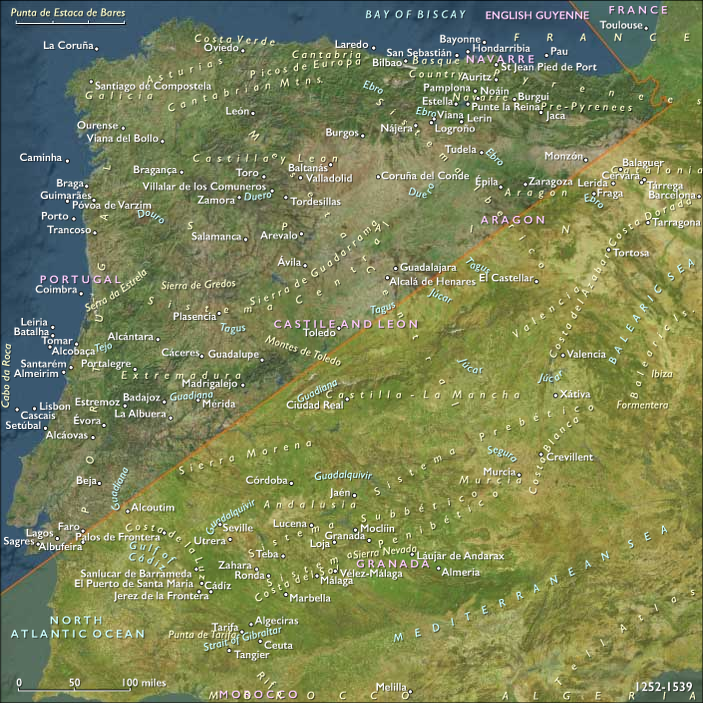
The Battle of Trancoso (June 1385): A…
1385 CE
The Battle of Trancoso (June 1385): A Decisive Victory for Portugal
By May 1385, John I of Castile, furious at Portugal’s continued resistance, ordered a massive invasion of Portugal, mobilizing 31,000 men in a two-pronged offensive. His strategy aimed to subdue the kingdom by attacking both northern and central Portugal simultaneously.
The Castilian Invasion and the Sack of Viseu
- The smaller northern force, part of the two-pronged attack, launched raids along the border, employing the scorched-earth tactics commonly used in the Hundred Years' War.
- The city of Viseu was plundered and burned, with many Portuguese taken prisoner and large amounts of loot seized.
- Confident in their success, the Castilian forces began their return march to Castile, heavily burdened with prisoners and stolen goods.
The Battle of Trancoso (First Week of June 1385)
- A Portuguese army, composed of local nobles and militia, intercepted the Castilian raiders at Trancoso, determined to halt their retreat and recover the stolen goods.
- The Portuguese forces dismounted and assumed a defensive formation, forcing the Castilian cavalry and infantry to exhaust themselves in repeated assaults.
- The Castilians suffered a disastrous defeat, losing six of their seven captains, with high casualties among their ranks.
- The Portuguese forces liberated all the prisoners, restored the plundered goods, and effectively destroyed the Castilian raiding force.
Impact of the Battle of Trancoso
- The battle boosted Portuguese morale just as the kingdom was preparing for the larger Castilian offensive in central Portugal.
- The Portuguese victory disrupted Castilian logistics, weakening their northern flank ahead of the decisive Battle of Aljubarrota (August 1385).
- This triumph demonstrated the effectiveness of Portuguese defensive tactics, which relied on infantry cohesion and strategic positioning, similar to those employed at Atoleiros (1384).
The Battle of Trancoso was a critical prelude to Aljubarrota, reinforcing Portugal’s determination to resist Castile and ensuring that the northern front remained secure as the main Castilian army advanced toward Lisbon.
Locations
People
Groups
Topics
Commodities
Subjects
Regions
Southwest Europe
View →Subregions