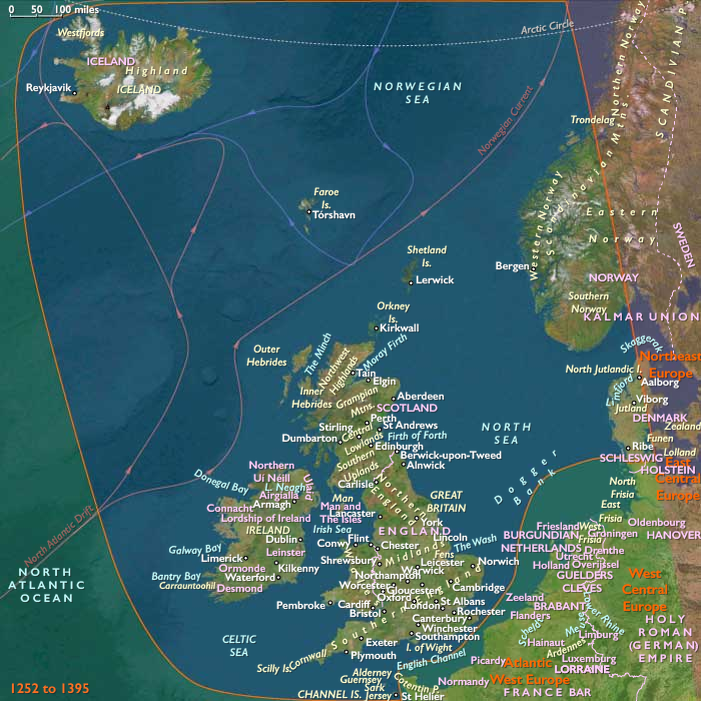
John Wycliffe teaches at Oxford University, where…
1382 CE
John Wycliffe teaches at Oxford University, where he gains renown as a brilliant scholastic theologian and the most respected debater of his age.
Wycliffe enters royal service in 1374, when, at fifty-six, he is sent to Bruges to negotiate with papal representatives on the issue of tribute payments to Rome.
He shortly becomes a key figure in the anticlerical party of John of Gaunt, attacking the rights claimed by the church and calling for a reformation of its wealth, corruption, and abuses.
Wycliffe views the king as the legitimate authority for church purification.
Wycliffe’s views had become more radicalized after the beginning in 1378 of the Great Papal Schism.
His “De potestate papae” (“On Papal Power”), published in that year, rejects the biblical basis of papal authority, insists on the primacy of Scripture, and advocates extensive theological reform.
His denial of transubstantiation and advocacy of a vernacular Bible bring him into further conflict with the church and cost him support.
The church in 1382 condemns ten conclusions drawn from his writings, and his Oxford disciples are forced to recant; but Wycliffe himself is neither tried nor personally condemned.
Locations
Topics
Commodities
Subjects
Regions

North Europe
View →Subregions