Julius Caesar, after a four-year-long politico-military struggle…
45 BCE to 34 BCE
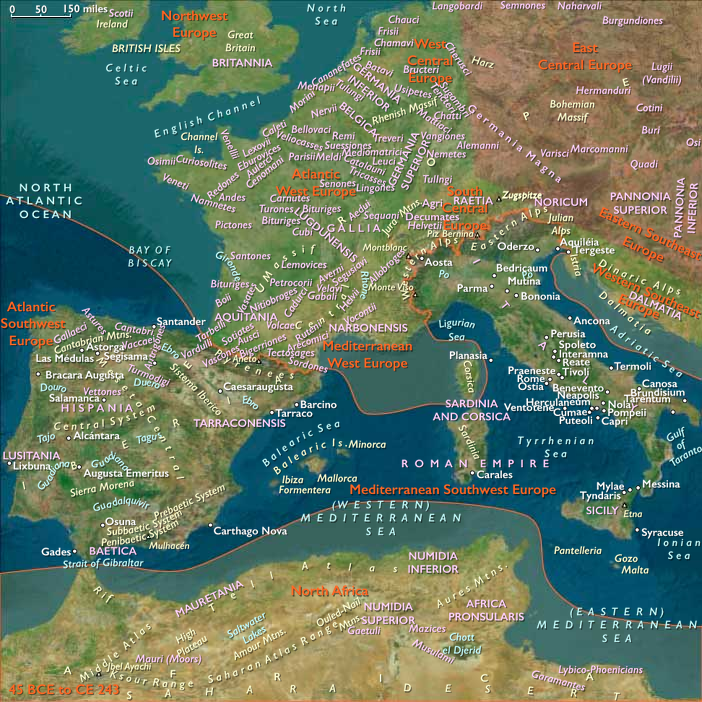
Julius Caesar, after a four-year-long politico-military struggle waged in Italy, Albania, Greece, Egypt, Africa, and Hispania, defeats the last of the Optimates in the Battle of Munda and becomes Dictator perpetuo (Perpetual Dictator) of Rome.
The changes to Roman government concomitant to the war mostly eliminate the political traditions of the Roman Republic (509–27 BCE) and lead to the Roman Empire (27 BCE–CE 476).
Caesar’s subsequent assassination in 45 BCE by the next generation of statesmen, led by Marcus Junius Brutus and Gaius Cassius Longinus, begins the process that eventually leads to the end of the Roman Republic with the reign of his great-nephew, Octavian (later known as Augustus).
The Senate's army (led first by Cicero and then by Octavian) wars with the army of Marcus Antonius (Mark Antony), Marcus Lepidus, and their colleagues.
The Post-Caesarian War culminates in the Battle of Mutina, fought on April 21, 43 BCE, between the forces of Antony and the forces of Gaius Vibius Pansa Caetronianus and Aulus Hirtius, who are providing aid to Decimus Junius Brutus Albinus.
It is a tactical victory for the Republican forces but a strategic victory for Antony, in that he is able to prevent encirclement of his forces and the enemy consul is killed; Octavian and the Republic sign a treaty with Antony and their forces unite.