King Charles VII Confirms the Charter of…
1432 CE
King Charles VII Confirms the Charter of the University of Poitiers (1432)
In 1432, King Charles VII of France officially confirmed the charter of the University of Poitiers, which had been established in 1431 by a Papal Bull issued by Pope Eugene IV. This act solidified the university’s legal and institutional foundation, ensuring its place as a major center of higher learning in France.
I. The Papal Foundation and Royal Confirmation
- Pope Eugene IV authorized the creation of the University of Poitiers in 1431, recognizing the need for a prominent academic institution in western France.
- Charles VII’s confirmation in 1432 reinforced its legitimacy, demonstrating royal support for higher education and intellectual development.
II. Structure and Academic Focus
- The university was founded with five faculties:
- Theology
- Canon Law
- Civil Law
- Medicine
- Arts
- It was modeled after the University of Paris, incorporating a strong focus on legal and theological studies, making it a key institution for training scholars, clergy, and administrators.
III. The University’s Role in the Hundred Years’ War Context
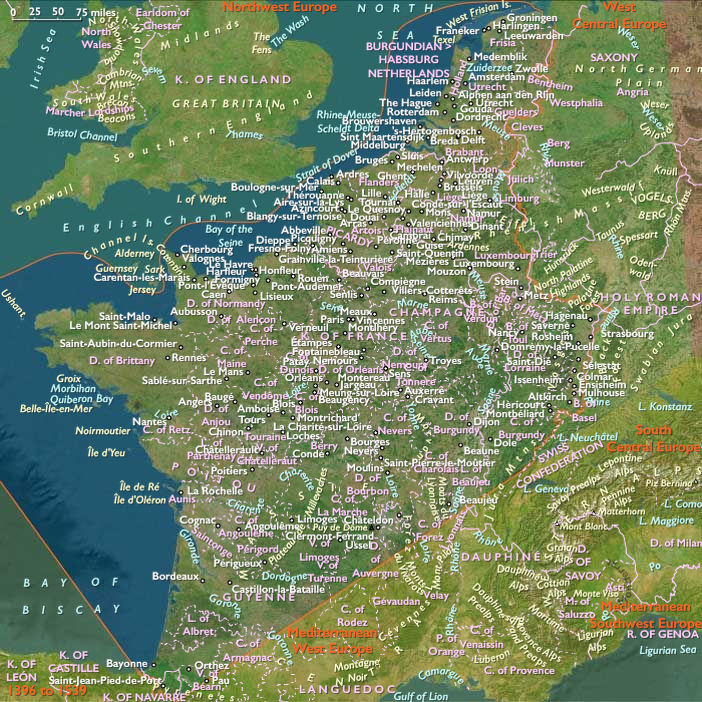
- Founded during the later years of the Hundred Years’ War, the university was part of Charles VII’s broader efforts to consolidate his rule in contested territories.
- Poitiers had served as a political and legal hub, making it an ideal location for an institution that would train officials and scholars for the French crown.
IV. Legacy and Influence
- The University of Poitiers remains one of France’s oldest and most prestigious universities.
- Over time, it became an intellectual powerhouse, producing influential figures such as René Descartes and François Rabelais.
- Its legal and theological faculties shaped French scholarship and governance for centuries.
The confirmation of the University of Poitiers’ charter by Charles VII in 1432 reinforced France’s commitment to higher learning, securing its place as a leading institution in medieval and Renaissance Europe.
Locations
Groups
Topics
Regions
West Europe
View →Subregions