
The suppression of the Jesuits in France…
1760 CE
Their large mission plantations include large local populations that work under the usual conditions of tropical colonial agriculture of the eighteenth century.
The Catholic Encyclopedia in 1908 says that missionaries occupying themselves personally in selling off the goods produced (an anomality for a religious order) "was allowed partly to provide for the current expenses of the mission, partly in order to protect the simple, childlike natives from the common plague of dishonest intermediaries."
Father Antoine La Vallette, Superior of the Martinique missions, has borrowed money to expand the large undeveloped resources of the colony, but on the outbreak of war with England, ships carrying goods of an estimated value of 2,000,000 livres are captured, and La Vallette suddenly goes bankrupt for a very large sum.
His creditors turn to the Jesuit procurator in Paris to demand payment, but he refuses responsibility for the debts of an independent mission—though he offers to negotiate for a settlement.
The creditors go to the courts and receive a favorable decision in 1760 obliging the Society to pay, and giving leave to distrain in the case of non-payment.
Locations
Groups
Commodities
Regions
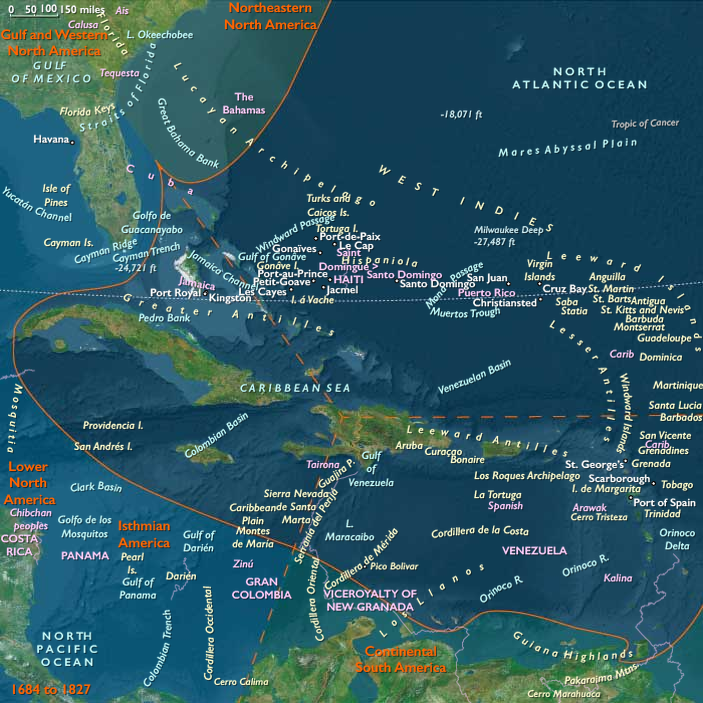
West Indies
View →Subregions
