
Francis I Brings Leonardo da Vinci to…
1516 CE
Francis I Brings Leonardo da Vinci to Amboise and Jean Clouet Enters Royal Service (1516)
In 1516, King Francis I of France invited the renowned Italian artist and inventor Leonardo da Vinci to his royal residence at Amboise, marking a significant moment in the cultural transformation of the French court. Simultaneously, the young Flemish painter Jean Clouet, originally from Brussels, emerged in royal accounts, signaling the start of his influential career at the French court.
Leonardo da Vinci in Amboise: Artistic and Cultural Impact
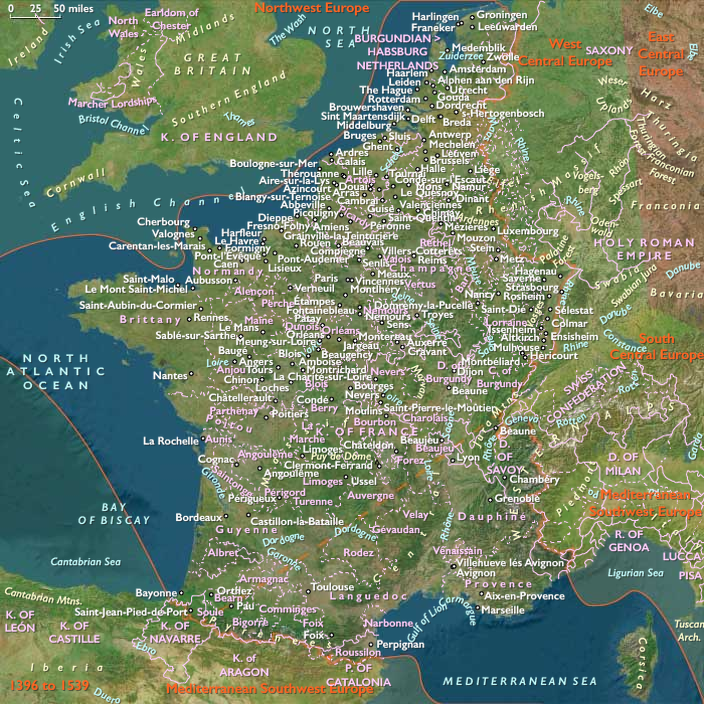
King Francis I, deeply fascinated by Italian Renaissance art and culture, persuaded Leonardo da Vinci to move from Italy to France in 1516, providing him with residence at the Château du Clos Lucé near Amboise. Da Vinci's presence in France symbolized the profound embrace of Italian Renaissance aesthetics and intellectualism by the French court. Francis I’s patronage allowed Leonardo to live out his final years under royal protection, facilitating significant cultural exchanges that greatly enriched French artistic traditions.
Leonardo’s arrival significantly accelerated the diffusion of Italian artistic techniques and Renaissance ideals into France. His influence extended beyond painting and sculpture into architecture, engineering, anatomy, and the natural sciences, profoundly shaping the intellectual and artistic environment of the French court.
Jean Clouet’s Entry into Royal Service
In the same pivotal year, the painter Jean Clouet, only twenty-one at the time, was officially documented in the French royal accounts for the first time. Born in Brussels, Jean was likely trained by his father, Michel Clouet, also a painter of note. Jean Clouet’s documented presence at the French court from 1516 suggests he was quickly recognized for his talent, and his Flemish heritage contributed distinctly Northern European techniques to the increasingly Italian-influenced French artistic scene.
Cultural Exchange and Artistic Synthesis
Jean Clouet became one of the leading portraitists at the French court, renowned for his refined realism, meticulous technique, and ability to capture the psychological depth of his subjects. His portraits blended Northern European precision with Italian Renaissance sophistication, embodying a unique synthesis of Flemish realism and Italianate elegance. Leonardo’s contemporaneous presence likely intensified the cross-cultural artistic dialogue, although direct evidence of influence between Leonardo and Clouet remains speculative.
Long-Term Significance and Historical Consequences
The decision by Francis I to invite Leonardo da Vinci and other Italian artists to his court had profound long-term effects. Leonardo’s stay at Amboise and his closeness to the king symbolized France's embrace of Renaissance humanism, dramatically altering French cultural life, art, and architecture.
Jean Clouet’s appearance at the French court similarly signaled a crucial moment in the development of portraiture in France, paving the way for a distinctly French portrait tradition characterized by psychological depth, careful realism, and refined elegance. Clouet’s career, initiated in 1516, thus represents the beginning of a Flemish-French artistic fusion that would significantly influence French portraiture through subsequent generations.
Together, Leonardo’s presence and Clouet’s entry into royal service exemplify the rich cultural exchanges that defined the early decades of Francis I’s reign, positioning France as a leading center of Renaissance art and learning north of the Alps.
Locations
Regions
West Europe
View →Subregions
