
Vasco da Gama’s Second Voyage to India…
February 1502 CE
Vasco da Gama’s Second Voyage to India (1502–1503): Retaliation and Establishing Portuguese Control
After receiving word that Portuguese traders left by Pedro Álvares Cabral in India had been massacred, King Manuel I of Portugal ordered Vasco da Gama to return to India, this time with the explicit goal of securing Portuguese dominance in the Indian Ocean trade.
The Fleet and Objectives
- Vasco da Gama was promoted to Admiral of the Indian Ocean, a title recognizing his role as Portugal’s foremost navigator in the East.
- In February 1502, he set sail from Portugal with 20 ships, making it one of the largest fleets yet sent to India.
Goals of the Expedition
-
Avenge the Massacre of Portuguese Traders in Calicut
- In 1500, Portuguese merchants and agents left in Calicut by Cabral had been slaughtered in an attack sanctioned by the local ruler, the Zamorin.
- Gama was tasked with punishing Calicut and reasserting Portuguese authority.
-
Secure the Spice Trade for Portugal
- Portugal aimed to control the lucrative Indian Ocean trade, particularly in pepper, cinnamon, and other spices.
- Gama was to establish permanent trade agreements with friendly rulers.
-
Destroy Arab and Indian Resistance to Portuguese Domination
- The fleet was heavily armed, as Portugal intended to use military force to secure trading privileges.
- Gama was authorized to attack and seize enemy ships, particularly those of Arab merchants who competed with Portuguese interests.
A Mission of Force and Fear
- On his way to India, Gama terrorized Arab shipping along the East African and Indian coasts.
- Near Calicut, he captured a Muslim pilgrim ship (the Miri) carrying over 300 passengers, mostly women and children, and set it on fire with all aboard, demonstrating Portuguese ruthlessness.
Battle and Retaliation in Calicut
- Gama demanded compensation from the Zamorin for the massacre of the Portuguese traders in 1500.
- When the Zamorin refused, Gama bombarded Calicut, destroying parts of the city and causing widespread devastation.
- The fleet also seized and executed merchants, leaving their mutilated bodies on shore to send a warning.
The Establishment of Portuguese Control
- After attacking Calicut, Gama sought new trading allies.
- He negotiated with the rulers of Cochin and Cannanore, securing agreements favorable to Portugal.
- These alliances laid the foundation for Portugal’s future dominance in the Indian Ocean, leading to the establishment of Portuguese forts and trade posts.
Consequences of the 1502 Expedition
-
Portuguese Naval Supremacy in the Indian Ocean
- Gama’s fleet crippled Indian and Arab merchant networks, ensuring that Portugal would soon dominate the spice trade.
-
Foundation for Future Portuguese Expansion
- His violent tactics set the precedent for later Portuguese conquests and fortifications in India, such as the capture of Goa in 1510 by Afonso de Albuquerque.
-
Permanent Hostility with Calicut
- The Zamorin of Calicut became one of Portugal’s fiercest enemies, leading to ongoing conflicts over Indian trade routes.
Legacy of Vasco da Gama’s Second Voyage
Gama’s second expedition to India (1502–1503) was a turning point in Portuguese imperial strategy. It marked the beginning of Portugal’s aggressive and militarized control over the Indian Ocean trade, making Lisbon the new center of global commerce.
Despite its brutality, this mission cemented Portugal’s status as the dominant European power in the East, ensuring its monopoly over the spice trade for the next century.
Locations
Commodities
Subjects
Regions
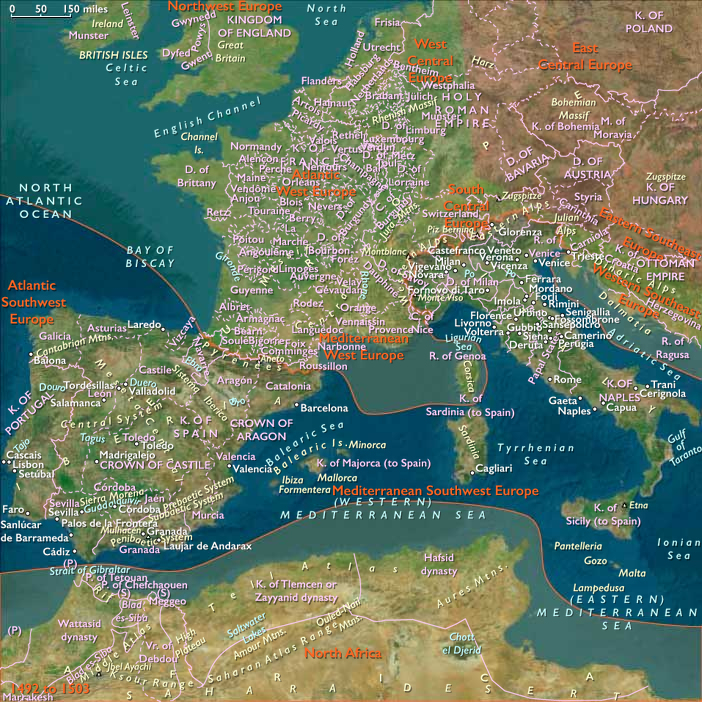
Southwest Europe
View →Subregions
