Leonardo da Vinci’s slightly later works of…
1482 CE
Leonardo da Vinci’s slightly later works of his Florentine period, the so-called “Benois Madonna,” painted between about 1478 to 1480, and the unfinished St. Jerome in the Wilderness, painted in around 1480, feature contrapposto and chiaroscuro.
In his unfinished Adoration of the Magi for the monastery of San Donato a Scopeto, on which he works in 1481-82, Leonardo displays for the first time his method of organizing figures into a pyramid shape, so that viewer interest is focused on the principal subject—in this case, the child held by his mother and adored by the three kings and their retinue.
This project is interrupted when Leonardo leaves Florence for Milan about 1482.
The influential Marsilio Ficino combines Christian theology with Platonic philosophy in his Theologia Platonica (Platonic Theology), published in 1482.
Ficino, who believes that true philosophy and true religion are in harmony with each other, emphasizes themes of good, love, humanity, and immortality, and conceives the universe as a hierarchy of beings from God down to prime matter, with humankind, the microcosm, as the center and bond of the universe.
Images
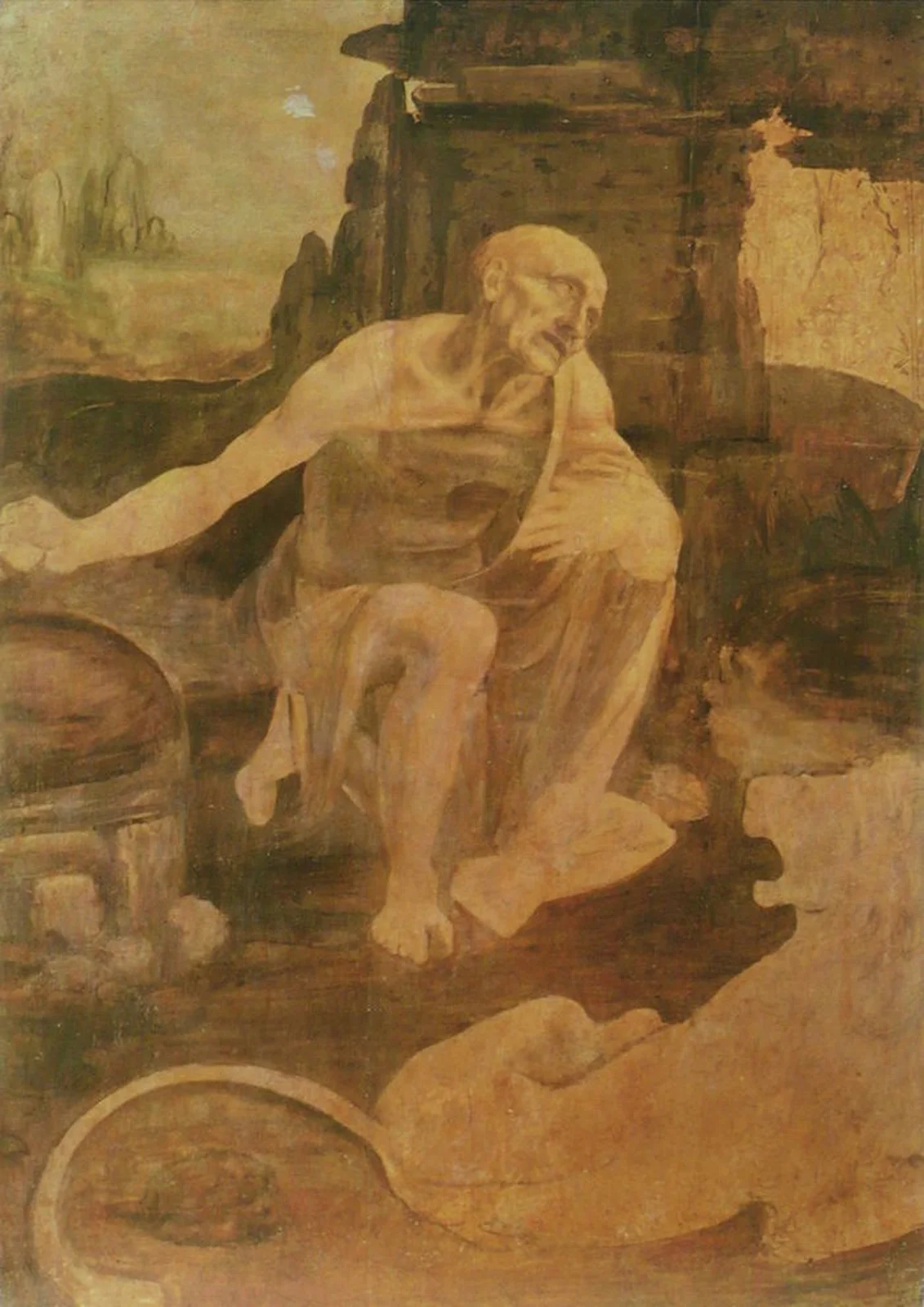
Leonardo da Vinci: Unfinished painting of St. Jerome in the Wilderness, (c. 1480), Vatican
Locations
Topics
Subjects
Regions
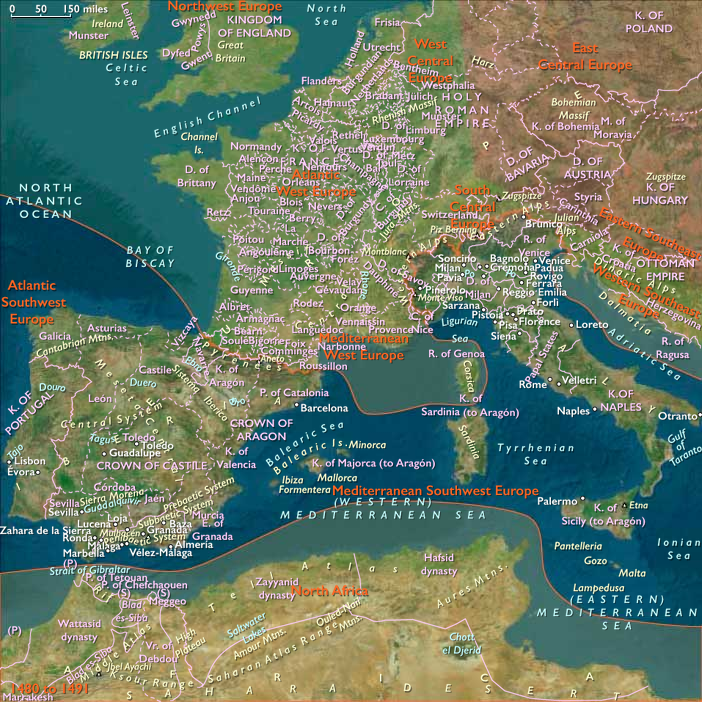
Southwest Europe
View →Subregions