The Cathedral of Saint-Étienne at Limoges: Renaissance…
1520 CE
The Cathedral of Saint-Étienne at Limoges: Renaissance and Gothic Splendor (1534)
Key Thematic Elements:
- Artistic and Architectural: The Renaissance rood loft exemplifies the blending of late Gothic architecture with Renaissance decorative motifs, highlighting the transitional nature of early sixteenth-century European art.
- Religious and Cultural: The cathedral continued to serve as a vibrant center of religious life and a significant locus of cultural expression in Limoges, a city historically renowned for its artistic and commercial vitality.
- Historical Context: The cathedral’s protracted construction, spanning over six centuries until its eventual completion in 1888, underscores both the changing aesthetic preferences and economic circumstances influencing monumental architecture in Europe.
Consequences and Significance:
The artistic treasures of the cathedral, particularly the Renaissance rood loft and the intricately carved tomb of Bishop Jean de Langeac, featuring sculpted scenes from the Apocalypse, reflect Limoges's sustained commitment to artistic excellence. The cathedral’s blend of Gothic and Renaissance elements represents the broader cultural transition of the era, capturing the coexistence of medieval heritage with burgeoning Renaissance humanism and classicism.
Locations
Regions
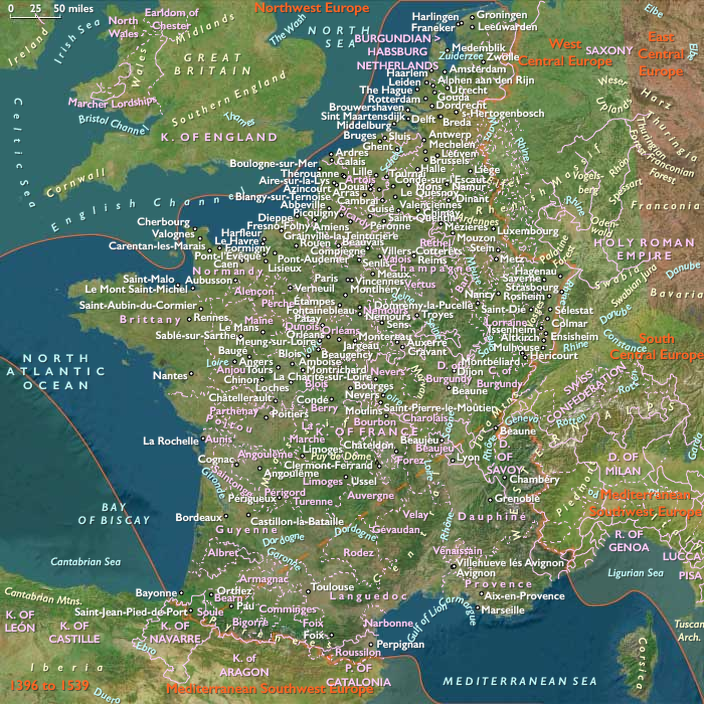
West Europe
View →Subregions